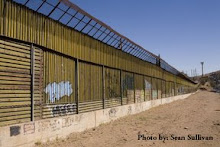
Texas RioGrande Legal Aid has been working to defend the rights of landowners who live in the path of the border wall. Their legal defense of private property rights in south Texas comes as the Department of Homeland Security, led by Secretary Chertoff, is accused of repeatedly violating laws and court orders in their aggressive attmempts to condemn land to build the wall. DHS even went so far as to initiate condemnation proceedings against one of the few south Texas landowners who wanted the border wall, and who had already agreed to sell his land. The Texas Border Coalition continues to challenge the coercive tactics that DHS has employed as it attempts to take over private and municipal property. The University of Texas at Brownsville has announced that they will bring suit to force DHS to comply with a court order requiring that they explore others alternatives to a wall that would slice through their campus. And altough the Supreme Court refused to hear the constitutional challenge to the Real ID Act's waiver privision brought by the Sierra Club and Defenders of Wildlife, there is another constitutional challenge pending, brought by El Paso County, the El Paso County Water Improvement District No. 1, the Hudspeth County Conservation and Reclamation District No. 1, the Ysleta Del Sur Pueblo of the Tigua Nation, Frontera Audubon Society, the Friends of the Wildlife Corridor, and the Friends of Laguna Atascosa National Wildlife Refuge, and Brownsville’s Galeria 409.
The following press release was sent out by Texas RioGrande Legal Aid regarding their ongoing efforts on behalf of private landowners threatened by the border wall:
LOS EBANOS, Texas – Two Rio Grande Valley families will be taking their legal fight against the federal government regarding the construction of the border wall to New Orleans, Louisiana.
Represented by Texas RioGrande Legal Aid (TRLA), the largest provider of legal aid in Texas, the families of Hilaria and Baldomero Muniz and Pamela Rivas are fighting the government’s efforts to take their land to build a wall along the Texas – Mexico border. The legal battle will continue in the Fifth Circuit Court of Appeals in New Orleans on July 8th. The Court will convene at 9 am.
The legal battle began when the Department of Homeland Security (DHS) filed lawsuits against the families to gain access to their land to begin planning the border wall. The families have argued that DHS did not follow the legal steps required before initiating the condemnation proceedings. DHS has sued more than fifty Rio Grande Valley landowners in the border wall process.
According to TRLA attorney Jerome Wesevich,“The government is required to negotiate a reasonable price for the property with these families before they use the court system. The government’s reasonable price was nothing.”
Both the Muniz and Rivas families have owned property in Los Ebanos for several decades. Baldomero and Hilaria Muniz worked as migrant farmworkers to save the money to build their house along the Rio Grande River. They have raised five children in that house and currently use the land to raise goats that they depend on to survive.
“Zero dollars is not a reasonable price for these families’ livelihoods,” added Wesevich. “The government needs to comply with its own laws. Right now, its failure to do so is at the expense of hardworking border landowners.”
Established in 1970, Texas RioGrande Legal Aid, Inc. (TRLA) is a nonprofit organization that provides free civil legal services to low-income and disadvantaged clients in a 68-county service area. TRLA’s mission is to promote the dignity, self-sufficiency, safety and stability of low-income Texas residents by providing high-quality legal assistance and related educational services.
Contact: Jerome Wesevich, Attorney
915.241.0534
jwesevich@trla.org
Cynthia Martinez, Communications Director
512.374.2764
cmartinez@trla.org
Friday, June 27, 2008


Friday, June 20, 2008
The Border Wall’s Lawless History
By Scott Nicol
The border wall, which has already done tremendous damage to the environment of our borderlands, will in coming weeks plug a canyon south of San Diego. More than 2 million cubic yards of earth will be torn from adjacent hills and dumped into a canyon called Smuggler’s Gulch to create a massive earthen berm. The wall will then be built on top of this berm, rather than following the canyon’s natural contours. The Keiwit Corporation will be paid $48.6 million to fill the canyon and build 3.5 miles of border wall, doing irreparable damage the Tijuana River estuary in the process. In Keiwit’s home state of Nebraska, or any other part of the country, federal laws would limit the destruction that such a reckless project could do, but on the border the Department of Homeland Security is no longer bound by our nation’s laws.
In 1996 Congress passed the Illegal Immigration Reform and Immigrant Responsibility Act, which called for the construction of walls along the U.S.-Mexico border. Beginning in the Pacific Ocean and extending inland for 14 miles, the wall would slice through protected lands, Smuggler’s Gulch, and the Tijuana River. It would consist of parallel concrete and steel walls with a graded road between them, lights, cameras, and sensors, and 50 feet on either side cleared of all vegetation.
California’s Coastal Commission determined that the border wall would violate the federal Coastal Zone Management Act. Of particular concern was the damage that would be done to the Tijuana River National Estuarine Research Reserve and other lands that had been set aside for protection, Smuggler’s Gulch in particular, as well as impacts on threatened and endangered species. The Sierra Club and other environmental groups challenged the border wall in court, alleging that it violated the National Environmental Policy Act. The judge agreed, and construction was halted.In 2005 the Real ID Act was attached as a rider on an appropriations bill funding the wars in Iraq and Afghanistan after it failed to pass on its own merits. It contained a provision intended to overrule the objections of the California Coastal Commission and anyone else who might oppose the construction of border walls. It said, “Notwithstanding any other provision of law, the Secretary of Homeland Security shall have the authority to waive all legal requirements such Secretary, in such Secretary’s sole discretion, determines necessary to ensure expeditious construction of the barriers and roads under this section.”
Department of Homeland Security Secretary Michael Chertoff used his unprecedented new power to “waive in their entirety” the Coastal Zone Management Act, the National Environmental Policy Act, the Endangered Species Act, the Migratory Bird Treaty Act, the Clean Water Act, and other vital federal laws to build the San Diego border wall. The challenges brought by the California Coastal Commission and the Sierra Club were thrown out when the laws that they were based upon were waived.
The Real ID Act amended the Illegal Immigration Reform and Immigrant Responsibility Act, with the phrase “under this section” referring to its 14 miles of California border wall. When the Secure Fence Act was passed two weeks before the 2006 mid-term election, it further amended the Illegal Immigration Reform and Immigrant Responsibility Act, replacing the 14 miles originally called for by the act with over 700 miles of border wall. Because these new walls were now “under this section” Secretary Chertoff had the power under Real ID to “waive all legal requirements” to build them as well.
In 2007 the California pattern was repeated in Arizona. The Sierra Club and Defenders of Wildlife challenged the construction of the border wall in the San Pedro Riparian National Conservation Area. The San Pedro was recognized by the National Audubon Society as its first Globally Important Bird Area, and designated as a world heritage natural area by the United Nations World Heritage Program. The court agreed that the Department of Homeland Security had ignored the requirements of the National Environmental Policy Act when they began building the wall through Arizona’s last free-flowing river, and an injunction temporarily halting construction was handed down. Rather than comply with the law, Secretary Chertoff waived it, once again suspending the laws that were the basis of a successful suit, along with 18 others. Within days of the waiver DHS restarted construction. This case is currently pending before the Supreme Court.
Apparently hoping to head off further court challenges to the border wall, last April Secretary Chertoff issued two waivers. One waived 27 federal laws to allow for the insertion of border walls into the existing flood control levees in Hidalgo County. This followed the determination by the US Fish and Wildlife Service that, “any proposed fence and/or levee segment that bisects lands within the Lower Rio Grande National Wildlife Refuge cannot be found compatible with the purposes for which the refuge was established,” and would therefore be in violation of the National Wildlife Refuge Administration Act. It also brought an abrupt end to the Environmental Impact Statement process mandated by the National Environmental Policy Act.
The second waiver covered every other section of border wall that will be built in 2008 from San Diego, California to Brownsville, Texas. This mega-waiver suspended 36 federal laws. Along with the environmental laws set aside in earlier waivers, Chertoff waived the Farmland Protection Policy Act, the National Historic Preservation Act, the Religious Freedom Restoration Act, the Clean Water Act, the Clean Air Act, the Endangered Species Act, and a host of others. It appears that in his rush to build the border wall, Chertoff was setting aside not only the laws that the wall was certain to violate, but any law that might in any way be relevant.
Predictably, this abuse of power invited court challenge rather than curtailing it. A diverse group of plaintiffs - El Paso County, the El Paso County Water Improvement District No. 1, the Hudspeth County Conservation and Reclamation District No. 1, the Ysleta Del Sur Pueblo of the Tigua Nation, Frontera Audubon Society, the Friends of the Wildlife Corridor, the Friends of Laguna Atascosa National Wildlife Refuge, and Brownsville’s Galeria 409 - have challenged the constitutionality of the Real ID Act’s waiver provision. They allege that giving an Administration appointee the power to overrule acts of Congress that were signed by the President for the express purpose of short-circuiting the functioning of the Judiciary is a violation of the Constitutionally mandated separation of powers.
This is not just an academic question; these plaintiffs will be directly impacted by the suspension of these laws. The waiving of the American Indian Religious Freedom Act means that the wall can be built without consideration of the sites on the Rio Grande that are important to the religious practices of the Tigua Nation. The El Paso and Hudspeth County water districts are charged with providing their counties with drinking and irrigation water. Not only has Chertoff waived the Clean Water Act and the Safe Drinking Water Act, but, “all federal, state, or other laws, regulations and legal requirements of, deriving from, or related to the subject of” the laws listed in the waiver. Apparently, no laws related to water are in force, leaving water districts with no way of knowing what rules still apply.
Long after the remains of the border wall share museum space with the broken concrete of the Berlin Wall, Smuggler’s Gulch will still be filled in, and the Tijuana River estuary that it flows into silted up. Secretary Chertoff, however, is so fixated on building the border wall that he is willing to ignore the consequences of his actions. Serious violations of federal law, resulting in irreparable damage to our nation’s natural and cultural heritage; to homes and farms and businesses; and to the continuation of Native American religious practices that predate the founding of the United States, are all acceptable costs according to this narrow mindset. Chertoff has admitted that, “Yes, you can get over it; yes, you can get under it,” but in his mind an ineffectual border wall is still worth sacrificing the fundamental principles enshrined in the U.S. Constitution.
The border wall, which has already done tremendous damage to the environment of our borderlands, will in coming weeks plug a canyon south of San Diego. More than 2 million cubic yards of earth will be torn from adjacent hills and dumped into a canyon called Smuggler’s Gulch to create a massive earthen berm. The wall will then be built on top of this berm, rather than following the canyon’s natural contours. The Keiwit Corporation will be paid $48.6 million to fill the canyon and build 3.5 miles of border wall, doing irreparable damage the Tijuana River estuary in the process. In Keiwit’s home state of Nebraska, or any other part of the country, federal laws would limit the destruction that such a reckless project could do, but on the border the Department of Homeland Security is no longer bound by our nation’s laws.
In 1996 Congress passed the Illegal Immigration Reform and Immigrant Responsibility Act, which called for the construction of walls along the U.S.-Mexico border. Beginning in the Pacific Ocean and extending inland for 14 miles, the wall would slice through protected lands, Smuggler’s Gulch, and the Tijuana River. It would consist of parallel concrete and steel walls with a graded road between them, lights, cameras, and sensors, and 50 feet on either side cleared of all vegetation.
California’s Coastal Commission determined that the border wall would violate the federal Coastal Zone Management Act. Of particular concern was the damage that would be done to the Tijuana River National Estuarine Research Reserve and other lands that had been set aside for protection, Smuggler’s Gulch in particular, as well as impacts on threatened and endangered species. The Sierra Club and other environmental groups challenged the border wall in court, alleging that it violated the National Environmental Policy Act. The judge agreed, and construction was halted.In 2005 the Real ID Act was attached as a rider on an appropriations bill funding the wars in Iraq and Afghanistan after it failed to pass on its own merits. It contained a provision intended to overrule the objections of the California Coastal Commission and anyone else who might oppose the construction of border walls. It said, “Notwithstanding any other provision of law, the Secretary of Homeland Security shall have the authority to waive all legal requirements such Secretary, in such Secretary’s sole discretion, determines necessary to ensure expeditious construction of the barriers and roads under this section.”
Department of Homeland Security Secretary Michael Chertoff used his unprecedented new power to “waive in their entirety” the Coastal Zone Management Act, the National Environmental Policy Act, the Endangered Species Act, the Migratory Bird Treaty Act, the Clean Water Act, and other vital federal laws to build the San Diego border wall. The challenges brought by the California Coastal Commission and the Sierra Club were thrown out when the laws that they were based upon were waived.
The Real ID Act amended the Illegal Immigration Reform and Immigrant Responsibility Act, with the phrase “under this section” referring to its 14 miles of California border wall. When the Secure Fence Act was passed two weeks before the 2006 mid-term election, it further amended the Illegal Immigration Reform and Immigrant Responsibility Act, replacing the 14 miles originally called for by the act with over 700 miles of border wall. Because these new walls were now “under this section” Secretary Chertoff had the power under Real ID to “waive all legal requirements” to build them as well.
In 2007 the California pattern was repeated in Arizona. The Sierra Club and Defenders of Wildlife challenged the construction of the border wall in the San Pedro Riparian National Conservation Area. The San Pedro was recognized by the National Audubon Society as its first Globally Important Bird Area, and designated as a world heritage natural area by the United Nations World Heritage Program. The court agreed that the Department of Homeland Security had ignored the requirements of the National Environmental Policy Act when they began building the wall through Arizona’s last free-flowing river, and an injunction temporarily halting construction was handed down. Rather than comply with the law, Secretary Chertoff waived it, once again suspending the laws that were the basis of a successful suit, along with 18 others. Within days of the waiver DHS restarted construction. This case is currently pending before the Supreme Court.
Apparently hoping to head off further court challenges to the border wall, last April Secretary Chertoff issued two waivers. One waived 27 federal laws to allow for the insertion of border walls into the existing flood control levees in Hidalgo County. This followed the determination by the US Fish and Wildlife Service that, “any proposed fence and/or levee segment that bisects lands within the Lower Rio Grande National Wildlife Refuge cannot be found compatible with the purposes for which the refuge was established,” and would therefore be in violation of the National Wildlife Refuge Administration Act. It also brought an abrupt end to the Environmental Impact Statement process mandated by the National Environmental Policy Act.
The second waiver covered every other section of border wall that will be built in 2008 from San Diego, California to Brownsville, Texas. This mega-waiver suspended 36 federal laws. Along with the environmental laws set aside in earlier waivers, Chertoff waived the Farmland Protection Policy Act, the National Historic Preservation Act, the Religious Freedom Restoration Act, the Clean Water Act, the Clean Air Act, the Endangered Species Act, and a host of others. It appears that in his rush to build the border wall, Chertoff was setting aside not only the laws that the wall was certain to violate, but any law that might in any way be relevant.
Predictably, this abuse of power invited court challenge rather than curtailing it. A diverse group of plaintiffs - El Paso County, the El Paso County Water Improvement District No. 1, the Hudspeth County Conservation and Reclamation District No. 1, the Ysleta Del Sur Pueblo of the Tigua Nation, Frontera Audubon Society, the Friends of the Wildlife Corridor, the Friends of Laguna Atascosa National Wildlife Refuge, and Brownsville’s Galeria 409 - have challenged the constitutionality of the Real ID Act’s waiver provision. They allege that giving an Administration appointee the power to overrule acts of Congress that were signed by the President for the express purpose of short-circuiting the functioning of the Judiciary is a violation of the Constitutionally mandated separation of powers.
This is not just an academic question; these plaintiffs will be directly impacted by the suspension of these laws. The waiving of the American Indian Religious Freedom Act means that the wall can be built without consideration of the sites on the Rio Grande that are important to the religious practices of the Tigua Nation. The El Paso and Hudspeth County water districts are charged with providing their counties with drinking and irrigation water. Not only has Chertoff waived the Clean Water Act and the Safe Drinking Water Act, but, “all federal, state, or other laws, regulations and legal requirements of, deriving from, or related to the subject of” the laws listed in the waiver. Apparently, no laws related to water are in force, leaving water districts with no way of knowing what rules still apply.
Long after the remains of the border wall share museum space with the broken concrete of the Berlin Wall, Smuggler’s Gulch will still be filled in, and the Tijuana River estuary that it flows into silted up. Secretary Chertoff, however, is so fixated on building the border wall that he is willing to ignore the consequences of his actions. Serious violations of federal law, resulting in irreparable damage to our nation’s natural and cultural heritage; to homes and farms and businesses; and to the continuation of Native American religious practices that predate the founding of the United States, are all acceptable costs according to this narrow mindset. Chertoff has admitted that, “Yes, you can get over it; yes, you can get under it,” but in his mind an ineffectual border wall is still worth sacrificing the fundamental principles enshrined in the U.S. Constitution.
Wednesday, June 4, 2008
Building border walls during hurricane season is dangerous
By K. Rod Summy
Most of us who live here in the Lower Rio Grande Valley (LRGV) of Texas were very relieved when the Secretary of Homeland Security recently thwarted a potentially dangerous proposal by the Border Patrol to check the immigration status of all persons leaving this area in the event of an emergency evacuation.
This idea may have sounded good on paper, but it would have very probably placed a lot of people in harm’s way if it were ever implemented during an evacuation. We applaud Mr. Chertoff for recognizing this danger and for making it clear to all that “…the safety of American citizens is and will remain a top priority of the Department of Homeland Security.”
 There is another DHS plan in progress which also sounds good on paper, but is probably more dangerous and potentially destructive than the one mentioned previously. The mandate to begin construction on the border wall in Cameron and Hidalgo Counties in the very near future and to finish it by year’s end essentially guarantees that much or all of our flood-control levee system will be under construction during the height of the 2008 hurricane season, which extends from early-June through mid-October.
 In addition to their highly unpredictable pathways and awesome destructive power, one of the major concerns relating to hurricanes involves the rapidity at which these storms may develop, intensify and move across the Gulf of Mexico. For example, the recent storm which ravaged much of the Gulf Coast area and essentially destroyed the city of New Orleans, Louisiana (Hurricane Katrina) developed as a tropical depression near the Bahamas on August 23, 2005, strengthened into a tropical storm the following day, intensified to a Category 1 hurricane by August 25 (winds greater than 74 mph), further intensified to Category 5 status by August 28 (winds greater than 155 mph), and made landfall as a Category 4 hurricane (winds of 140-150 mph) near Grande Isle, LA, on August 29 – a total of 6 days between the time the storm formed and the date of landfall on the Louisiana coast.
What this means in practical terms is that if a major hurricane destined to hit the Rio Grande Valley develops this year over the Caribbean or Gulf of Mexico, we will have about a week or less to prepare for it. While this short time interval is probably sufficient to organize an orderly evacuation of human residents, it almost certainly does not provide sufficient time to “batten down the hatches” of any flood-control levees under construction at the time a hurricane warning is issued.
 The flood-control levee system of the Rio Grande Valley is our primary defense against such a disaster, and allowing anyone tamper with it during the annual hurricane season is tantamount to giving them a pair of dice and allowing them to play a game of “craps” with our lives and property as the stakes.
The obvious solution to this problem is simply to postpone construction of the border wall project until the 2008 hurricane season ends during mid-October, or to limit construction during the hurricane season per se to levee improvements in areas in dire need of repair.
This common-sense approach might be somewhat inconvenient as it would require extending the completion deadline by a period of several months, although this delay would probably be in the best interests of everyone involved as it would allow sufficient time for DHS contractors do the job right and to avoid the tendency by some to view work on our critical levee system as a “rush job,” which we cannot afford under any circumstance.
The legal precedent for such an extension already exists – the DHS Secretary waived 37 Federal laws in order to expedite construction of the border wall in Texas, and a simple waiver that would delay construction until a safer time of year would not only be perfectly legal, but would also reinforce Mr. Chertoff’s previous commitment that “… the safety of American citizens is and will remain a top priority of the Department of Homeland Security.”
K. Rod Summy is an associate professor of entomology. He lives in Weslaco, Texas.
Most of us who live here in the Lower Rio Grande Valley (LRGV) of Texas were very relieved when the Secretary of Homeland Security recently thwarted a potentially dangerous proposal by the Border Patrol to check the immigration status of all persons leaving this area in the event of an emergency evacuation.
This idea may have sounded good on paper, but it would have very probably placed a lot of people in harm’s way if it were ever implemented during an evacuation. We applaud Mr. Chertoff for recognizing this danger and for making it clear to all that “…the safety of American citizens is and will remain a top priority of the Department of Homeland Security.”
 There is another DHS plan in progress which also sounds good on paper, but is probably more dangerous and potentially destructive than the one mentioned previously. The mandate to begin construction on the border wall in Cameron and Hidalgo Counties in the very near future and to finish it by year’s end essentially guarantees that much or all of our flood-control levee system will be under construction during the height of the 2008 hurricane season, which extends from early-June through mid-October.
The potential danger of this plan should be obvious – the LRGV region is located within a major hurricane zone and, during an average year, our probability of experiencing a major tropical storm or hurricane is about 1 in 7 (14%). Although the majority of these storms develop during the late-summer and early-fall period, some of the most destructive hurricanes on record have made landfall on the Texas coast as early as June – e.g., Hurricane Alice during June, 1954 and Hurricane Audrey during June, 1957.
 In addition to their highly unpredictable pathways and awesome destructive power, one of the major concerns relating to hurricanes involves the rapidity at which these storms may develop, intensify and move across the Gulf of Mexico. For example, the recent storm which ravaged much of the Gulf Coast area and essentially destroyed the city of New Orleans, Louisiana (Hurricane Katrina) developed as a tropical depression near the Bahamas on August 23, 2005, strengthened into a tropical storm the following day, intensified to a Category 1 hurricane by August 25 (winds greater than 74 mph), further intensified to Category 5 status by August 28 (winds greater than 155 mph), and made landfall as a Category 4 hurricane (winds of 140-150 mph) near Grande Isle, LA, on August 29 – a total of 6 days between the time the storm formed and the date of landfall on the Louisiana coast.
What this means in practical terms is that if a major hurricane destined to hit the Rio Grande Valley develops this year over the Caribbean or Gulf of Mexico, we will have about a week or less to prepare for it. While this short time interval is probably sufficient to organize an orderly evacuation of human residents, it almost certainly does not provide sufficient time to “batten down the hatches” of any flood-control levees under construction at the time a hurricane warning is issued.
If a major hurricane associated with torrential rains does indeed impact the Rio Grande Valley region this year, our levee system will have to withstand water currents capable of washing out dams, knocking down bridges and uprooting large trees. Therefore, we need to be very cautious in believing any claims by DHS or their contractors and engineers that initiating major levee construction projects at the beginning of our current hurricane season is okay and will pose no problems.
If we are impacted by a major hurricane and our levee system holds (including those areas under construction), then the experts will indeed be correct and the story will end happily. On the other hand, if they are wrong and the levee system fails, the Rio Grande Valley will very probably be subjected to massive flooding and we may well find ourselves living in the midst of drowned and ruined cities similar to those that are now commonplace in Louisiana and other areas impacted by Hurricane Katrina three years ago.
 The flood-control levee system of the Rio Grande Valley is our primary defense against such a disaster, and allowing anyone tamper with it during the annual hurricane season is tantamount to giving them a pair of dice and allowing them to play a game of “craps” with our lives and property as the stakes.
The obvious solution to this problem is simply to postpone construction of the border wall project until the 2008 hurricane season ends during mid-October, or to limit construction during the hurricane season per se to levee improvements in areas in dire need of repair.
This common-sense approach might be somewhat inconvenient as it would require extending the completion deadline by a period of several months, although this delay would probably be in the best interests of everyone involved as it would allow sufficient time for DHS contractors do the job right and to avoid the tendency by some to view work on our critical levee system as a “rush job,” which we cannot afford under any circumstance.
The legal precedent for such an extension already exists – the DHS Secretary waived 37 Federal laws in order to expedite construction of the border wall in Texas, and a simple waiver that would delay construction until a safer time of year would not only be perfectly legal, but would also reinforce Mr. Chertoff’s previous commitment that “… the safety of American citizens is and will remain a top priority of the Department of Homeland Security.”
K. Rod Summy is an associate professor of entomology. He lives in Weslaco, Texas.
Thursday, May 29, 2008
Texas Groups Sue to Force the Department of Homeland Security to Obey Our Nation's Laws
The Frontera Audubon Society, the Friends of the Wildlife Corridor, and the Friends of Laguna Atascosa National Wildlife Refuge are suing Homeland Security Secretary Michael Chertoff for waiving 36 federal laws in order to build walls along the U.S.-Mexico border. They are joined in this effort by a diverse group of plaintiffs along the Texas-Mexico border: El Paso County, the El Paso County Water Improvement District No. 1, the Hudspeth County Conservation and Reclamation District No. 1, the Ysleta Del Sur Pueblo of the Tigua Nation, and Brownsville’s Galeria 409. The Texas organizations are challenging the constitutionality of section 102 of the Real ID Act, which gives Secretary Chertoff the power to waive any and all federal, state and local laws in order to facilitate construction of the border wall. The suit claims that by placing the authority to unilaterally suspend all laws in the hands of a single Administration appointee, the Real ID Act violates the Constitution’s separation of powers. As organizations dedicated to the preservation of South Texas’ remaining wildlife habitat, these groups assert that if environmental laws are waived, years of effort to protect species and restore critical habitat will be lost.
 In April DHS Secretary Chertoff announced that he was using his waiver power to ignore 36 federal laws, including the Endangered Species Act, the Migratory Bird Treaty Act, the National Wildlife Refuge System Administration Act, and the National Environmental Policy Act, in order to speed up construction of over 300 miles of border wall. The only reason for Secretary Chertoff to waive these laws is that he knows that the border wall will violate them.
The fate of the Lower Rio Grande Valley National Wildlife Refuge system is of particular concern. Consisting of individual tracts of native habitat linked by the Rio Grande, it creates a wildlife corridor, providing endangered species such as the ocelot and jaguarundi sufficient territory to find food, water, and mates. Migratory birds also rely on it to rest and refuel on their annual journeys, as well as for nesting. Maps released by DHS show the border wall slicing through many refuge tracts, and cutting off others from the river. The wall will fragment habitat, block migratory pathways, deny animals access to fresh water, and isolate breeding populations of endangered ocelot and jagurandi.
"It's taken 30 years, $80 million, and back-breaking effort to create an 80,000 acre wildlife corridor along the last 250 miles of the Rio Grande. To put a fence or wall through that is insanity," said Keith Hackland, President of the Friends of the Wildlife Corridor.
 “Currently, there are only 80 to 100 wild ocelots remaining in the continental U.S., and they cannot hope to survive without the wildlife corridor and the protection of the Endangered Species Act,” said Shane Wilson, President of the Friends of Laguna Atascosa. “The border wall, as proposed, will ensure that future generations will never witness the spectacular beauty of seeing an ocelot in the wild.”
“Further habitat losses in the Valley, which serves as a vital stop over and feeding grounds for hundreds of species of migrating coastal shorebirds, inland waterfowl, and passerines, and nesting habitat for approximately 150 more species, will be catastrophic,” said Wayne Bartholomew, Executive Director of Frontera Audubon.
In their suit, the organizations ask the court to declare section 102 of the Real ID Act unconstitutional and to prevent the Department of Homeland Security from building walls, roads, or other infrastructure on the border that do not fully comply with all of our nation’s environmental laws.
"To instantly dissolve 96 years of environmental laws and protection with a mere wave of the hand is nothing short of monstrous,” said Jim Chapman, Board President of the Frontera Audubon Society. “If laws can be so easily swept aside on the border, the same precedent could be applied anywhere, from the Arctic National Wildlife Refuge to Yellowstone National Park. If our nation’s laws are optional, they aren’t really laws.”
In the April waiver the Department of Homeland Security suspended the following federal laws along the United States' southern border:
The National Environmental Policy Act
The Endangered Species Act
The Federal Water Pollution Control Act (commonly referred to as the Clean Water Act)
The National Historic Preservation Act
The Migratory Bird Treaty Act
The Clean Air Act
The Archeological Resources Protection Act
The Safe Drinking Water Act
The Noise Control Act
The Solid Waste Disposal Act, as amended by the Resource Conservation and Recovery Act
The Comprehensive Environmental Response, Compensation, and Liability Act
The Archaeological and Historic Preservation Act
The Antiquities Act
The Historic Sites, Buildings, and Antiquities Act
The Wild and Scenic Rivers Act
The Farmland Protection Policy Act
The Coastal Zone Management Act
The Wilderness Act
The Federal Land Policy and Management Act
The National Wildlife Refuge System Administration Act
The Fish and Wildlife Act of 1956
The Fish and Wildlife Coordination Act
The Administrative Procedure Act
The Otay Mountain Wilderness Act of 1999
Sections 102(29) and 103 of Title I of the California Desert Protection Act
The National Park Service Organic Act
The National Park Service General Authorities Act
Sections 401(7), 403, and 404 of the National Parks and Recreation Act of 1978
Sections 301(a)-(f) of the Arizona Desert Wilderness Act
The Rivers and Harbors Act of 1899
The Eagle Protection Act
The Native American Graves Protection and Repatriation Act
The American Indian Religious Freedom Act
The Religious Freedom Restoration Act
The National Forest Management Act of 1976
The Multiple Use and Sustained Yield Act of 1960
 In April DHS Secretary Chertoff announced that he was using his waiver power to ignore 36 federal laws, including the Endangered Species Act, the Migratory Bird Treaty Act, the National Wildlife Refuge System Administration Act, and the National Environmental Policy Act, in order to speed up construction of over 300 miles of border wall. The only reason for Secretary Chertoff to waive these laws is that he knows that the border wall will violate them.
The fate of the Lower Rio Grande Valley National Wildlife Refuge system is of particular concern. Consisting of individual tracts of native habitat linked by the Rio Grande, it creates a wildlife corridor, providing endangered species such as the ocelot and jaguarundi sufficient territory to find food, water, and mates. Migratory birds also rely on it to rest and refuel on their annual journeys, as well as for nesting. Maps released by DHS show the border wall slicing through many refuge tracts, and cutting off others from the river. The wall will fragment habitat, block migratory pathways, deny animals access to fresh water, and isolate breeding populations of endangered ocelot and jagurandi.
"It's taken 30 years, $80 million, and back-breaking effort to create an 80,000 acre wildlife corridor along the last 250 miles of the Rio Grande. To put a fence or wall through that is insanity," said Keith Hackland, President of the Friends of the Wildlife Corridor.
 “Currently, there are only 80 to 100 wild ocelots remaining in the continental U.S., and they cannot hope to survive without the wildlife corridor and the protection of the Endangered Species Act,” said Shane Wilson, President of the Friends of Laguna Atascosa. “The border wall, as proposed, will ensure that future generations will never witness the spectacular beauty of seeing an ocelot in the wild.”
“Further habitat losses in the Valley, which serves as a vital stop over and feeding grounds for hundreds of species of migrating coastal shorebirds, inland waterfowl, and passerines, and nesting habitat for approximately 150 more species, will be catastrophic,” said Wayne Bartholomew, Executive Director of Frontera Audubon.
In their suit, the organizations ask the court to declare section 102 of the Real ID Act unconstitutional and to prevent the Department of Homeland Security from building walls, roads, or other infrastructure on the border that do not fully comply with all of our nation’s environmental laws.
"To instantly dissolve 96 years of environmental laws and protection with a mere wave of the hand is nothing short of monstrous,” said Jim Chapman, Board President of the Frontera Audubon Society. “If laws can be so easily swept aside on the border, the same precedent could be applied anywhere, from the Arctic National Wildlife Refuge to Yellowstone National Park. If our nation’s laws are optional, they aren’t really laws.”
In the April waiver the Department of Homeland Security suspended the following federal laws along the United States' southern border:
The National Environmental Policy Act
The Endangered Species Act
The Federal Water Pollution Control Act (commonly referred to as the Clean Water Act)
The National Historic Preservation Act
The Migratory Bird Treaty Act
The Clean Air Act
The Archeological Resources Protection Act
The Safe Drinking Water Act
The Noise Control Act
The Solid Waste Disposal Act, as amended by the Resource Conservation and Recovery Act
The Comprehensive Environmental Response, Compensation, and Liability Act
The Archaeological and Historic Preservation Act
The Antiquities Act
The Historic Sites, Buildings, and Antiquities Act
The Wild and Scenic Rivers Act
The Farmland Protection Policy Act
The Coastal Zone Management Act
The Wilderness Act
The Federal Land Policy and Management Act
The National Wildlife Refuge System Administration Act
The Fish and Wildlife Act of 1956
The Fish and Wildlife Coordination Act
The Administrative Procedure Act
The Otay Mountain Wilderness Act of 1999
Sections 102(29) and 103 of Title I of the California Desert Protection Act
The National Park Service Organic Act
The National Park Service General Authorities Act
Sections 401(7), 403, and 404 of the National Parks and Recreation Act of 1978
Sections 301(a)-(f) of the Arizona Desert Wilderness Act
The Rivers and Harbors Act of 1899
The Eagle Protection Act
The Native American Graves Protection and Repatriation Act
The American Indian Religious Freedom Act
The Religious Freedom Restoration Act
The National Forest Management Act of 1976
The Multiple Use and Sustained Yield Act of 1960
Saturday, May 24, 2008
Presidio does the right thing in joining the Texas Border Coalition border wall lawsuit
by Adrienne Evans
On Tuesday, May 20, after input from citizens and discussion among the mayor and council, the Presidio City Council voted to join the Texas Border Coalition (TBC), a coalition of Texas border cities, counties, chambers of commerce, and economic development corporations, representing over two million border residents from El Paso to Brownsville. Presidio is scheduled by DHS for levee-wall construction this year, along with Cameron and Hidalgo Counties.
On February 19, the Presidio City Council passed a resolution that stated that they opposed “the building of a wall along the Texas/Mexico border that extends over 135 miles of border,” as well as “a wall specifically in the Big Bend Area of Texas,” in that “the building of the border wall will impact our region, through trade, tourism, and unfriendly relations within border alliances”. The Presidio County Commissioners, the City of Marfa, the City of Alpine, and the City of El Paso passed similar resolutions.
At the Border Wall Conference in Alpine on May 17, U.S. Border Patrol Deputy Chief Carry Huffman stated in reference to a border wall in Presidio, “As I mentioned earlier, Presidio is not a place that is out of control. Apprehensions in Presidio are relatively low.” After delineating examples of the existing problems in the Marfa Sector, Huffman said, “We anticipate that traffic will be moving through the Ojinaga area,” as the rationale for the border wall.
During a presentation at the Tuesday City Council meeting, Redford resident and border activist April Cotte stated, “I have spoken with five landowners who are very against this, whose land will be affected.”
Mayor Lorenzo Hernandez said, “The thing that really bothers me is those big, old lines that we have to wait in [at the port of entry]. Two Sundays ago, people were complaining about waiting three hours to pass. So if this coalition could help us out that and help the businesses in Presidio, I don’t see why we shouldn’t join. … About the relationship between Presidio and Ojinaga … how is [the border wall] going to affect the relationship with those people? And they know they need Presidio just as much as we need them. And I don’t think this wall is going to help that relationship.”
Before the council voted to join the TBC, there was a discussion about alternatives to the border wall, such as restoring the Rio Grande to its historical levels. The vote was unanimous.
During the city council meeting, Presidio City Attorney Steve Spurgin indicated that he would be in contact with the attorneys involved regarding legal action.
The TBC has recently filed a class action lawsuit against the government asserting, among other issues, that there was a lack of consultation with property owners and border communities about the construction of a border wall. The lawsuit is being brought pro bono by a team that includes lead attorney Peter Schey of the Center for Human Rights and Constitutional Law in Los Angeles.
In the legal complaint filed on May 16, 2008, it states that Secretary of Homeland Security Michael Chertoff has "failed to comply with the consultation requirement of the Consolidated Appropriations Act, 2008 … which requires consultation with private property owners and cities and other stake-holders to minimize the impact on the environment, culture, commerce, and quality of life for the communities and residents located near the sites at which activities relating to border fencing may occur.”
The chair of the TBC is Chad Foster, the mayor of Eagle Pass. In the complaint filed last week, which names as the plaintiff, TBC, and as defendants, Secretary Chertoff as well as Robert F. Janson of U.S. Customs and Border Protection, Mayor Foster is quoted about never receiving “any logical answers from defendants as to why certain areas in his city have been targeted for fencing over other areas: ‘I puzzled a while over why the fence would bypass the industrial park and go through the city park.’”
After the Presidio city council's vote, lifelong Redford resident Enrique Madrid, who attended the meeting with his wife Ruby, said, “Today, May 20, is the eleventh anniversary of the killing of Esequiel Hernandez Jr. Instead of a human form of militarization like the Marines killing Esequiel, this border wall is an engineering form of militarization, which is just as inhumane and brutal as deploying the Marines on U.S. soil in Redford was, eleven years ago."
On May 20, 1997, Esequiel Hernandez, Jr., an 18-year-old high school student, was killed by U.S. Marines near his home in Redford, Texas, which is 12 miles from Presidio. He was the first U.S. citizen to be killed by members of the U.S. Armed Forces since an incident where student demonstrators were massacred at Kent State University by members of the Ohio National Guard in 1970. The documentary, The Ballad of Esequiel Hernandez, will air on PBS on July 8. It is narrated by Tommy Lee Jones and directed by Kieran Fitzgerald.
Mr. Madrid went on to say that “it was appropriate that the City of Presidio, in its own way, commemorated the death of Esequiel Hernandez by rejecting this new manifestation of militarization on this day. It’s like there’s a light at the end of the tunnel, that there is hope, that justice will be permitted, finally. Justice is a natural right that should be freely flowing, and the City of Presidio is supporting that.”
###########
Adrienne Evans is a mother, health practitioner and community volunteer who lives in Terlingua, Texas. She is the co-founder of No Wall – Big Bend coalition. For more info, visit www.NoWallBigBend.blogspot.com.
This op-ed first appeared in the Big Bend Sentinel, the Presidio International, and the Rio Grande Guardian.
On Tuesday, May 20, after input from citizens and discussion among the mayor and council, the Presidio City Council voted to join the Texas Border Coalition (TBC), a coalition of Texas border cities, counties, chambers of commerce, and economic development corporations, representing over two million border residents from El Paso to Brownsville. Presidio is scheduled by DHS for levee-wall construction this year, along with Cameron and Hidalgo Counties.
On February 19, the Presidio City Council passed a resolution that stated that they opposed “the building of a wall along the Texas/Mexico border that extends over 135 miles of border,” as well as “a wall specifically in the Big Bend Area of Texas,” in that “the building of the border wall will impact our region, through trade, tourism, and unfriendly relations within border alliances”. The Presidio County Commissioners, the City of Marfa, the City of Alpine, and the City of El Paso passed similar resolutions.
At the Border Wall Conference in Alpine on May 17, U.S. Border Patrol Deputy Chief Carry Huffman stated in reference to a border wall in Presidio, “As I mentioned earlier, Presidio is not a place that is out of control. Apprehensions in Presidio are relatively low.” After delineating examples of the existing problems in the Marfa Sector, Huffman said, “We anticipate that traffic will be moving through the Ojinaga area,” as the rationale for the border wall.
During a presentation at the Tuesday City Council meeting, Redford resident and border activist April Cotte stated, “I have spoken with five landowners who are very against this, whose land will be affected.”
Mayor Lorenzo Hernandez said, “The thing that really bothers me is those big, old lines that we have to wait in [at the port of entry]. Two Sundays ago, people were complaining about waiting three hours to pass. So if this coalition could help us out that and help the businesses in Presidio, I don’t see why we shouldn’t join. … About the relationship between Presidio and Ojinaga … how is [the border wall] going to affect the relationship with those people? And they know they need Presidio just as much as we need them. And I don’t think this wall is going to help that relationship.”
Before the council voted to join the TBC, there was a discussion about alternatives to the border wall, such as restoring the Rio Grande to its historical levels. The vote was unanimous.
During the city council meeting, Presidio City Attorney Steve Spurgin indicated that he would be in contact with the attorneys involved regarding legal action.
The TBC has recently filed a class action lawsuit against the government asserting, among other issues, that there was a lack of consultation with property owners and border communities about the construction of a border wall. The lawsuit is being brought pro bono by a team that includes lead attorney Peter Schey of the Center for Human Rights and Constitutional Law in Los Angeles.
In the legal complaint filed on May 16, 2008, it states that Secretary of Homeland Security Michael Chertoff has "failed to comply with the consultation requirement of the Consolidated Appropriations Act, 2008 … which requires consultation with private property owners and cities and other stake-holders to minimize the impact on the environment, culture, commerce, and quality of life for the communities and residents located near the sites at which activities relating to border fencing may occur.”
The chair of the TBC is Chad Foster, the mayor of Eagle Pass. In the complaint filed last week, which names as the plaintiff, TBC, and as defendants, Secretary Chertoff as well as Robert F. Janson of U.S. Customs and Border Protection, Mayor Foster is quoted about never receiving “any logical answers from defendants as to why certain areas in his city have been targeted for fencing over other areas: ‘I puzzled a while over why the fence would bypass the industrial park and go through the city park.’”
After the Presidio city council's vote, lifelong Redford resident Enrique Madrid, who attended the meeting with his wife Ruby, said, “Today, May 20, is the eleventh anniversary of the killing of Esequiel Hernandez Jr. Instead of a human form of militarization like the Marines killing Esequiel, this border wall is an engineering form of militarization, which is just as inhumane and brutal as deploying the Marines on U.S. soil in Redford was, eleven years ago."
On May 20, 1997, Esequiel Hernandez, Jr., an 18-year-old high school student, was killed by U.S. Marines near his home in Redford, Texas, which is 12 miles from Presidio. He was the first U.S. citizen to be killed by members of the U.S. Armed Forces since an incident where student demonstrators were massacred at Kent State University by members of the Ohio National Guard in 1970. The documentary, The Ballad of Esequiel Hernandez, will air on PBS on July 8. It is narrated by Tommy Lee Jones and directed by Kieran Fitzgerald.
Mr. Madrid went on to say that “it was appropriate that the City of Presidio, in its own way, commemorated the death of Esequiel Hernandez by rejecting this new manifestation of militarization on this day. It’s like there’s a light at the end of the tunnel, that there is hope, that justice will be permitted, finally. Justice is a natural right that should be freely flowing, and the City of Presidio is supporting that.”
###########
Adrienne Evans is a mother, health practitioner and community volunteer who lives in Terlingua, Texas. She is the co-founder of No Wall – Big Bend coalition. For more info, visit www.NoWallBigBend.blogspot.com.
This op-ed first appeared in the Big Bend Sentinel, the Presidio International, and the Rio Grande Guardian.
Tuesday, May 20, 2008
Senator Cornyn's Lack of Integrity Brings Texans the Border Wall
Despite the fact that he voted for both the Secure Fence Act and the Real ID Act, in October Texas Senator John Cornyn told the Border Trade Alliance, “I have long said that I do not support a fence, or as some said, a wall, between the United States and Mexico. That’s irrational and just doesn’t make sense, because we know that people can come over fences or walls; they can go under them; they can go through them, given sufficient opportunity.”
Just a few weeks later Senator Cornyn authored S. 2348, the “Emergency Border Security Funding Act of 2007”, showing once again that he values the worst politics ahead of the best interests of south Texas and our nation. It called for 700 linear miles of border wall and 300 miles of vehicle barriers along the US – Mexico border, and provided $3 billion dollars to get construction started. This despite his earlier statement and the fact that the walls built so far have had no impact on the number of people coming across our southern border.
Once again, Senator Cornyn was talking out of both sides of his mouth. When he visited the border, where people know that a wall will do tremendous damage without bringing any benefit, he said that he does not support a border wall. When he went back to Washington he pandered to far-right xenophobes and sponsored legislation providing $3 billion to build the border walls in Texas that he admits will not work, that he knows border residents do not want, and that he claims not to support.
Just a few weeks later Senator Cornyn authored S. 2348, the “Emergency Border Security Funding Act of 2007”, showing once again that he values the worst politics ahead of the best interests of south Texas and our nation. It called for 700 linear miles of border wall and 300 miles of vehicle barriers along the US – Mexico border, and provided $3 billion dollars to get construction started. This despite his earlier statement and the fact that the walls built so far have had no impact on the number of people coming across our southern border.
Once again, Senator Cornyn was talking out of both sides of his mouth. When he visited the border, where people know that a wall will do tremendous damage without bringing any benefit, he said that he does not support a border wall. When he went back to Washington he pandered to far-right xenophobes and sponsored legislation providing $3 billion to build the border walls in Texas that he admits will not work, that he knows border residents do not want, and that he claims not to support.
 Cornyn also said, "I assure you there will be local consultation. There will not be ... unilateral actions on the part of the Department of Homeland Security without local input." But of course that promise has proved to be false as well. The Department of Homeland Security has not listened to any local input, and has instead relied upon condemnation proceedings to take private and municipal property against the owners’ will. Homes and businesses will be bulldozed, farms and ranches will be cut off from the Rio Grande, parks and wildlife refuges will be destroyed. This destruction was not agreed upon by its victims.
When DHS Secretary Chertoff used the authority granted him by the Real ID Act to waive 36 federal laws to build the border wall, one of those laws was the National Environmental Policy Act. It requires that a project’s impacts on both the human and natural environment be thoroughly examined, and that public input be solicited and addressed. Two days after handing down the waiver Chertoff told the Texas Border Coalition that the Final Environmental Assessments and Environmental Impact Statements that had been close to completion would not be released to the public. Thousands of public comments that had been received will never be addressed. Texas Congressman Silvestre Reyes said, “it is clear that DHS is not communicating with the border communities that would be most adversely affected by this project."
 If Cornyn and other Senators from southern border states were to stand up for their constituents and denounce the border wall on the floor of Congress, it would have an impact on Senators from northern states. Other Senators assume that, representing a state that borders Mexico, Texas Senator Cornyn has some insight into border issues. If he were to show them that the border wall will only slow down, not stop, undocumented crossers, they might listen. If he were to present evidence that the wall will do tremendous environmental damage and destroy the Rio Grande Valley’s $125 million ecotourism industry, they might pay attention. If he were to stand up for property owners in El Paso, Presidio, Roma, Brownsville, and other Texas communities in the face of DHS attempts to trample their legal rights and seize their property, other Senators might support him.
Unfortunately, Senator Cornyn has done none of these things. Instead he has worked to make the border wall a reality, and his support for the wall gives political cover to members of Congress who might otherwise be persuaded to oppose it. So long as he refuses to take a leadership role in stopping the border wall, it is going to be extremely difficult to convince Congress to revisit it. Hopefully Senator Cornyn’s lack of leadership and integrity will catch up with him this November.
Monday, May 12, 2008
Judge JD Salinas Buys into the Border Wall
By Scott Nicol
On February 8 Department of Homeland Security Secretary Michael Chertoff held a press conference at the Border Patrol station in Hidalgo County, Texas, to announce that a deal had been struck with Hidalgo County Judge JD Salinas to build the border wall. Rather than the 22 miles of “pedestrian fence” that DHS had planned to build along side the flood control levees in the county, which would destroy homes, bisect farms, and ruin wildlife refuges, the wall would be inserted into the levees. The existing levees that parallel the Rio Grande would have their sides torn off and replaced with 18-foot tall slabs of concrete. This was a configuration that had been rejected without study in the Draft Environmental Impact Study for the Rio Grande Valley, but suddenly it was rebranded as the perfect solution for both stopping the flow of immigrants into the United States and holding back floodwaters in a hurricane zone. Judge Salinas and Secretary Chertoff both characterized the border wall/levee combo as a “win-win.”
 This week Hidalgo County Judge JD Salinas told residents of Hidalgo County that we will be paying $48 million to stuff the border wall into our flood control levees. Since brokering the deal for the border wall/levee combo, Judge Salinas has claimed that the border wall is not a wall at all, and that rather than destroying homes, farms, and wildlife refuges it will be a boon to our economy. When Secretary Chertoff announced that he would waive federal laws meant to protect Hidalgo County residents and our environment, Judge Salinas issued a press release stating that, “As it relates to Hidalgo County, the DHS waiver is responsive to the needs of our diverse border community.” Rather than fight for the rights of his constituents, Judge Salinas is paving the way for the border wall.
Salinas has repeatedly claimed that the county will be reimbursed. Relying on Senator Cornyn’s promise of federal funds, he says that the border wall/levee combo will actually bring money into the county rather than draining our funds. However, in order to secure these funds, Senator Cornyn must get a law passed, and his bill repaying Hidalgo County’s contribution to the border wall has no cosponsors and may not go forward. Hidalgo County will then be left with the bill for a wall that the overwhelming majority of its residents do not want.
Salinas claims that the new design is not really a border wall, it is a levee, but for the Department of Homeland Security this is not about flood control. If it were, Chertoff could not issue a waiver. The waiver authority contained in section 102 of the Real ID Act only applies to border wall construction. No wall = no waiver. In response to criticism of his applause for Chertoff’s waiver, Salinas issued a statement saying,
"I agree with you that environmental laws are enacted to protect the environment for humans and that persons are guaranteed by the Constitution equal protection under the law. However, South Texas is hardly as equally protected as the rest of our country and the rest of the border. We live in a unique geographic setting — a flat Delta area prone to intense tropical weather."
We were equally protected by the law before Secretary Chertoff issued the waiver. Now we are not. Laws such as the Safe Drinking Water Act and Clean Water Act, which continue to be in effect for the rest of the nation, no longer ensure that the water that we drink is safe or clean. The Endangered Species Act and the Migratory Bird Treaty Act no longer protect the ocelots and migratory birds that attract $125 million worth of ecotourism to the area. The suspension of our legal protections has nothing to do with “a unique geographic setting.” The fact that we live in a flood prone area does not mean that we should live without protective laws; instead, it makes those laws even more important.
 When Hurricane Katrina devastated New Orleans it was not because there were too many pesky laws. New Orleans drowned because the federal government shirked its duty to maintain the levees. The federal government has also been negligent regarding south Texas’ levees. Now Secretary Chertoff, who oversaw the disaster there, is going to implement a rushed insertion of border walls into our already weak levees. The waiver was issued to speed this up. Now the Final Environmental Impact Statement will not be released, and DHS does not have to carry out the engineering studies and hydrological modeling that would assure us that the wall is structurally sound. They will just build it and hope for the best.
In Arizona border walls constructed just last summer are already leaning over. With construction rushed to meet an artificial deadline, there is no reason to think that similar problems will not plague Hidalgo County. But here the stakes are higher, as the new border wall is also supposed to protect us from floods. The laws that Chertoff waived, and whose suspension Salinas has publicly supported, were there for a reason.
The fact that Judge Salinas is working so hard to sell not only the wall but the waiver, ignoring the threat to the safety of Hidalgo County residents and the suspension of our Constitutional right to equal protection under the law, is extremely disturbing. Judge Salinas has gone from opponent of the border wall to border wall booster, and his words will help Chertoff to build it.
Maybe Hidalgo County will be reimbursed for the $48 million, or maybe we will be forced to pay for a wall that we do not want, that will in no way protect us, and that may actually increase the liklihood of a levee breach. One thing is certain; Judge JD Salinas has become Chertoff’s best ally when it comes to building the border wall.
On February 8 Department of Homeland Security Secretary Michael Chertoff held a press conference at the Border Patrol station in Hidalgo County, Texas, to announce that a deal had been struck with Hidalgo County Judge JD Salinas to build the border wall. Rather than the 22 miles of “pedestrian fence” that DHS had planned to build along side the flood control levees in the county, which would destroy homes, bisect farms, and ruin wildlife refuges, the wall would be inserted into the levees. The existing levees that parallel the Rio Grande would have their sides torn off and replaced with 18-foot tall slabs of concrete. This was a configuration that had been rejected without study in the Draft Environmental Impact Study for the Rio Grande Valley, but suddenly it was rebranded as the perfect solution for both stopping the flow of immigrants into the United States and holding back floodwaters in a hurricane zone. Judge Salinas and Secretary Chertoff both characterized the border wall/levee combo as a “win-win.”
 This week Hidalgo County Judge JD Salinas told residents of Hidalgo County that we will be paying $48 million to stuff the border wall into our flood control levees. Since brokering the deal for the border wall/levee combo, Judge Salinas has claimed that the border wall is not a wall at all, and that rather than destroying homes, farms, and wildlife refuges it will be a boon to our economy. When Secretary Chertoff announced that he would waive federal laws meant to protect Hidalgo County residents and our environment, Judge Salinas issued a press release stating that, “As it relates to Hidalgo County, the DHS waiver is responsive to the needs of our diverse border community.” Rather than fight for the rights of his constituents, Judge Salinas is paving the way for the border wall.
Salinas has repeatedly claimed that the county will be reimbursed. Relying on Senator Cornyn’s promise of federal funds, he says that the border wall/levee combo will actually bring money into the county rather than draining our funds. However, in order to secure these funds, Senator Cornyn must get a law passed, and his bill repaying Hidalgo County’s contribution to the border wall has no cosponsors and may not go forward. Hidalgo County will then be left with the bill for a wall that the overwhelming majority of its residents do not want.
Salinas claims that the new design is not really a border wall, it is a levee, but for the Department of Homeland Security this is not about flood control. If it were, Chertoff could not issue a waiver. The waiver authority contained in section 102 of the Real ID Act only applies to border wall construction. No wall = no waiver.
 In response to criticism of his applause for Chertoff’s waiver, Salinas issued a statement saying,
"I agree with you that environmental laws are enacted to protect the environment for humans and that persons are guaranteed by the Constitution equal protection under the law. However, South Texas is hardly as equally protected as the rest of our country and the rest of the border. We live in a unique geographic setting — a flat Delta area prone to intense tropical weather."
We were equally protected by the law before Secretary Chertoff issued the waiver. Now we are not. Laws such as the Safe Drinking Water Act and Clean Water Act, which continue to be in effect for the rest of the nation, no longer ensure that the water that we drink is safe or clean. The Endangered Species Act and the Migratory Bird Treaty Act no longer protect the ocelots and migratory birds that attract $125 million worth of ecotourism to the area. The suspension of our legal protections has nothing to do with “a unique geographic setting.” The fact that we live in a flood prone area does not mean that we should live without protective laws; instead, it makes those laws even more important.
 When Hurricane Katrina devastated New Orleans it was not because there were too many pesky laws. New Orleans drowned because the federal government shirked its duty to maintain the levees. The federal government has also been negligent regarding south Texas’ levees. Now Secretary Chertoff, who oversaw the disaster there, is going to implement a rushed insertion of border walls into our already weak levees. The waiver was issued to speed this up. Now the Final Environmental Impact Statement will not be released, and DHS does not have to carry out the engineering studies and hydrological modeling that would assure us that the wall is structurally sound. They will just build it and hope for the best.
In Arizona border walls constructed just last summer are already leaning over. With construction rushed to meet an artificial deadline, there is no reason to think that similar problems will not plague Hidalgo County. But here the stakes are higher, as the new border wall is also supposed to protect us from floods. The laws that Chertoff waived, and whose suspension Salinas has publicly supported, were there for a reason.
The fact that Judge Salinas is working so hard to sell not only the wall but the waiver, ignoring the threat to the safety of Hidalgo County residents and the suspension of our Constitutional right to equal protection under the law, is extremely disturbing. Judge Salinas has gone from opponent of the border wall to border wall booster, and his words will help Chertoff to build it.
The 2007 Omnibus Spending Bill says that to get border wall funds Secretary Chertoff must go before the Appropriations Committees and prove that he has worked with local stakeholders. Texas Border Coalition President Chad Foster has repeatedly said that Chertoff’s claims of meaningful consultation are false. Brownsville Mayor Pat Ahumada and numerous other border leaders have said the same. But when Secretary Chertoff goes before those committees he will ignore his critics and instead trot out Judge Salinas. He can say, “Judge Salinas thinks the wall is ‘a win-win’; Judge Salinas says, ‘the DHS waiver is responsive to the needs of our diverse border community.’” Salinas’ statements will help Secretary Chertoff get the funds that he needs to build the border wall.
Maybe Hidalgo County will be reimbursed for the $48 million, or maybe we will be forced to pay for a wall that we do not want, that will in no way protect us, and that may actually increase the liklihood of a levee breach. One thing is certain; Judge JD Salinas has become Chertoff’s best ally when it comes to building the border wall.
Subscribe to:
Posts (Atom)