Wednesday, December 19, 2007

Blatant Bias in the Border Wall Environmental Impact Statement

The Department of Homeland Security intends to break ground on the border wall in the Rio Grande Valley of Texas in the spring of 2008. Seventy miles of wall are planned to cut across the Valley from Roma to Brownsville. In preparation for this enormous and expensive project, DHS has prepared a Draft Environmental Impact Statement (EIS). Unfortunately, the document, prepared by the private contractor e²M, is not an objective study as required by environmental regulations, but an enthusiastic endorsement of the border wall. It erroneously claims that a border wall will stop illegal immigration and keep the United States safe from terrorism. And it downplays the damage a wall will cause to the communities, farms and natural areas of the Rio Grande Valley and to our nation as a whole.


Texas State Rep. Kino Flores at the La Lomita No Border Wall Festival

To comply with the National Environmental Policy Act of 1969 (NEPA), Environmental Impact Statements must present an objective, unbiased overview of the impacts that a course of action will have on both the human and natural environments. This information is used by decision makers to evaluate whether the costs of an action outweigh its intended benefits. In the regulations that govern Environmental Impact Statements the Council on Environmental Quality clearly states, “Environmental impact statements shall serve as the means of assessing the environmental impact of proposed agency actions, rather than justifying decisions already made.” (Sec. 1502.2)

The Draft Environmental Impact Statement for the Rio Grande Valley border wall ignores this regulation. Rather than objectively evaluating all of the negative impacts that a wall will have in South Texas, it repeatedly presents Department of Homeland Security justifications for the wall as facts without any corroborating evidence. It assumes that the border wall will be a resounding success, and that Texas and the other 49 states will reap the benefits. One passage in particular promotes this idea:

“The cumulative impacts of USBP activities to reduce the flow of illegal drugs, terrorists, and terrorist weapons into the United States and the concomitant effects upon the Nation’s health and economy, drug-related crimes, community cohesion, property values, and traditional family values would be long-term and beneficial, both nationally and locally. Residents of the border towns would benefit from increased security, a reduction in illegal drug-smuggling activities and the number of violent crimes, less damage to and loss of personal property, and less financial burden for entitlement programs. This would be accompanied by the concomitant benefits of reduced enforcement and insurance costs.” (5.11.17)

This reads like a sales pitch, not an unbiased assessment. No evidence is presented to back up any of these claims. But the words used to frame the first sentence, “The cumulative impacts… would be long-term and beneficial” employ precisely the same language that is used elsewhere to evaluate scientifically quantifiable impacts.

In an effective ad campaign it is important to inflate the positive aspects of the product and minimize or ignore the negative. If you go to a used car lot, you know that the sales person is going to tell you that the car has A/C, but probably won’t mention the rust in the wheel wells. The claims made in the Draft EIS should be viewed with the same level of skepticism. A prime example of this is the repeated use of terrorism as a justification for building the wall. Since no terrorists or terrorist weapons have ever entered the United States by crossing the southern border, the border wall cannot possibly “reduce their flow” into the U.S. How can they go below zero?

The United States - Canada border at Beebe Vermont / Quebec

Illegal drugs, on the other hand, do cross the southern border into the United States. However, no data is presented in the Draft EIS to support the assertion that building 70 miles of wall in 21 separate sections along our 1,933 mile long southern border, while ignoring the 3,987 mile long northern border and 12,479 miles of coastline, will in any way impact “drug-related crimes… both nationally and locally.” There have been walls along the southern border near San Diego for over a decade, but according to the Border Patrol nearly 33% of the drugs that they confiscated in 2006 came through the San Diego sector, up from 24% the previous year. The border wall has apparently failed to bring about a “reduction in illegal drug-smuggling activities” in southern California.

The statement that the border wall’s impact upon “community cohesion, property values, and traditional family values would be long-term and beneficial” falls somewhere between George Orwell and Alice in Wonderland. How does one objectively measure “community cohesion” or “traditional family values?” This statement sounds more like a presidential candidate’s stump speech than an unbiased evaluation of the facts, and it is directly contradicted by an earlier passage in the same Draft EIS:

“Minor to moderate adverse indirect impacts would be expected from the imminent dislocation of some families due to property acquisition. Some housing properties would either be removed or visually impaired by the pedestrian fence and adjacent patrol roads. The social aspects of dislocation could be disruptive. Many families in the proposed project corridor have lived there for decades, some even centuries, and have strong emotional ties to the family land and homes.” (4.12.55)

How will the “dislocation of some families” and the removal of houses have a beneficial impact on “community cohesion, property values, and traditional family values?” Wouldn’t bulldozing a house lower the property’s value? Is homelessness now a “traditional family value?” At least there is the tepid admission that evicting families from their homes and lands “could be disruptive”, particularly for families that have occupied plots of land for many generations. In some instances ownership stretches back to the Spanish land grants of the 1760’s. Removing families with such deep roots will destroy “community cohesion”, no matter what definition of the term the writers of the Draft EIS want to use. But even in this statement the negative impacts are downplayed. When a family is evicted from their home and the building is knocked down, the impacts are certainly not “indirect”, and they are by no means “minor to moderate.”

Construction of the Berlin Wall - "community cohesion" in the making

Not only are the claims that those border residents who don’t have their homes bulldozed will see a reduction in violent crime, less damage to private property, and lower entitlement program costs made without any empirical evidence, they run counter to the evidence that does exist. All of the imagined benefits of the border wall flow from the baseless assumption that if sections of border wall are built in the Rio Grande Valley they will stop illegal traffic from coming across. They will not. In its June 5, 2007 report Border Security: Barriers Along the U.S. International Border the Congressional Research Service concluded that the border wall “did not have a discernible impact on the influx of unauthorized aliens coming across the border in San Diego.” The San Diego wall consists of two parallel walls, the first made of steel slabs and the second made of steel mesh, each 16 feet tall. Between them there is a cleared area 100 feet wide with a graded patrol road and light and camera towers. This is much more than is proposed for the Rio Grande Valley by the Draft EIS, yet it is claimed that the Texas border wall will be much more effective than the walls near San Diego.

In searching for justifications for the border wall the private contractor that wrote the Draft Environmental Impact Statement was very selective about what information was included and what was left out. Even the words of their client were excluded when they failed to provide a ringing endorsement of the wall’s effectiveness. Discussing the border wall in July, Department of Homeland Security Secretary Michael Chertoff said,

“Fencing is not the cure-all for the problem at the border. I think the fence has come to assume a certain kind of symbolic significance which should not obscure the fact that it is a much more complicated problem than putting up a fence which someone can climb over with a ladder or tunnel under with a shovel.”

Coming from the man who recently threatened to condemn people’s homes if they refused access to surveyors, this is a telling comment. The fact that it is not reflected anywhere in the Draft EIS shows just how biased it is.

The Border Wall between San Diego and Tijuana

Border residents and the rest of America deserve more than a sales pitch. There must be a full accounting of the effects of the border wall before construction begins. Rather than issuing a Final Environmental Impact Statement in January, a new Draft EIS that even-handedly evaluates the impacts that the border wall will have should be prepared. Bias and unfounded statements should be replaced with solid facts. Information that was left out of the Draft EIS, such as the exact number of homes that will be bulldozed, what will happen in the event of a hurricane or major flood, and what measures will be taken to ensure that endangered species are not driven to extinction, should be included. Anything less would be a violation of the National Environmental Policy Act, and would represent a tremendous disservice to the American people.

Saturday, December 15, 2007

Texas Border Wall May Worsen Flooding During Hurricanes

By K. Rod Summy

One very disturbing aspect of the proposed Border Wall in south Texas has received very little coverage in the local press, although it may well be the most important with respect to public safety. Federal, state and county officials have long recognized that the flood-control levee system in the Rio Grande Valley is deficient and in dire need of repair at many locations. Last June, the U. S. Congress approved a $15.5 million bill to fix the Valley levee system, although a Hidalgo County Judge indicated that at least $80 million would be required to get the system on par with Federal standards. At a meeting held in Mercedes last July, a spokesman for the International Boundary and Water Commission (IBWC) indicated that levee improvement costs in the Rio Grande Valley could run as high as $125 million, and several IBWC officials expressed concern that construction of the proposed Border Fence on or near flood-control levees would not only violate provisions of a treaty with Mexico but would also seriously obstruct water flow within the Valley’s floodways. Nevertheless, the consulting firm which prepared the Draft Environmental Impact Statement (EIS) for the Border Fence project concluded that the impact of the proposed fence on the hydrology or water flow within the Rio Grande Basin is expected to be “negligible” in most areas of the Valley.

For their own protection, every person who calls the Rio Grande Valley “home” and wants to keep it that way should stand up, be counted, and confront their governmental officials and elected representatives with some very hard questions. Exactly how deficient are the levee systems of the Rio Grande Valley, and why have they been allowed to digress to their present condition? Have any hydrological studies been conducted to assess the potential impact of proposed Border Fence on the stability of the flood-control levee systems in both southern Texas and northeastern Mexico, and what is the probable impact on the Rio Grande Valley region if the levee systems in either Texas or Mexico should fail? If hydrological studies have indeed been conducted, who were the researchers, what are their credentials, and what was the type and quality of the data used to reach the conclusions reported in the EIS? If any legitimate hydrological studies relating to this topic actually exist, their methodologies, data and results should be discussed in open forum so that the people who live here can judge for themselves whether or not conclusions reported in the EIS are valid.

These are not minor points. The Rio Grande Valley is located in a hurricane zone, and the prospects that we will experience the effects of one or more major hurricanes sometime in the future is a certainty. This may not occur for another five or even ten years, but it will occur. It is therefore vital that we maintain our flood-control levee system in the best possible condition, and avoid doing anything that might destabilize the system. Two years ago, this country lost a major city – New Orleans – because of a defective levee system. Last month, the failure of a levee system following torrential rains in Tabasco, Mexico resulted in a substantial loss of human life (nearly 300 people missing or dead) and approximately two million homes were severely damaged or destroyed by floodwaters. It is not very comforting to realize that the words “hurricane” and “tropical storm” and “torrential rains” do not appear on even one occasion in the 538-page Draft EIS document for the Border Wall.

When it comes to assessing the impact of anything that could destabilize our flood-control levee system, there is no room for opinions, speculation or bureaucratic double-talk. We need honest and unbiased professional advice from the best hydrologists in the country. All Valley property owners would also be well-advised to consider another factor of considerable importance – the continuing availability of flood insurance coverage for our area. If the agencies responsible for administering flood insurance coverage sense that we are setting ourselves up to become the next “New Orleans,” will they cancel coverage for our area or increase premiums to such an extent that few if any of us can afford to insure our homes and businesses? In either case, the effects on property values and our economy would be disastrous.

If there is even a slight possibility that the proposed Border Fence could predispose the Rio Grande Valley to widespread flooding following a major hurricane, the U. S. government has a moral obligation and responsibility to the people who live here to postpone construction of the structure until its safety has been demonstrated conclusively. Federal funds allocated for border security could be spent much more effectively (and much more safely) by doubling or tripling the operating budgets of the IBWC, which is responsible in part for maintaining of our flood-control levee system, and the U. S. Border Patrol, which is responsible for enforcing our immigration laws and securing our international border with Mexico. The missions of both agencies are vital to our regional and national security, and cannot be accomplished effectively unless the agencies are provided with adequate manpower and funding. Regardless, neither of these agencies deserves to become the “fall guys” or “scapegoats” if, at some future date, something goes terribly wrong with a fence plan which is viewed by many as being little more than an election-year gimmick that was concocted by a few members of the U. S. Congress and imposed by law on nearly two million people who live in southern Texas and northeastern Mexico.

Friday, December 7, 2007

Border Walls Will Not Protect Texas From Terrorists

On the first page of the Draft Environmental Impact Statement for the 70 miles of border wall that are scheduled to be built in Texas’ Rio Grande Valley in the spring, it states, “The mission of CBP [Customs and Border Patrol] is to prevent terrorists and terrorist weapons from entering the United States, while also facilitating the flow of legitimate trade and travel.” (ES-1) Building the wall will allegedly aid them in this narrow goal by, “preventing terrorists and terrorist weapons from entering the United States.” (ES-2) The phrase “terrorists and terrorist weapons” is used over and over, showing up more frequently than references to drug-smuggling or undocumented immigrants. The pre-9/11 functions of the Border Patrol seem to have faded into the background, despite the fact that no terrorists or terrorist weapons have ever come across our southern border.

The assertion that the border wall will make our nation safer is absurd. While the Draft EIS makes grand claims for the efficacy of the border wall, spokespersons for DHS and the Border Patrol describe it much more modestly. Del Rio, Texas, Border Patrol Chief Randy Hill said, “We're going to see steel barriers erected on the borders where U.S. and Mexican cities adjoin. These will slow down illegal crossers by minutes.” Not “prevent terrorists and terrorist weapons from entering the United States,” or prevent anyone or anything else from entering the United States, but “slow down illegal crossers by minutes.” Rather than preventing the next 9/11, the Department of Homeland Security is building a $46 billion dollar speed bump.

If a border wall had stretched from sea to shining sea before September 11, 2001, it would have made no difference to the terrorists. None of the hijackers came into the United States across a land border. Instead, according to the 9/11 Commission, the 19 hijackers applied for and received visas which allowed them to enter and reenter the U.S. 33 times. Each time they came in through an airport, not by land. Only one terrorist is known to have tried to come into our nation by crossing a land border. He was the Millenium Bomber, caught trying to bring explosives across the Canadian border. To reach the nearest border wall, just south of San Diego on the U.S.-Mexico border, he would have needed to drive another 1,257 miles.

The Draft EIS for “Tactical Infrastructure” in the Rio Grande Valley also includes a “No Action” alternative, but dismisses it with the statement, “The No Action Alternative would not meet USBP mission or operational needs.” (ES-2) There is no further explanation as to why it would not meet these needs. This is striking because if one were to look objectively at the facts, it would appear that the needs of the stated USBP mission are currently being met without border walls. No terrorists or terrorist weapons have come across the border in the Rio Grande Valley. More strikingly, the number of illegal crossers apprehended by the Border Patrol in the Rio Grande Valley dropped by 34% in 2007, bringing apprehensions in the area to a 15 year low.

Rather than analyze the Rio Grande Valley’s success, the Department of Homeland Security is poised to impose upon it a border wall that will cost billions and necessitate “the demolition of buildings and structures within the proposed project corridor” (4.11.38) and “the loss of approximately 150 acres of potential ocelot and jaguarundi habitat” (5.8.15), but will not stop border crossers. Despite the Draft EIS's repeated mantra of “prevent terrorists and terrorist weapons”, Chertoff is building the wall to placate xenophobic politicians like Hunter and Tancredo, not to help the Border Patrol do its job. Railing against immigrants and trumpeting the border wall helps them cling to dreams of reaching the White House because no one listens to anything else that they say. They know that the border wall will not protect Texas or the United States from terrorists; it is a politician's prop that only provides a false sense of security.

Friday, November 30, 2007

The Department of Homeland Security Versus Environmental Justice

In the recently released Rio Grande Valley Tactical Infrastructure Environmental Impact Statement (EIS), the Department of Homeland Security attempts to brush aside issues of environmental justice in its plans to build border walls in south Texas. Although the Rio Grande Valley’s population is over 85% minority, and its border communities are some of the poorest in the nation, the EIS states that the impacts of the proposed border wall “would not fall disproportionately on minority or low-income populations.”

The Environmental Impact Statement is not only of interest to environmentalists. By law, environmental impact statements are required to cover issues of the human environment as well. Unfortunately, the Rio Grande Valley Border Fence EIS (copy available at http://www.borderfencenepa.com/rio-grande-valley-sector-eis/) does not adequately address these issues, and the most vulnerable residents of the Rio Grande Valley are being left unprotected from the damage a border wall is certain to cause.


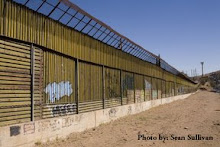
The Border Wall in Southern California - courtesy J.J. Castro

Environmental justice is defined by the Environmental Protection Agency to mean that “no group of people, including racial, ethnic, or socioeconomic groups, should bear a disproportionate share of the negative environmental consequences resulting from industrial, municipal, and commercial operations or the execution of federal, state, local, and tribal environmental programs and policies” (EPA Fact Sheet). This sentiment was codified by President Clinton in executive order 12898 (Federal Action to Address Environmental Justice [EJ] in Minority Populations and Low-Income Populations), which provides that “each Federal agency must identify and address, as appropriate, disproportionately high and adverse human health or environmental effects of its programs, policies, and activities on minority populations and low-income populations in the U.S.”

In 2004, the Operation Rio Grande Environmental Impact Statement found that environmental justice was indeed an issue for projects in the Rio Grande Valley:

"Approximately 85% of the population in the area can be classified as minority (well above the state average of 39.4%). The median annual household incomes for the counties in the project area (Starr, $10,182; Hidalgo, $16,703; and Cameron, $17,336) are well below the state average of $27,016 and, in the case of Starr County, below the $15,000 established by the EPA for defining the economic status risk group. Therefore, many of the households in the project area doubtless have a high potential EJ index." (Operation Rio Grande EIS, Section 3.12.6)

However, in the 2007 Draft Rio Grande Valley Border Fence EIS, it is claimed that the protections of environmental justice do not apply. This questionable judgment is achieved by sleight of hand and is revealed in the following quote:

"Of the 21 fence sections, 11 are within census bureau tracts in which a portion of the tracts have a higher proportion of minority or low-income residents. Of the proposed 70 miles of tactical infrastructure, substantially less than half is within census bureau tracts that have a higher proportion of minority or low-income residents—therefore the overall impacts of the proposed tactical infrastructure would not fall disproportionately on minority or low-income populations." (Section 5. 5.11)

Rather than stating that the majority of people who will be negatively impacted by the border wall are poor and/or minorities, which is what environmental justice is all about, the EIS counts miles. Miles that fall within US Fish and Wildlife refuge tracts, where no people live, are counted along with the miles that pass through poor communities, allowing them to dilute, at least on paper, the wall’s impact on minority and low-income populations. Mileage is irrelevant to the question of environmental justice. The question is whether a disproportionately high number of the people who will be negatively affected are members of minority and/or low income populations.

The EIS does mention in passing that people will lose their homes, stating that, “Construction of the project would require some acquisition of private property, including the potential dislocation of some property owners and tenants.” “Dislocation” is of course a euphemism for eviction. In communities like Granjeno, where families have passed property down through the generations since the Spanish land grants of the 1760’s, up to a third of the homes will be impacted.

Residents evicted to build the Berlin Wall

Hard-working people who may not have the money to hire lawyers are going to have their homes bulldozed or family farms sliced in two for a wall that won’t stop anyone. DHS is prepared to perpetrate a terrible injustice against the very U.S. citizens that they are supposed to protect.

The grassroots coalition No Border Wall is concerned that the Department of Homeland Security is papering over the real human hardships that a border wall tearing through Rio Grande Valley communities will cause and that minorities and the poor will bear the brunt of the damage of a misguided and politically-motivated project.

Wednesday, November 28, 2007

The Two Faces of Senator Cornyn

With the introduction of S. 2348, the “Emergency Border Security Funding Act of 2007”, Texas Senator John Cornyn has once again shown that he values the worst politics ahead of the best interests of Texas and our nation. It calls for at least 700 linear miles of border wall and 300 miles of vehicle barriers along the US – Mexico border, and provides $3 billion dollars to get construction started. This despite the fact that the walls built so far have had not impacted the number of people coming across the border.


In October, speaking to the Border Trade Alliance, Cornyn said, “I have long said that I do not support a fence, or as some said, a wall, between the United States and Mexico. That’s irrational and just doesn’t make sense, because we know that people can come over fences or walls; they can go under them; they can go through them, given sufficient opportunity.”

News from the border bears out Senator Cornyn’s statement. 24 tunnels have been found under just the 14 miles of wall that lie south of San Diego. The number of crossers apprehended there increased by 7% in fiscal 2007, despite the fact that San Diego has the most heavily fortified wall on our southern border. The border wall suffers daily breaches, and crews have been assigned to the never-ending task of fixing holes sliced through the steel walls and filling tunnels. The Congressional Research Service estimates that the annual cost of repairs will reach $8.3 million per mile.

In the Rio Grande Valley, where there currently is no wall, apprehensions of crossers dropped by 34% in fiscal 2007. Rather than analyze their success in Texas and their failure in California, Department of Homeland Security plans to begin construction of 70 miles of wall, which they prefer to call “tactical infrastructure”, in the Rio Grande Valley in the Spring of 2008. It will plow through people’s homes, businesses, farm fields, historic buildings, tracts of the Lower Rio Grande National Wildlife Refuge, and Texas Parks and Wildlife World Birding Centers.


Once again, Senator Cornyn is talking out of both sides of his mouth. When he visits the border, where people know that a wall will do tremendous damage but no good, he says that he does not support a wall. He says that there should be public input, ignoring the fact that there has been no real public input to date. When he is back in Washington, he panders to far-right xenophobes and sponsors legislation providing $3 billion to build border walls in Texas that he knows won’t work, and that he claims not to support.

Tuesday, November 13, 2007

The Wall Does Not Work

Department of Homeland Security Secretary Michael Chertoff announced that the number of undocumented immigrants apprehended by the Border Patrol dropped in the 2007 fiscal year, from 1,071,972 to 858,638. He credited this to increased enforcement along the southern border, including the construction of another 70 miles of border wall. It was, he claimed, proof that the border wall works, and therefore, “What it ought to do is encourage us to step up the tempo."

But the numbers that he was promoting prove the opposite. In San Diego apprehensions increased by 7%. San Diego was the first part of the border to get “triple fencing”. It consists of a primary fence made of steel slabs and a secondary steel mesh fence. Between the two there is a cleared area of 100 feet with a graded patrol road and light and camera towers. The Border Patrol began construction of this stretch of border wall in 1996, and it currently runs inland from the Pacific Ocean for 14 miles.

In contrast to the increase in the number of people crossing near San Diego, the Del Rio, Texas, sector saw a 45% drop. Del Rio, like all of Texas aside from El Paso, has no border wall. The Secure Fence Act calls for “2 layers of reinforced fencing, the installation of additional physical barriers, roads, lighting, cameras, and sensors… extending from 5 miles northwest of the Del Rio, Texas, port of entry to 5 miles southeast of the Eagle Pass, Texas, port of entry,” but so far none has been built.

So in the place where the wall has been built and has been up for a decade, border crossings are on the rise. Where there is no wall crossings have dropped dramatically.

The fact that the border wall does not stop anyone from crossing has been pointed out numerous times since Congress passed the Secure Fence Act, just two weeks ahead of the 2006 midterm elections. The Border Patrol has said repeatedly that it will only slow a crosser down by a few minutes or a few seconds. In its June 5, 2007 report Border Security: Barriers Along the U.S. International Border the Congressional Research Service stated, “The primary fence, by itself, did not have a discernible impact on the influx of unauthorized aliens coming across the border in San Diego.”
Despite all of this, Secretary Chertoff is moving ahead with plans to bring the same level of destruction, expense, and ultimate failure that characterize the San Diego wall to the comparatively successful area of Del Rio. In the same press conference in which he crowed about the Border Patrol’s success in the areas where there has never been a wall, he indicated that he will use the power that the Real ID Act grants him to waive laws in Texas if construction of a wall is slowed by citizens who insist that he obey our nation's laws.

Instead of willfully violating our nation’s laws to build a wall that will not work, Chertoff should be looking at his department’s own statistics to find out what is working and what is not. The fact that he has not already done this is further evidence that construction of the border wall is driven by ideology and election politics, rather than an interest in constructively addressing a complex issue. Congress never should have granted an unelected Administration appointee the power to brush aside all of our nation’s laws, and they should immediately repeal section 102 of the Real ID Act and restore the rule of law.

Thursday, November 1, 2007

Defenders of Wildlife and the Sierra Club challenge the constitutionality of the Real ID Act

Today, Defenders of Wildlife and the Sierra Club stepped up their efforts to save crucial environmental protections as well as unique wildlife and lands along the U.S.-Mexico border. The groups have filed an amended complaint in U.S. district court which challenges as unconstitutional the Bush administration’s power to single-handedly waive any and all United States laws to continue construction of border wall segments in environmentally sensitive areas.

On October 10, U.S. District Court Judge Ellen S. Huvelle issued a temporary restraining order stopping border wall and road construction within the San Pedro Riparian National Conservation Area, saying that the Department of Homeland Security (DHS) and the Bureau of Land Management, which oversees the San Pedro area, hadn’t properly analyzed the impacts of the construction on wildlife and other natural resources, and that the agencies had failed to include the public in their decision-making process. DHS Secretary Michael Chertoff responded by invoking the REAL ID Act to waive 19 laws in order to resume construction of this particular wall segment.

“Instead of fixing these shortcomings and incorporating environmental protection into national security efforts, Secretary Chertoff took it upon himself to waive 19 laws. These laws were put in place to provide all of us with clean air and water and ensure our treasured places and wildlife are protected,” said Rodger Schlickeisen, president of Defenders of Wildlife. “The Secretary’s action was a clear and unprecedented abuse of authority and demonstrated a profound disregard for the system of checks and balances assured in our constitution. The Secretary left us no choice but to address the unconstitutional nature of the REAL ID Act.”

“The Bush administration should know that we have the ability to protect our nation while at the same time preserving the unique wildlife and treasured lands along the border,” said Carl Pope, Sierra Club Executive Director. “Arbitrarily waiving environmental protections is an extreme path to tread.”

Under the REAL ID Act, Congress gave the DHS Secretary unrestricted power to waive any law—federal, state or local—that would otherwise apply to border wall and road construction. The groups’ amended complaint alleges that this unprecedented authority violates the fundamental separation of powers principles enshrined in the United States Constitution. They argue that by delegating the power to pick and choose which laws will apply to border wall construction, Congress has unconstitutionally given away its lawmaking responsibilities to a politically-appointed Executive branch official who is not accountable to the American public.

Despite the fact that the groups’ lawsuit was based on violations of only three laws, Sec. Chertoff responded by waiving 19 laws intended to protect wildlife and endangered species, clean water and air, safe drinking water, and cultural, historic and archeologically significant resources.