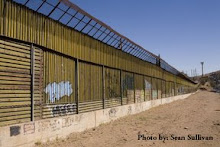
Yesterday HR 1505, authored by Representative Rob Bishop (R-UT), made it onto the floor of the US House of Representatives. HR 1505 would expand the Real ID Act waiver that former Homeland Security Secretary Chertoff issued in 2008, which allowed for the construction of hundreds of miles of border walls by waiving 36 federal laws that the walls would have otherwise violated. Bishop's bill waives the same laws for any activity undertaken by the Border Patrol on all federal lands within 100 miles of both the northern and southern borders.
The Coalition of National Park Service Retirees immediately issued a press release, stating their opposition to a bill that would do tremendous harm to national parks and other protected lands:
NPS RETIREES: 54 NATIONAL PARK AREAS JEOPARDIZED UNDER BOGUS “NATIONAL SECURITY” BILL ADVANCING IN U.S. HOUSE
Among National Parks Threatened With Unrestricted Construction and Road Building: Olympic, Glacier, Voyageurs, Isle Royale, Big Bend, Joshua Tree, Acadia and Saguaro; Sites in AK, AZ, CA, ME, MI, MN, MT, NM, ND, OH, TX and WA Seen As At Risk.
WASHINGTON, D.C. – April 18, 2012 -- Legislation pending in the U.S. House of Representatives that is being falsely touted as improving U.S. border security would instead “have the potential to devastate 54 of America’s national parks, historic sites, national monuments and other popular park icons and negatively impact the nation’s economy,” according to a warning issued today by the Coalition of National Park Service Retirees (CNPSR). H.R. 1505, the mistitled “National Security and Federal Lands Protection Act,” would gut a century’s worth of proven federal lands protection, potentially opening up millions of pristine acres of national parks to off-road vehicle use, road construction, air strips and helipads, fencing, base installations, and other disruptions.
This radical legislation introduced by Rep. Rob Bishop (R-UT) would suspend the enforcement of almost all the nation’s environmental laws on all lands under the jurisdiction of the Departments of the Interior and Agriculture within 100 miles of the northern border with Canada and the southern border with Mexico. It would change the targeted national park and other federal areas into security zones and leave priceless resources unprotected. Such dramatic changes to the integrity of our national parks and forests would almost certainly damage local economies, which have evolved to depend on the tourism, jobs, and related economic benefits generated by these national assets. Why would families seeking the natural and cultural wonders and transformative outdoor experiences of our national parks choose to visit such Border Patrol-controlled areas criss-crossed by new roads, penetrated by noisy all-terrain vehicles, and dominated by tactical infrastructure?
Among the National Park Service areas that fall within H.R. 1505’s proposed 100-mile zone of potential devastation are Acadia, Big Bend, Carlsbad Caverns, Cuyahoga Valley, Glacier, Glacier Bay National Park and Preserve, Guadalupe Mountains, Isle Royale, Joshua Tree, North Cascades, Olympic, Saguaro, Theodore Roosevelt, Voyageurs, and Wrangell-St. Elias National Park and Preserve. The combined total acreage of these 15 parks is 21,657,399, nearly 25 percent of the overall footprint U.S. National Park System. They are located within the states of Alaska, Arizona, California, Maine, Michigan, Minnesota, Montana, New Mexico, North Dakota, Ohio, Texas, and Washington.
CNPSR Chair Maureen Finnerty said: “This legislative proposal is perhaps the most direct assault on national parks ever to be advanced at any level in any Congress in U.S. history. It threatens to literally stop all enforcement of several landmark environmental and conservation laws that NPS uses to manage and protect the National Park System and to serve millions of park visitors. The outrage here is that national parks and other U.S. crown jewels could end up being trashed in the name of achieving national security gains that are fictitious.”
Among the 36 laws that would be expressly suspended within 100 miles of the borders with Canada and Mexico are virtually all environmental, historic preservation, wildlife, pollution, and tribal protection laws, including the National Park Service Organic Act, 1916 (the act that requires park areas to be managed for conservation and enjoyment so as to leave them unimpaired); the Wilderness Act, 1964; the National Environmental Policy Act, 1969; the National Historic Preservation Act, 1966; the Endangered Species Act, 1973; the Clean Water and Clean Air Acts; the Archeological Resources Protection Act, 1979. All these laws are critically important to maintaining the integrity of America’s national parks.
H.R. 1505’s remaining provisions are no less extreme. For example, the bill independently provides “immediate access” to U.S. Customs and Border Patrol for road, equipment, and infrastructure construction and motorized vehicle use on national parks and all the other lands under the jurisdiction of both the Secretary of Agriculture, home of the U.S. Forest Service, and the Secretary of the Interior, home of the National Park Service, the U.S. Fish and Wildlife Service, and the Bureau of Land Management. In addition, the bill prohibits these Secretaries from “impeding, prohibiting or restricting activities of the U.S. Customs and Border Patrol” on national parks or any of the other lands. Thus, even without the cynical waiver of virtually all environmental laws within 100 miles of the northern and southern borders, this bill achieves essentially the same result, and applies throughout the entire United States, through its remaining provisions.
Furthermore, in light of the interagency collaboration and achievements made under existing authorities, this harmful legislation is not needed. Homeland Security Secretary Janet Napolitano testified on March 8, 2012, that the bill “is unnecessary, and it’s bad policy.” And officials from the U.S. Border Patrol testified against the bill in Congress on July 8, 2011, explaining that “U.S. Customs and Border Protection (CBP) enjoys a close working relationship with the Department of Interior (DOI) and Department of Agriculture (USDA) that allows us to fulfill our border enforcement responsibilities while respecting and enhancing the environment. We respect the missions of these agencies, and we recognize the importance of preserving the American landscape. Our agencies have formed a number of agreements that allow us to carry out both of these missions. CBP believes that efforts to reduce the number of illegal aliens crossing the border have lessened environmental degradation and have assisted with recovery of damaged resources, and we are fully committed to continuing our cooperative relationships with DOI and USDA to further this good work.” See the testimony online at http://www.dhs.gov/ynews/testimony/20110708-cbp-national-security-federal-lands-protection-act.shtm.
H.R. 1505 is only one of several pending bills that similarly threaten national parks and other park, refuge, and wilderness lands under the jurisdiction of the Secretaries of the Interior and Agriculture in the name of border security. For example, Senators McCain (R-AZ) and Kyl (R-AZ) and Representative Quayle (R-AZ) are sponsoring amendments to the authorization legislation for the Department of Homeland Security that would have also have devastating impacts on national parks and other Federally protected lands and are unwarranted for national security.
CNPSR’s Finnerty pointed out that “while the other bills do not have the express waiver of virtually all environmental laws like H.R. 1505, they accomplish essentially the same result by allowing the Border Patrol to make decisions on activities like motorized patrol and construction of roads and infrastructure in national park and other conservation areas. It may be that these bills are too radical for Congress to pass or the President to sign as stand-alone bills, thus making it the far greater danger that Congress will tack the park-wrecking provisions onto another must-sign piece of legislation, like an appropriations bill. All these bills are terrible policy, unnecessary for national security, and must be stopped.”
ABOUT CNPSR
The more than 800 members of the Coalition of National Park Service Retirees are all former employees of the National Park Service with a combined over 24,000 years of stewardship of America’ most precious natural and cultural resources. In their personal lives, CNPSR members reflect the broad spectrum of political affiliations. CNPSR members now strive to apply their credibility and integrity as they speak out for national park solutions that uphold law and apply sound science. The Coalition counts among its members: former National Park Service leaders at the national, regional, and park levels, park rangers, and other career professionals who devoted an average of nearly 30 years each to protecting and interpreting America’s national parks on behalf of the public. For more information, visit the CNPSR Web site at http://www.npsretirees.org.
Showing posts with label Department of the Interior. Show all posts
Showing posts with label Department of the Interior. Show all posts
Wednesday, April 18, 2012


Monday, August 29, 2011
New Study: Border Hysteria Imperils Wildlife
by Dan Millis
In a Congress plagued by immigration hysteria, none is more gravely afflicted than South Carolina’s Republican Senator Jim DeMint. Twice in two weeks he added border pork to Senate bills, both times calling for 300-plus miles of walls to be imposed between the U.S. and Mexico. These are the fourth and fifth times in less than two years that he has made such attempts.
Delirious and angry lawmakers like DeMint seem oblivious to the 650 miles of barriers and walls that already occupy the Southwest’s borderlands, exacting high costs on taxpayers and public lands. Another side effect these lawmakers suffer is an acute indifference to the impacts caused by their border madness.
A new study in the Diversity and Distributions journal identifies 49 species put most at risk by border walls and areas of intensive human land use along the U.S.-Mexico border. The study only considers amphibian, reptile, and non-volant (don't fly) mammal species, and identifies California, the Sky Islands, the Gulf Coast as the three regions most heavily impacted.
One unique aspect of this study is that it doesn’t just look at current impacts wrought by existing border walls and areas with a heavy human footprint. Potential future impacts from border wall expansions such as those proposed by DeMint are also taken into consideration, and the results are sobering:

This graph from the study shows a horizontal base line representing our 2,000 mile border with Mexico. The three faint vertical lines in the left half of the graph represent the state borders between California, Arizona, New Mexico, and Texas. The fatter horizontal line sitting atop the baseline shows where the taller “pedestrian” (10-25 feet tall) border walls are located along the border.
Then there is the vertical ‘species’ scale, which includes only species from the sample set that have already been listed as threatened, either binationally or by the International Union for the Conservation of Nature. The dashed line represents how many of these already-threatened species are put in grave danger by existing “pedestrian” border walls in each geographic location along the border. You’ll notice that there are few such species, which may be expected when working with such a small sample set of species to begin with.
However, the solid line is much less benign, with the number of vulnerable species spiking most dramatically here in Arizona (to the right [East] of first faint vertical line [CA-AZ border]). This line represents the number of already threatened species that would be pushed to the brink if proposals like DeMint’s were passed and border walls came to occupy even more precious habitat.

A key finding of the study states, "The REAL ID Act should be amended to reinstate environmental regulation of border security efforts." The REAL ID waiver of more than 30 vital federal protection laws along the border allowed walls to be built in violation of the Wilderness Act, the Endangered Species Act, and more.
Dan Millis is a Sierra Club Borderlands campaign organizer. To learn more about the Sierra Club's Borderlands Campaign visit http://sierraclub.org/borderlands/
Friday, July 29, 2011
New Amendments Threaten Protected Lands
US representative Gosar has introduced two amendments (no. 20 and 55) to the Department of the Interior's annual appropriations bill that would do tremendous damage to our nation's protected federal lands. Representative Gosar’s (R-AZ) amendment No. 20 is an extreme attack on public lands even more overreaching than recent controversial legislation (H.R. 1505). Under this amendment the U.S. Border Patrol would be exempted from any regulation that would “impede or obstruct” patrol activities on every acre of federal land throughout the United States, putting national treasures at risk and throwing away a century of laws designed to protect our natural resources.
What federal lands would be put at risk?
• All of them. This amendment decimates environmental and other protections on every single acre of federally owned lands, from areas in the southwest already at risk from Border Patrol Activities, like the Cabeza Prieta National Wildlife Refuge in Arizona, to places far from the border, including the Grand Canyon, Yellowstone National Park, and the Cape Hatteras National Seashore.
• This amendment is NOT restricted to areas near the southwest border or even to areas near all borders, as past legislation has proposed.
What laws would be overturned?
• All of them. This amendment is even more overreaching in its impact on federal lands than the controversial H.R. 1505 because it is not restricted to a long list of environmental regulations, but prevents the enforcement of any regulation, even those put in place for safety and other reasons.
• Other regulations that could be completely ignored are those that support economic development, allowing Border Patrol to interfere with grazing, mining, and drilling for oil and gas on public lands.
What Border Patrol activities would be exempted from any oversight?
• All of them. The amendment does not clearly define what “impede or obstruct” means or who would decide whether a law or regulation meets this standard and could therefore be ignored.
• The amendment is even more overreaching than past bills on the Border Patrol because it does not limit exempted activities to “operational control” – or activities specifically intended to prevent illegal entry into the country. Instead it exempts all “patrol activities” which, without definition, could mean any activity undertaken by the Border Patrol.
• This will create conflict between agencies that have begun to work very effectively together to resolve issues surrounding Border Patrol activities.
Is the amendment even needed by the Border Patrol?
• No. The amendment would override multiagency coordination that has been occurring on Federal lands since a 2006 Memorandum of Agreement between the Departments of Homeland Security, Interior, and Agriculture that has led to increased cooperation and leveraged resources.
• 22 out of 26 Border Patrol stations on the southern border with Mexico report that the border security of their area of operation has not been affected by land management laws beyond some minor delays. Instead, factors like rugged terrain—and not access delays or restrictions—have the highest impact on operational control.
• Exemptions already exist that allow Border Patrol Officers in pursuit to continue onto any federal land regardless of regulations or laws. Other exemptions have also been established administratively to ensure the Border Patrol has the access necessary to secure the border.
In addition, Rep. Gosar has also introduced amendment No. 55, another extreme attack on federal lands. Similar to amendment No. 20, this amendment would exempt the Border Patrol from any environmental review, from protecting clean air and water, from honoring and respecting the history and culture of native people, from preserving biodiversity, and more.
Who isn’t hurt by this amendment?
Representative Gosar’s friends in industries like oil and gas drilling, grazing, mining, and logging are taken off the hook in this updated version of amendment No. 20. Amendment No. 20 exempts the Border Patrol from “any regulation” meaning that rules allowing for development and resources extraction could also be trampled by any Border Patrol activities. Amendment No. 55, however, spares these special interests and instead focuses its attack on the environment, biodiversity, and native people.
What environmental and cultural laws would be overturned?
A similar list of laws to that found in H.R. 1505 is included in the amendment. These laws represent a century of bipartisan efforts to protect the environment, intelligently manage public lands, and demonstrate respect for historical and cultural sites.
The exempted laws include:
The National Environmental Policy Act of 1969 (42 U.S.C. 4321 et seq.)
The Endangered Species Act of 1973 (16 U.S.C. 1531 et seq.)
The Clean Water Act (33 U.S.C. 1251 et seq.)
The National Historic Preservation Act (16 U.S.C. 470 et seq.).
The Migratory Bird Treaty Act (16 U.S.C. 703 et seq.)
The Clean Air Act (42 U.S.C. 7401 et seq.).
The Archeological Resources Protection Act of 1979 (16 U.S.C. 18 470aa et seq.).
The Safe Drinking Water Act (42 U.S.C. 300f et seq.).
The Noise Control Act of 1972 (42 U.S.C. 4901 et seq.).
The Solid Waste Disposal Act (42 U.S.C. 6901 et seq.).
The Comprehensive Environmental Response, Compensation, and Liability Act of 1980 (42 U.S.C. 9601 et seq.)
The Archaeological and Historic Preservation Act' and the Archaeological Recovery Act (16 U.S.C. 469 et seq.).
The Antiquities Act (16 U.S.C. 431 et seq.).
The Historic Sites, Buildings, and Antiquities Act (16 U.S.C. 461 et seq.)
The Farmland Protection Policy Act (7 U.S.C. 4201 et seq.).
The Coastal Zone Management Act of 1972 (16 U.S.C. 1451 et seq.).
The Federal Land Policy and Management Act of 1976 (43 U.S.C. 1701 et seq.).
The Wilderness Act (16 U.S.C. 1131 et seq.).
The Bald Eagle Protection Act of 1940 (16 U.S.C. 668 et seq.).
The Native American Graves Protection and Repatriation Act (25 U.S.C. 3001 et seq.).
The American Indian Religious Freedom Act (42 U.S.C. 1996 et seq.).
The Religious Freedom Restoration Act of 1993 (42 U.S.C. 2000bb et seq.).
The Federal Grant and Cooperative Agreement Act of 1977 (31 U.S.C. 6303 et seq.)
What Species would be impacted?
The bill waives compliance with all provisions of the ESA on federal lands. Species throughout the nation that would be impacted include
In the Southwest
• Mexican spotted owl
• Desert tortoise
• Jaguar
• Ocelot
• Sonoran pronghorn
• Chiricahua leopard frog
Elsewhere in the country
• Florida Panther
• Canada lynx
• Polar bear
• Hawaii akepa (honeycreeper)
• Leatherback sea turtle
• West Indian manatee
What federal lands would be put at risk?
• All of them. This amendment decimates environmental and other protections on every single acre of federally owned lands, from areas in the southwest already at risk from Border Patrol Activities, like the Cabeza Prieta National Wildlife Refuge in Arizona, to places far from the border, including the Grand Canyon, Yellowstone National Park, and the Cape Hatteras National Seashore.
• This amendment is NOT restricted to areas near the southwest border or even to areas near all borders, as past legislation has proposed.
What laws would be overturned?
• All of them. This amendment is even more overreaching in its impact on federal lands than the controversial H.R. 1505 because it is not restricted to a long list of environmental regulations, but prevents the enforcement of any regulation, even those put in place for safety and other reasons.
• Other regulations that could be completely ignored are those that support economic development, allowing Border Patrol to interfere with grazing, mining, and drilling for oil and gas on public lands.
What Border Patrol activities would be exempted from any oversight?
• All of them. The amendment does not clearly define what “impede or obstruct” means or who would decide whether a law or regulation meets this standard and could therefore be ignored.
• The amendment is even more overreaching than past bills on the Border Patrol because it does not limit exempted activities to “operational control” – or activities specifically intended to prevent illegal entry into the country. Instead it exempts all “patrol activities” which, without definition, could mean any activity undertaken by the Border Patrol.
• This will create conflict between agencies that have begun to work very effectively together to resolve issues surrounding Border Patrol activities.
Is the amendment even needed by the Border Patrol?
• No. The amendment would override multiagency coordination that has been occurring on Federal lands since a 2006 Memorandum of Agreement between the Departments of Homeland Security, Interior, and Agriculture that has led to increased cooperation and leveraged resources.
• 22 out of 26 Border Patrol stations on the southern border with Mexico report that the border security of their area of operation has not been affected by land management laws beyond some minor delays. Instead, factors like rugged terrain—and not access delays or restrictions—have the highest impact on operational control.
• Exemptions already exist that allow Border Patrol Officers in pursuit to continue onto any federal land regardless of regulations or laws. Other exemptions have also been established administratively to ensure the Border Patrol has the access necessary to secure the border.
In addition, Rep. Gosar has also introduced amendment No. 55, another extreme attack on federal lands. Similar to amendment No. 20, this amendment would exempt the Border Patrol from any environmental review, from protecting clean air and water, from honoring and respecting the history and culture of native people, from preserving biodiversity, and more.
Who isn’t hurt by this amendment?
Representative Gosar’s friends in industries like oil and gas drilling, grazing, mining, and logging are taken off the hook in this updated version of amendment No. 20. Amendment No. 20 exempts the Border Patrol from “any regulation” meaning that rules allowing for development and resources extraction could also be trampled by any Border Patrol activities. Amendment No. 55, however, spares these special interests and instead focuses its attack on the environment, biodiversity, and native people.
What environmental and cultural laws would be overturned?
A similar list of laws to that found in H.R. 1505 is included in the amendment. These laws represent a century of bipartisan efforts to protect the environment, intelligently manage public lands, and demonstrate respect for historical and cultural sites.
The exempted laws include:
The National Environmental Policy Act of 1969 (42 U.S.C. 4321 et seq.)
The Endangered Species Act of 1973 (16 U.S.C. 1531 et seq.)
The Clean Water Act (33 U.S.C. 1251 et seq.)
The National Historic Preservation Act (16 U.S.C. 470 et seq.).
The Migratory Bird Treaty Act (16 U.S.C. 703 et seq.)
The Clean Air Act (42 U.S.C. 7401 et seq.).
The Archeological Resources Protection Act of 1979 (16 U.S.C. 18 470aa et seq.).
The Safe Drinking Water Act (42 U.S.C. 300f et seq.).
The Noise Control Act of 1972 (42 U.S.C. 4901 et seq.).
The Solid Waste Disposal Act (42 U.S.C. 6901 et seq.).
The Comprehensive Environmental Response, Compensation, and Liability Act of 1980 (42 U.S.C. 9601 et seq.)
The Archaeological and Historic Preservation Act' and the Archaeological Recovery Act (16 U.S.C. 469 et seq.).
The Antiquities Act (16 U.S.C. 431 et seq.).
The Historic Sites, Buildings, and Antiquities Act (16 U.S.C. 461 et seq.)
The Farmland Protection Policy Act (7 U.S.C. 4201 et seq.).
The Coastal Zone Management Act of 1972 (16 U.S.C. 1451 et seq.).
The Federal Land Policy and Management Act of 1976 (43 U.S.C. 1701 et seq.).
The Wilderness Act (16 U.S.C. 1131 et seq.).
The Bald Eagle Protection Act of 1940 (16 U.S.C. 668 et seq.).
The Native American Graves Protection and Repatriation Act (25 U.S.C. 3001 et seq.).
The American Indian Religious Freedom Act (42 U.S.C. 1996 et seq.).
The Religious Freedom Restoration Act of 1993 (42 U.S.C. 2000bb et seq.).
The Federal Grant and Cooperative Agreement Act of 1977 (31 U.S.C. 6303 et seq.)
What Species would be impacted?
The bill waives compliance with all provisions of the ESA on federal lands. Species throughout the nation that would be impacted include
In the Southwest
• Mexican spotted owl
• Desert tortoise
• Jaguar
• Ocelot
• Sonoran pronghorn
• Chiricahua leopard frog
Elsewhere in the country
• Florida Panther
• Canada lynx
• Polar bear
• Hawaii akepa (honeycreeper)
• Leatherback sea turtle
• West Indian manatee
Subscribe to:
Posts (Atom)