By Scott Nicol
How does waiving the Endangered Species Act in Hawaii help secure the U.S. – Mexico border?
Simple. It doesn’t.
But that obvious fact is irrelevant to Representative Rob Bishop of Utah, author of the National Security and Federal Lands Protection Act (HR 1505). Bishop claims that the Department of Homeland Security (DHS) cannot enforce immigration laws without violating the rest of our nation’s laws, so his bill waives 36 federal laws within 100 miles of the U.S. – Mexico border, the U.S. – Canada border, and all U.S. coastlines, for anything that DHS may want to do.
Most of the laws that HR 1505 tosses aside, including the Endangered Species Act, Migratory Bird Treaty Act, and Safe Drinking Water Act, protect the environment, but it also waives laws like the Farmland Policy Protection Act and the American Indian Religious Freedom Act.
This bill is an expansion of the Real ID Act, which gave the Secretary of Homeland Security the authority to waive local, state, and federal laws to build walls along the southern border.
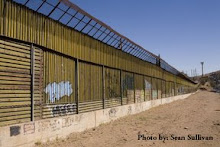
The existing Real ID Act waivers, which HR 1505 expands, have caused tremendous environmental damage. To build border walls 530,000 cubic yards of rock was blasted from mountainsides in the Otay Mountain Wilderness Area; walls have caused serious flooding in the Organ Pipe Cactus National Monument; and walls fragment the Lower Rio Grande Valley National Wildlife Refuge, which was established for the preservation of endangered ocelots. Without the waiver, these walls would be illegal.
Bishop’s bill would also give DHS the run of all federally owned lands, in all 50 states, with absolutely no restrictions. Has a lack of access to the Everglades, or Hawaii’s Volcanoes National Park, or the lawn around the Statue of Liberty, prevented DHS from securing the southern border?
Not according to the Border Patrol.
The irony is that the Border Patrol, which operates under DHS’ umbrella, has not asked for the power to overrule land managers or ignore environmental laws. Last spring the Government Accountability Office found that, “Most agents reported that land management laws have had no effect on Border Patrol’s overall measure of border security.”
When Rep. Bishop introduced a similar bill last year Brandon Judd of the National Border Patrol Council said, “I would definitely look and see if there are some restrictions that are too restrictive. But to get rid of all restrictions, you would destroy the land.”
Representative Bishop has a long history of attacking protected lands and environmental regulations. He is currently pushing for a repeal of the Antiquities Act and a ban on new National Monuments. HR 1505 is just more of the same.
This Wednesday the National Security and Federal Lands Protection Act will be up for a vote in the House Natural Resources Committee, which Rep. Bishop, in a bit of Orwellian irony, chairs. Packed with Tea Party darlings like Bishop, the bill is almost certain to pass and be sent on to the full House of Representatives.
This is the week to contact your representatives and tell them that HR 1505 is not about protecting our nation. It is an assault on federal lands and environmental laws using border security as a convenient cover, nothing more.
For more information, visit www.sierraclub.org/borderlands.
Showing posts with label Waiver. Show all posts
Showing posts with label Waiver. Show all posts
Tuesday, October 4, 2011


Friday, July 29, 2011
New Amendments Threaten Protected Lands
US representative Gosar has introduced two amendments (no. 20 and 55) to the Department of the Interior's annual appropriations bill that would do tremendous damage to our nation's protected federal lands. Representative Gosar’s (R-AZ) amendment No. 20 is an extreme attack on public lands even more overreaching than recent controversial legislation (H.R. 1505). Under this amendment the U.S. Border Patrol would be exempted from any regulation that would “impede or obstruct” patrol activities on every acre of federal land throughout the United States, putting national treasures at risk and throwing away a century of laws designed to protect our natural resources.
What federal lands would be put at risk?
• All of them. This amendment decimates environmental and other protections on every single acre of federally owned lands, from areas in the southwest already at risk from Border Patrol Activities, like the Cabeza Prieta National Wildlife Refuge in Arizona, to places far from the border, including the Grand Canyon, Yellowstone National Park, and the Cape Hatteras National Seashore.
• This amendment is NOT restricted to areas near the southwest border or even to areas near all borders, as past legislation has proposed.
What laws would be overturned?
• All of them. This amendment is even more overreaching in its impact on federal lands than the controversial H.R. 1505 because it is not restricted to a long list of environmental regulations, but prevents the enforcement of any regulation, even those put in place for safety and other reasons.
• Other regulations that could be completely ignored are those that support economic development, allowing Border Patrol to interfere with grazing, mining, and drilling for oil and gas on public lands.
What Border Patrol activities would be exempted from any oversight?
• All of them. The amendment does not clearly define what “impede or obstruct” means or who would decide whether a law or regulation meets this standard and could therefore be ignored.
• The amendment is even more overreaching than past bills on the Border Patrol because it does not limit exempted activities to “operational control” – or activities specifically intended to prevent illegal entry into the country. Instead it exempts all “patrol activities” which, without definition, could mean any activity undertaken by the Border Patrol.
• This will create conflict between agencies that have begun to work very effectively together to resolve issues surrounding Border Patrol activities.
Is the amendment even needed by the Border Patrol?
• No. The amendment would override multiagency coordination that has been occurring on Federal lands since a 2006 Memorandum of Agreement between the Departments of Homeland Security, Interior, and Agriculture that has led to increased cooperation and leveraged resources.
• 22 out of 26 Border Patrol stations on the southern border with Mexico report that the border security of their area of operation has not been affected by land management laws beyond some minor delays. Instead, factors like rugged terrain—and not access delays or restrictions—have the highest impact on operational control.
• Exemptions already exist that allow Border Patrol Officers in pursuit to continue onto any federal land regardless of regulations or laws. Other exemptions have also been established administratively to ensure the Border Patrol has the access necessary to secure the border.
In addition, Rep. Gosar has also introduced amendment No. 55, another extreme attack on federal lands. Similar to amendment No. 20, this amendment would exempt the Border Patrol from any environmental review, from protecting clean air and water, from honoring and respecting the history and culture of native people, from preserving biodiversity, and more.
Who isn’t hurt by this amendment?
Representative Gosar’s friends in industries like oil and gas drilling, grazing, mining, and logging are taken off the hook in this updated version of amendment No. 20. Amendment No. 20 exempts the Border Patrol from “any regulation” meaning that rules allowing for development and resources extraction could also be trampled by any Border Patrol activities. Amendment No. 55, however, spares these special interests and instead focuses its attack on the environment, biodiversity, and native people.
What environmental and cultural laws would be overturned?
A similar list of laws to that found in H.R. 1505 is included in the amendment. These laws represent a century of bipartisan efforts to protect the environment, intelligently manage public lands, and demonstrate respect for historical and cultural sites.
The exempted laws include:
The National Environmental Policy Act of 1969 (42 U.S.C. 4321 et seq.)
The Endangered Species Act of 1973 (16 U.S.C. 1531 et seq.)
The Clean Water Act (33 U.S.C. 1251 et seq.)
The National Historic Preservation Act (16 U.S.C. 470 et seq.).
The Migratory Bird Treaty Act (16 U.S.C. 703 et seq.)
The Clean Air Act (42 U.S.C. 7401 et seq.).
The Archeological Resources Protection Act of 1979 (16 U.S.C. 18 470aa et seq.).
The Safe Drinking Water Act (42 U.S.C. 300f et seq.).
The Noise Control Act of 1972 (42 U.S.C. 4901 et seq.).
The Solid Waste Disposal Act (42 U.S.C. 6901 et seq.).
The Comprehensive Environmental Response, Compensation, and Liability Act of 1980 (42 U.S.C. 9601 et seq.)
The Archaeological and Historic Preservation Act' and the Archaeological Recovery Act (16 U.S.C. 469 et seq.).
The Antiquities Act (16 U.S.C. 431 et seq.).
The Historic Sites, Buildings, and Antiquities Act (16 U.S.C. 461 et seq.)
The Farmland Protection Policy Act (7 U.S.C. 4201 et seq.).
The Coastal Zone Management Act of 1972 (16 U.S.C. 1451 et seq.).
The Federal Land Policy and Management Act of 1976 (43 U.S.C. 1701 et seq.).
The Wilderness Act (16 U.S.C. 1131 et seq.).
The Bald Eagle Protection Act of 1940 (16 U.S.C. 668 et seq.).
The Native American Graves Protection and Repatriation Act (25 U.S.C. 3001 et seq.).
The American Indian Religious Freedom Act (42 U.S.C. 1996 et seq.).
The Religious Freedom Restoration Act of 1993 (42 U.S.C. 2000bb et seq.).
The Federal Grant and Cooperative Agreement Act of 1977 (31 U.S.C. 6303 et seq.)
What Species would be impacted?
The bill waives compliance with all provisions of the ESA on federal lands. Species throughout the nation that would be impacted include
In the Southwest
• Mexican spotted owl
• Desert tortoise
• Jaguar
• Ocelot
• Sonoran pronghorn
• Chiricahua leopard frog
Elsewhere in the country
• Florida Panther
• Canada lynx
• Polar bear
• Hawaii akepa (honeycreeper)
• Leatherback sea turtle
• West Indian manatee
What federal lands would be put at risk?
• All of them. This amendment decimates environmental and other protections on every single acre of federally owned lands, from areas in the southwest already at risk from Border Patrol Activities, like the Cabeza Prieta National Wildlife Refuge in Arizona, to places far from the border, including the Grand Canyon, Yellowstone National Park, and the Cape Hatteras National Seashore.
• This amendment is NOT restricted to areas near the southwest border or even to areas near all borders, as past legislation has proposed.
What laws would be overturned?
• All of them. This amendment is even more overreaching in its impact on federal lands than the controversial H.R. 1505 because it is not restricted to a long list of environmental regulations, but prevents the enforcement of any regulation, even those put in place for safety and other reasons.
• Other regulations that could be completely ignored are those that support economic development, allowing Border Patrol to interfere with grazing, mining, and drilling for oil and gas on public lands.
What Border Patrol activities would be exempted from any oversight?
• All of them. The amendment does not clearly define what “impede or obstruct” means or who would decide whether a law or regulation meets this standard and could therefore be ignored.
• The amendment is even more overreaching than past bills on the Border Patrol because it does not limit exempted activities to “operational control” – or activities specifically intended to prevent illegal entry into the country. Instead it exempts all “patrol activities” which, without definition, could mean any activity undertaken by the Border Patrol.
• This will create conflict between agencies that have begun to work very effectively together to resolve issues surrounding Border Patrol activities.
Is the amendment even needed by the Border Patrol?
• No. The amendment would override multiagency coordination that has been occurring on Federal lands since a 2006 Memorandum of Agreement between the Departments of Homeland Security, Interior, and Agriculture that has led to increased cooperation and leveraged resources.
• 22 out of 26 Border Patrol stations on the southern border with Mexico report that the border security of their area of operation has not been affected by land management laws beyond some minor delays. Instead, factors like rugged terrain—and not access delays or restrictions—have the highest impact on operational control.
• Exemptions already exist that allow Border Patrol Officers in pursuit to continue onto any federal land regardless of regulations or laws. Other exemptions have also been established administratively to ensure the Border Patrol has the access necessary to secure the border.
In addition, Rep. Gosar has also introduced amendment No. 55, another extreme attack on federal lands. Similar to amendment No. 20, this amendment would exempt the Border Patrol from any environmental review, from protecting clean air and water, from honoring and respecting the history and culture of native people, from preserving biodiversity, and more.
Who isn’t hurt by this amendment?
Representative Gosar’s friends in industries like oil and gas drilling, grazing, mining, and logging are taken off the hook in this updated version of amendment No. 20. Amendment No. 20 exempts the Border Patrol from “any regulation” meaning that rules allowing for development and resources extraction could also be trampled by any Border Patrol activities. Amendment No. 55, however, spares these special interests and instead focuses its attack on the environment, biodiversity, and native people.
What environmental and cultural laws would be overturned?
A similar list of laws to that found in H.R. 1505 is included in the amendment. These laws represent a century of bipartisan efforts to protect the environment, intelligently manage public lands, and demonstrate respect for historical and cultural sites.
The exempted laws include:
The National Environmental Policy Act of 1969 (42 U.S.C. 4321 et seq.)
The Endangered Species Act of 1973 (16 U.S.C. 1531 et seq.)
The Clean Water Act (33 U.S.C. 1251 et seq.)
The National Historic Preservation Act (16 U.S.C. 470 et seq.).
The Migratory Bird Treaty Act (16 U.S.C. 703 et seq.)
The Clean Air Act (42 U.S.C. 7401 et seq.).
The Archeological Resources Protection Act of 1979 (16 U.S.C. 18 470aa et seq.).
The Safe Drinking Water Act (42 U.S.C. 300f et seq.).
The Noise Control Act of 1972 (42 U.S.C. 4901 et seq.).
The Solid Waste Disposal Act (42 U.S.C. 6901 et seq.).
The Comprehensive Environmental Response, Compensation, and Liability Act of 1980 (42 U.S.C. 9601 et seq.)
The Archaeological and Historic Preservation Act' and the Archaeological Recovery Act (16 U.S.C. 469 et seq.).
The Antiquities Act (16 U.S.C. 431 et seq.).
The Historic Sites, Buildings, and Antiquities Act (16 U.S.C. 461 et seq.)
The Farmland Protection Policy Act (7 U.S.C. 4201 et seq.).
The Coastal Zone Management Act of 1972 (16 U.S.C. 1451 et seq.).
The Federal Land Policy and Management Act of 1976 (43 U.S.C. 1701 et seq.).
The Wilderness Act (16 U.S.C. 1131 et seq.).
The Bald Eagle Protection Act of 1940 (16 U.S.C. 668 et seq.).
The Native American Graves Protection and Repatriation Act (25 U.S.C. 3001 et seq.).
The American Indian Religious Freedom Act (42 U.S.C. 1996 et seq.).
The Religious Freedom Restoration Act of 1993 (42 U.S.C. 2000bb et seq.).
The Federal Grant and Cooperative Agreement Act of 1977 (31 U.S.C. 6303 et seq.)
What Species would be impacted?
The bill waives compliance with all provisions of the ESA on federal lands. Species throughout the nation that would be impacted include
In the Southwest
• Mexican spotted owl
• Desert tortoise
• Jaguar
• Ocelot
• Sonoran pronghorn
• Chiricahua leopard frog
Elsewhere in the country
• Florida Panther
• Canada lynx
• Polar bear
• Hawaii akepa (honeycreeper)
• Leatherback sea turtle
• West Indian manatee
Thursday, June 9, 2011
Border Skirmish: Republicans Are Using Immigrants to Bash Our Wilderness
by Char Miller
It would be nice if Congress held executive-branch agencies accountable for their actions. Or insisted that they follow federal law. Or fulfill their fiduciary responsibilities to one another.
But the Republican-controlled House of Representatives is making a mockery of these basic rules of order and good government.
You won't be surprised that the latest bit of GOP chicanery involves its twin obsessions: the U.S-Mexico Border and national environmental regulations. Their hyperventilating defense of the former, as I've noted before, comes with blustery assaults on the latter.
Since November, Utah representative Rob Bishop, chair of the House subcommittee on public lands, along with his gal pal, Cynthia Lummis (R-WY), and a host of fellow travelers, have mounted an incessant campaign to allow the U. S. Border Patrol to ignore key provisions of the Wilderness Act, the Endangered Species Act, and other vital environmental laws.
Arguing that such legislation impedes the Border Patrol's capacity to defend the nation against undocumented migrants, they have filed amendments and riders to pending legislation, called public hearings to lambaste officials of the Department of Interior, and penned fulminating op-eds to rouse the party's extremist base.
Their most recent gambit came late last week in the form of an amendment to the Department of Homeland Security's appropriation. Rep. Lummis proposed, and a lock-step Republican vote secured, a rule prohibiting DHS from transferring funds to the Department of the Interior.
These moneys would have been used to mitigate the oft-intense environmental damage resulting from the construction of the infamous border wall across federal wildlife refuges, wildlands, and preserves, in such places as the Rio Grande Valley; Arizona's Organ Pipe Cactus National Monument; and the Otay Wilderness near San Diego. And from the spinning wheels of its high-speed patrols that can tear up wildlife habitat or damage sensitive ecosystems.
Such mitigation, required by law, is also sanctioned through longstanding practice among localities, states, and the federal government. It is also a matter of committed environmental stewardship.
Neither the precedent nor the principle matters to contemporary Republicans. In a "Dear Colleague" letter that Bishop, Rep. Doc Hastings (R-WA), chair of the Natural Resources Committee, and Rep. Peter King (R-NY), chair of the Committee on Homeland Security sent out in support of Lummis' amendment, they thrilled at its anti-environmentalism: "the amendment would strike language in the bill that allows these funds to be used by the Interior Department to purchase even more land. Additional federal land acquisition only exacerbates the problem by limiting access to even more land and further bloating the federal estate--at a time when the government cannot even afford to provide the basic care and maintenance needed for existing national parks and other lands."
(Query: why can't the government afford to take care of its treasured public lands? Answer: drastic Republican budget cuts!)
Lummis heaps just as much scorn on the legal obligations and moral responsibilities the government has for protecting our public lands: "Every day our nation's border patrol fights to protect our country against increasingly sophisticated criminal networks that produce and smuggle illegal drugs, and people, into America," she fumed. "Unfortunately, DOI policies have tied the hands of Border Patrol agents, who need access to federal lands to carry out their constitutional responsibility to secure the border."
Her allegation is bogus. The very same Government Accountability Office report that Lummis and Bishop routinely cite as evidence that environmental regulations have handcuffed the Border Patrol, in fact reached the opposite conclusion. In mid-April, for instance, the GAO found that "22 of the 26 patrol agents-in-charge reported that the overall security status of their jurisdiction had not been affected by land management laws. Instead, factors such as the remoteness and ruggedness of the terrain have had the greatest effect on their ability to achieve operational control in these areas."
The report also revealed that the four patrol agents-in-charge who had "reported that delays and restrictions had affected their ability to achieve or maintain operational control," admitted they "either had not requested resources for increased or timelier access or their requests had been denied by senior Border Patrol officials because of higher priority needs of the agency."
Moreover, the GAO investigation demonstrated that relevant agencies out in the field and inside the Beltway have developed close working relations. To argue otherwise, as Lummis and Bishop reflexively do, is to perpetuate a fraud.
Ah, but why let the facts get in your way when you can wrap yourself in the flag as protective cover? Trumpets Lummis: "our nation's security should be our top priority." Wilderness be damned.
Such a blinkered public policy, in point of fact, will lead us into damnation. That's the potent message embedded in Aldo Leopold's private correspondence and his brilliant conservation classic, Sand County Almanac (1948).
Arguing that wilderness is an irreplaceable part of our "cultural inheritance," and that even then was in precious, dwindling supply--it is a "resource that can shrink but cannot grow"--Leopold urged his fellow citizens to defend these beleaguered lands against those with a narrowly conceived notion of homeland securityhttp://www.blogger.com/img/blank.gif. "If we lose our wilderness, we have nothing left...worth fighting for."
Note, please, that Leopold was a Republican.
Char Miller is the Director and W.M. Keck Professor of Environmental Analysis at Pomona College, and editor of the just-published "Cities and Nature in the American West."
Reprinted with the author's permission, this essay was originally posted at KCET:
http://www.kcet.org/updaily/socal_focus/commentary/border-skirmish-republicans-are-using-immigrants-to-bash-our-wilderness-34146.html
It would be nice if Congress held executive-branch agencies accountable for their actions. Or insisted that they follow federal law. Or fulfill their fiduciary responsibilities to one another.
But the Republican-controlled House of Representatives is making a mockery of these basic rules of order and good government.
You won't be surprised that the latest bit of GOP chicanery involves its twin obsessions: the U.S-Mexico Border and national environmental regulations. Their hyperventilating defense of the former, as I've noted before, comes with blustery assaults on the latter.
Since November, Utah representative Rob Bishop, chair of the House subcommittee on public lands, along with his gal pal, Cynthia Lummis (R-WY), and a host of fellow travelers, have mounted an incessant campaign to allow the U. S. Border Patrol to ignore key provisions of the Wilderness Act, the Endangered Species Act, and other vital environmental laws.
Arguing that such legislation impedes the Border Patrol's capacity to defend the nation against undocumented migrants, they have filed amendments and riders to pending legislation, called public hearings to lambaste officials of the Department of Interior, and penned fulminating op-eds to rouse the party's extremist base.
Their most recent gambit came late last week in the form of an amendment to the Department of Homeland Security's appropriation. Rep. Lummis proposed, and a lock-step Republican vote secured, a rule prohibiting DHS from transferring funds to the Department of the Interior.
These moneys would have been used to mitigate the oft-intense environmental damage resulting from the construction of the infamous border wall across federal wildlife refuges, wildlands, and preserves, in such places as the Rio Grande Valley; Arizona's Organ Pipe Cactus National Monument; and the Otay Wilderness near San Diego. And from the spinning wheels of its high-speed patrols that can tear up wildlife habitat or damage sensitive ecosystems.
Such mitigation, required by law, is also sanctioned through longstanding practice among localities, states, and the federal government. It is also a matter of committed environmental stewardship.
Neither the precedent nor the principle matters to contemporary Republicans. In a "Dear Colleague" letter that Bishop, Rep. Doc Hastings (R-WA), chair of the Natural Resources Committee, and Rep. Peter King (R-NY), chair of the Committee on Homeland Security sent out in support of Lummis' amendment, they thrilled at its anti-environmentalism: "the amendment would strike language in the bill that allows these funds to be used by the Interior Department to purchase even more land. Additional federal land acquisition only exacerbates the problem by limiting access to even more land and further bloating the federal estate--at a time when the government cannot even afford to provide the basic care and maintenance needed for existing national parks and other lands."
(Query: why can't the government afford to take care of its treasured public lands? Answer: drastic Republican budget cuts!)
Lummis heaps just as much scorn on the legal obligations and moral responsibilities the government has for protecting our public lands: "Every day our nation's border patrol fights to protect our country against increasingly sophisticated criminal networks that produce and smuggle illegal drugs, and people, into America," she fumed. "Unfortunately, DOI policies have tied the hands of Border Patrol agents, who need access to federal lands to carry out their constitutional responsibility to secure the border."
Her allegation is bogus. The very same Government Accountability Office report that Lummis and Bishop routinely cite as evidence that environmental regulations have handcuffed the Border Patrol, in fact reached the opposite conclusion. In mid-April, for instance, the GAO found that "22 of the 26 patrol agents-in-charge reported that the overall security status of their jurisdiction had not been affected by land management laws. Instead, factors such as the remoteness and ruggedness of the terrain have had the greatest effect on their ability to achieve operational control in these areas."
The report also revealed that the four patrol agents-in-charge who had "reported that delays and restrictions had affected their ability to achieve or maintain operational control," admitted they "either had not requested resources for increased or timelier access or their requests had been denied by senior Border Patrol officials because of higher priority needs of the agency."
Moreover, the GAO investigation demonstrated that relevant agencies out in the field and inside the Beltway have developed close working relations. To argue otherwise, as Lummis and Bishop reflexively do, is to perpetuate a fraud.
Ah, but why let the facts get in your way when you can wrap yourself in the flag as protective cover? Trumpets Lummis: "our nation's security should be our top priority." Wilderness be damned.
Such a blinkered public policy, in point of fact, will lead us into damnation. That's the potent message embedded in Aldo Leopold's private correspondence and his brilliant conservation classic, Sand County Almanac (1948).
Arguing that wilderness is an irreplaceable part of our "cultural inheritance," and that even then was in precious, dwindling supply--it is a "resource that can shrink but cannot grow"--Leopold urged his fellow citizens to defend these beleaguered lands against those with a narrowly conceived notion of homeland securityhttp://www.blogger.com/img/blank.gif. "If we lose our wilderness, we have nothing left...worth fighting for."
Note, please, that Leopold was a Republican.
Char Miller is the Director and W.M. Keck Professor of Environmental Analysis at Pomona College, and editor of the just-published "Cities and Nature in the American West."
Reprinted with the author's permission, this essay was originally posted at KCET:
http://www.kcet.org/updaily/socal_focus/commentary/border-skirmish-republicans-are-using-immigrants-to-bash-our-wilderness-34146.html
Thursday, August 5, 2010
Destroying the Borderlands to Secure the Border
By Scott Nicol
In the 1990’s politicians trying to explain away all of America’s ills, without blaming American voters or accepting their own fair share of blame, turned their attention towards the southern border. The ebb and flow of migrants across the border, which had been occurring since the Treaty of Guadalupe Hidalgo established it at its present location, was recast as an invasion. The invaders (who were, conveniently, ineligible to vote) were blamed for rising crime and failing schools, unemployment and overstretched social services. Clearly, the invasion must be stopped before the nation was overwhelmed.
Time to call in the troops and wall off the border.
The first 14 miles of border wall, extending from the Pacific Ocean inland, were built of rusting steel helicopter landing mats left over from the Vietnam War crudely welded together. A second layer, 15-feet tall and made of steel mesh, was later added north of the first wall. In the no-man’s-land between these two walls was a graded road for Border Patrol vehicles, with towers for surveillance cameras and stadium lights.
Time to call in the troops and wall off the border.
The first 14 miles of border wall, extending from the Pacific Ocean inland, were built of rusting steel helicopter landing mats left over from the Vietnam War crudely welded together. A second layer, 15-feet tall and made of steel mesh, was later added north of the first wall. In the no-man’s-land between these two walls was a graded road for Border Patrol vehicles, with towers for surveillance cameras and stadium lights.

The landing mat border wall entering the ocean between San Diego and Tijuana.
In 2004 the California Coastal Commission and environmental groups, including the Sierra Club, sued to stop the Border Patrol’s plan to plug several canyons in order to create a level path for the border wall. The court found that the Border Patrol was in violation of federal environmental laws and that such a fill project would have a devastating impact on the Tijuana Estuary. The judge ordered that construction be halted.
In order to override the court’s decision, a provision was inserted into the Real ID Act of 2005 giving the unprecedented power to the US Attorney General (later transferred to the Secretary of Homeland Security) to waive all federal, state, and local laws, environmental and otherwise, to build border walls. Former Secretary of Homeland Security Michael Chertoff used the Real ID Act to brush aside the laws that had stopped the border wall, and resumed construction. In waiving those laws he was admitting that border wall construction would violate them.
A few hundred feet from the border wall’s starting point in the Pacific, the Tijuana River Estuary spills into the sea. It is the largest of Southern California’s remaining salt marshes, where over 90% of wetland habitat has been lost to development. The combined Tijuana River Slough National Wildlife Refuge, Tijuana River National Estuarine Research Reserve and Border Field State Park protect sand dunes and beaches, vernal pools, tidal channels, mudflats and coastal sage scrub. During the wet winter season, water drains into the marsh from the Tijuana River and surrounding creeks and canyons, infusing the marsh with fresh water and creating a delicate balance on which its many highly sensitive habitats depend. The site is a key stopover point on the Pacific Flyway, and provides over 370 species of migratory and native birds, including six endangered species, with essential breeding, feeding and nesting grounds.

Smuggler's Gulch filled in to make way for the border wall.
Following the passage of the Real ID Act the canyon known as Smuggler’s Gulch, south of San Diego, was filled in with over 2 million cubic yards of earth that had been ripped from adjacent mountaintops. A border wall was then perched on top. With no regulations in place and no oversight by other agencies, the Department of Homeland Security (DHS) put little effort into erosion control, and the still bare slopes of the earthen dam threaten to wash tremendous amounts of dirt into the Tijuana River National Estuarine Research Reserve, which is only 600 feet away. In addition to smothering vegetation, burying the estuary in sediment may raise its surface level enough to disrupt the twice-daily inundation of sea water upon which its fragile ecosystem depends.
A few miles up the Tijuana River, the Otay Mountain region is home to the last surviving stands of Tecate cypress, an ice age tree that survives by absorbing coastal moisture from the air. This tree in turn is the host plant for the rare Thorne’s hairstreak butterfly. In an attempt to protect these and other rare and endangered species that inhabit this unique ecosystem, 18,500 acres of the Otay Mountain region were designated a National Wilderness Area.

Border wall in the Otay Mountain Wilderness Area, California
When the Environmental Protection Agency reviewed the plan to build this section of border wall, they expressed concern that plans to fill in canyons and waterways that feed into the Tijuana River would violate the Clean Water Act. The Department of the Interior warned that 6 endangered species would also be harmed by the wall.San Diego Sector Border Patrol spokesman Richard Kite said in 2006, "At the mountain range, you simply don't need a fence. It's such harsh terrain it's difficult to walk, let alone drive. There's no reason to disrupt the land when the land itself is a physical barrier."
Ignoring his observation, DHS decided to “disrupt the land” of the Otay Mountain Wilderness Area with a border wall and an access road. The rugged terrain of the Wilderness Area necessitated the blasting and removal of 530,000 cubic yards of rock and extensive grading and leveling. The Otay Mountain Wilderness Area is so steep that the goal of blasting was to achieve an elevation grade of 15%, even though the Secure Fence Act states that if the elevation grade of an area exceeds 10% walls do not need to be constructed there. Border wall construction caused tremendous erosion, and involved cutting down more than 100 Tecate cypress trees.
Because this is clearly incompatible with a wilderness designation, the goal of which was to limit human activity and protect fragile ecosystems, the Otay Mountain Wilderness Act was among the 36 laws that former Homeland Security Secretary Chertoff suspended using the Real ID Act. He also swept aside the Clean Water Act and the Endangered Species Act, rather than listen to the concerns of the Environmental Protection Agency and the Department of the Interior. With the wilderness no longer protected by law, DHS blasted through it and built the border wall. The Otay Mountain Wilderness Area now suffers from a barren scar and erosion that will bleed sediment into the Tijuana River for years to come.
Unchecked by environmental protections, the walls that began in California’s borderlands now extend over 600 miles, inflicting tremendous damage upon many sensitive ecosystems. In Arizona the border walls that cross washes and streams in the Organ Pipe Cactus National Monument have caused severe erosion and flooding. Border walls built in New Mexico’s Playas Valley block the movement of one of the last wild herds of bison, whose range straddles the U.S. – Mexico border. In Texas the walls that slice through the Lower Rio Grande Valley National Wildlife Refuge have fragmented habitat that is critical for the survival of endangered ocelots.

Border wall in the Lower Rio Grande Valley National Wildlife Refuge in Texas.
Environmental organizations, including the Sierra Club, Defenders of Wildlife, and many others, have attempted to protect fragile border ecosystems from DHS’ lawless actions. They have challenged the constitutionality for the Real ID Act’s waiver provision in court, and have worked to educate Congress and the public about the wall’s environmental impacts. The Sierra Club has also produced a short documentary, Wild vs. Wall, that gives an overview of the border wall’s environmental impacts from the Pacific to the Gulf of Mexico.
Even the Department of Homeland Security admits that border walls have negative impacts on border ecosystems, though they consistently underestimate the extent of the damage. In Environmental Stewardship Plans prepared ahead of construction, DHS identified the purchase of equivalent replacement lands as the most practical way to make up for the many thousands of acres of land that walls would tear through. Setting aside the question of where one would find replacement land comparable to a mountainous wilderness area, Congress allocated some of the necessary funds in 2008 and 2009. The Department of Homeland Security has yet to provide the Department of the Interior with those funds, and not a single acre of replacement land has been bought.
The Department of Homeland Security’s dismissive attitude towards environmental laws and border ecosystems is a direct reflection of that of some politicians, who whip up hysteria about “broken borders” and are openly hostile towards environmental protections. Chief among them has been Utah Representative Rob Bishop, who has repeatedly called the idea that DHS should pay to fix some small portion of the damage that it has done “extortion”, and has worked to keep mitigation funds from reaching the Department of the Interior.
Bishop recently said, "If wilderness designation gets in the way of a secure southern border, I want the designation changed. If it means you lose a couple of acres of wilderness, I don't think God will blame us at the judgment bar for doing that."
In 1968 an unnamed Army major justified the bombing of the Vietnamese provincial capital of Ben Tre by stating coldly, “It became necessary to destroy the town to save it.” The same Orwellian logic seems to animate Representative Bishop, and some of his colleagues, when they look at the U.S.-Mexico border. Blinded by the myth that the border is a war zone, they ignore inconvenient facts like the low crime rates in the border cities of San Diego, El Paso, and Brownsville, and call for a scorched earth campaign to stop the imagined invasion. They fail to see the hypocrisy in setting aside all of our nation’s laws to stop those whom they call “illegals”. They are destroying the borderlands to “secure” the border.
The Sierra Club documentary Wild vs. Wall can be viewed at sierraclub.org/borderlands .
Sunday, September 20, 2009
Environmental Organizations Call Upon Congress to Strip Border Walls from the DHS Appropriations Bill
The following letter, signed by 18 environmental organizations including the Sierra Club, Defenders of Wildlife, and Audubon, was sent to members of the House / Senate conference committee that will be debating the DHS appropriations bill. Currently, the Senate version of the bill contains an amendment requiring hundreds of miles of new border wall. The House version does not require more walls.
Dear Conferees,
On behalf of our millions of members and supporters across the entire country, the undersigned organizations are writing to ask that you remove Sen. DeMint’s amendment #1399 from the Homeland Security Appropriations Act and continue to support efforts to monitor and mitigate negative impacts of border wall construction.
Senate amendment #1399 is the latest attempt to extend the failed policy of building more border walls along our southwest border. In addition to negatively impacting the wildlife and natural resources of the borderlands, the provision would come at great expense to our nation’s border security programs and the American taxpayer. While tying the hands of border security experts by requiring an arbitrary number of miles of wall construction, this language would drain funding from other border security programs in order to cover the growing cost of border wall construction. Taxpayers have paid approximately $2.4 billion for border wall construction to date, and according to the Government Accountability Office, one mile of border wall now costs nearly $8 million.
Nearly one-third of the 1,950 mile U.S.-Mexico border lies within military, tribal, and public lands, including Wilderness areas, National Wildlife Refuges, National Forests, National Monuments, State Parks and hundreds of miles within the National Park system. Much of this country’s most spectacular and imperiled wildlife, including two of America’s most endangered big cats, jaguars and ocelot, bighorn sheep, Sonoran pronghorn, and bison, depend upon protected public lands along the border for intact habitat and survival.
Numerous studies have highlighted the damage that border infrastructure has caused to the borderlands’ ecology and wildlife. The National Park Service issued a report in August, 2008 confirming that the border wall along the Lukeville Port of Entry has exacerbated seasonal flooding and has caused accelerated scouring and erosion on the Organ Pipe Cactus National Monument. A recent study in Conservation Biology showed that the border wall fractures the habitat connectivity that wildlife like the pygmy owl and bighorn sheep need for survival. As climate change shifts habitats and alters migration routes, establishing wildlife corridors and protecting habitat connectivity becomes even more critical.
The damage that border walls have caused to the unique natural values of the borderlands has been exacerbated by the Secretary of Homeland Security’s authority to waive any applicable laws to expedite border wall construction. This unprecedented authority has prompted the waiving of 37 environmental, historic preservation, tribal protection and other federal laws along with related state and local laws across 563 miles of the border.
In order to help address the negative impacts of border walls that have already been constructed, the House Homeland Security Appropriations bill included $40 million for border monitoring and mitigation. We strongly support keeping this language in the final bill and believe that its inclusion would mark one more step towards repairing the damage done to communities and natural resources along the border.
Again, we support the House version of the Homeland Security Appropriations Act, and as you move to conference we specifically ask that you remove Senate amendment #1399 from the final bill and continue to advance border monitoring and mitigation efforts.
Sincerely,
The Arizona Zoological Society
Center for Biological Diversity
Defenders of Wildlife
Earthjustice
Frontera Audubon
International League of Conservation Photographers
League of Conservation Voters
National Audubon Society
National Wildlife Federation
Natural Resources Defense Council
Rio Grande International Study Center
Sierra Club
Southwest Environmental Center
Valley Nature Center
Western Lands Project
The Wilderness Society
Wildlands CPR
Wildlands Network
Dear Conferees,
On behalf of our millions of members and supporters across the entire country, the undersigned organizations are writing to ask that you remove Sen. DeMint’s amendment #1399 from the Homeland Security Appropriations Act and continue to support efforts to monitor and mitigate negative impacts of border wall construction.
Senate amendment #1399 is the latest attempt to extend the failed policy of building more border walls along our southwest border. In addition to negatively impacting the wildlife and natural resources of the borderlands, the provision would come at great expense to our nation’s border security programs and the American taxpayer. While tying the hands of border security experts by requiring an arbitrary number of miles of wall construction, this language would drain funding from other border security programs in order to cover the growing cost of border wall construction. Taxpayers have paid approximately $2.4 billion for border wall construction to date, and according to the Government Accountability Office, one mile of border wall now costs nearly $8 million.
Nearly one-third of the 1,950 mile U.S.-Mexico border lies within military, tribal, and public lands, including Wilderness areas, National Wildlife Refuges, National Forests, National Monuments, State Parks and hundreds of miles within the National Park system. Much of this country’s most spectacular and imperiled wildlife, including two of America’s most endangered big cats, jaguars and ocelot, bighorn sheep, Sonoran pronghorn, and bison, depend upon protected public lands along the border for intact habitat and survival.
Numerous studies have highlighted the damage that border infrastructure has caused to the borderlands’ ecology and wildlife. The National Park Service issued a report in August, 2008 confirming that the border wall along the Lukeville Port of Entry has exacerbated seasonal flooding and has caused accelerated scouring and erosion on the Organ Pipe Cactus National Monument. A recent study in Conservation Biology showed that the border wall fractures the habitat connectivity that wildlife like the pygmy owl and bighorn sheep need for survival. As climate change shifts habitats and alters migration routes, establishing wildlife corridors and protecting habitat connectivity becomes even more critical.
The damage that border walls have caused to the unique natural values of the borderlands has been exacerbated by the Secretary of Homeland Security’s authority to waive any applicable laws to expedite border wall construction. This unprecedented authority has prompted the waiving of 37 environmental, historic preservation, tribal protection and other federal laws along with related state and local laws across 563 miles of the border.
In order to help address the negative impacts of border walls that have already been constructed, the House Homeland Security Appropriations bill included $40 million for border monitoring and mitigation. We strongly support keeping this language in the final bill and believe that its inclusion would mark one more step towards repairing the damage done to communities and natural resources along the border.
Again, we support the House version of the Homeland Security Appropriations Act, and as you move to conference we specifically ask that you remove Senate amendment #1399 from the final bill and continue to advance border monitoring and mitigation efforts.
Sincerely,
The Arizona Zoological Society
Center for Biological Diversity
Defenders of Wildlife
Earthjustice
Frontera Audubon
International League of Conservation Photographers
League of Conservation Voters
National Audubon Society
National Wildlife Federation
Natural Resources Defense Council
Rio Grande International Study Center
Sierra Club
Southwest Environmental Center
Valley Nature Center
Western Lands Project
The Wilderness Society
Wildlands CPR
Wildlands Network
Tuesday, June 16, 2009
Supreme Court Fails to Restore the Rule of Law to the Border
The Supreme Court’s refusal to hear arguments that the waiving of all state, local, and federal laws to build the border wall is unconstitutional is a tremendous blow for border residents and the principle of the rule of law. We had hoped that the court would honor its obligation to examine the constitutionality of section 102 of the Real ID Act, which is an unprecedented power grab by the Executive branch, and which creates unequal legal protections for U.S. citizens that are solely dependant upon what part of the country one lives in. In this instance the Supreme Court shirked its duty, leaving the border without the benefit of the rule of law that is enjoyed by the rest of our nation.
Section 102 of the Real ID Act allows for the suspension of all laws to build the border wall, stating, “Notwithstanding any other provision of law, the Secretary of Homeland Security shall have the authority to waive all legal requirements such Secretary, in such Secretary’s sole discretion, determines necessary to ensure expeditious construction of the barriers and roads under this section.” No other United States citizen is granted this extreme power under any circumstance. Even the president does not have this power to waive our nation’s laws, no matter what crisis may arise.
When former Homeland Security Secretary Chertoff waived 36 federal laws in April 2008, he knew that in building border walls he would be violating those laws. Obeying the law is not voluntary, it is mandatory. In a nation of laws all laws must be respected, not just those that are convenient. Those laws were enacted to prevent the kind of damage that we see everywhere border walls have been built.
For plaintiffs such as the Frontera Audubon Society, the Friends of the Wildlife Corridor, and the Friends of Laguna Atascosa National Wildlife Refuge, the fate of the Lower Rio Grande Valley National Wildlife Refuge is of particular concern. Consisting of individual tracts of native habitat linked by the Rio Grande, it creates a wildlife corridor, providing federally endangered species such as the ocelot and jaguarundi sufficient territory to find food, water, and mates. Migratory birds also rely on it to rest and refuel on their annual journeys, as well as for nesting. The border walls that have been built, and those that are still under construction, slice through many refuge tracts and cut off others from the river. The wall is fragmenting habitat, blocking migratory pathways, denying animals access to fresh water, and isolating breeding populations of endangered ocelot and jagurandi. Because the Endangered Species Act, the Migratory Bird Treaty Act, the National Wildlife Refuge System Administration Act, and the National Environmental Policy Act were among the 36 federal laws that the former Secretary swept aside, none of the usual legal protections for these supposedly protected lands remain.
In addition, Texas border communities depend upon the Rio Grande for irrigation and drinking water. But former Homeland Security Secretary Chertoff waived not only the Safe Drinking Water Act and the Clean Water Act, but also “all federal, state, or other laws, regulations and legal requirements of, deriving from, or related to the subject of” those, and 34 other, laws. So where the wall has been built, in El Paso and Eagle Pass and Hidalgo and Brownsville and other border communities that draw water from the Rio Grande, all laws “related to the subject of” water are no longer in effect. This absurd situation prompted the El Paso County Water Improvement District No. 1 and the Hudspeth County Conservation and Reclamation District No. 1 to take part in the challenge to the constitutionality of the Real ID Act’s waiver authority.
Equal protection under the law is meant to be a fundamental right shared by every American, but the Real ID Act makes the legal rights of citizens who live near the border conditional on the whims of an unelected Administration appointee. The Secretary of Homeland Security cannot waive the laws that protect citizens who live away from the border. Only border residents may have their legal protections waived.
When the Supreme Court decided not to hear these arguments without uttering so much as a word as to why, they shirked their duty as the final arbiters of the United States constitution and the principle of the rule of law that it enshrines. This precedent bodes ill for the rest of the nation, as any manufactured crisis may be used to enact a similar waiver. A “broken” northern border may be the pretext for a new bill waiving laws along the Canadian boundary, or an “energy crisis” may provide a convenient excuse to do away with laws that prevent drilling in the Arctic National Wildlife Refuge. The Supreme Court’s inaction will likely have repercussions beyond the destruction wrought by the border wall.
Section 102 of the Real ID Act allows for the suspension of all laws to build the border wall, stating, “Notwithstanding any other provision of law, the Secretary of Homeland Security shall have the authority to waive all legal requirements such Secretary, in such Secretary’s sole discretion, determines necessary to ensure expeditious construction of the barriers and roads under this section.” No other United States citizen is granted this extreme power under any circumstance. Even the president does not have this power to waive our nation’s laws, no matter what crisis may arise.
When former Homeland Security Secretary Chertoff waived 36 federal laws in April 2008, he knew that in building border walls he would be violating those laws. Obeying the law is not voluntary, it is mandatory. In a nation of laws all laws must be respected, not just those that are convenient. Those laws were enacted to prevent the kind of damage that we see everywhere border walls have been built.
For plaintiffs such as the Frontera Audubon Society, the Friends of the Wildlife Corridor, and the Friends of Laguna Atascosa National Wildlife Refuge, the fate of the Lower Rio Grande Valley National Wildlife Refuge is of particular concern. Consisting of individual tracts of native habitat linked by the Rio Grande, it creates a wildlife corridor, providing federally endangered species such as the ocelot and jaguarundi sufficient territory to find food, water, and mates. Migratory birds also rely on it to rest and refuel on their annual journeys, as well as for nesting. The border walls that have been built, and those that are still under construction, slice through many refuge tracts and cut off others from the river. The wall is fragmenting habitat, blocking migratory pathways, denying animals access to fresh water, and isolating breeding populations of endangered ocelot and jagurandi. Because the Endangered Species Act, the Migratory Bird Treaty Act, the National Wildlife Refuge System Administration Act, and the National Environmental Policy Act were among the 36 federal laws that the former Secretary swept aside, none of the usual legal protections for these supposedly protected lands remain.
In addition, Texas border communities depend upon the Rio Grande for irrigation and drinking water. But former Homeland Security Secretary Chertoff waived not only the Safe Drinking Water Act and the Clean Water Act, but also “all federal, state, or other laws, regulations and legal requirements of, deriving from, or related to the subject of” those, and 34 other, laws. So where the wall has been built, in El Paso and Eagle Pass and Hidalgo and Brownsville and other border communities that draw water from the Rio Grande, all laws “related to the subject of” water are no longer in effect. This absurd situation prompted the El Paso County Water Improvement District No. 1 and the Hudspeth County Conservation and Reclamation District No. 1 to take part in the challenge to the constitutionality of the Real ID Act’s waiver authority.
Equal protection under the law is meant to be a fundamental right shared by every American, but the Real ID Act makes the legal rights of citizens who live near the border conditional on the whims of an unelected Administration appointee. The Secretary of Homeland Security cannot waive the laws that protect citizens who live away from the border. Only border residents may have their legal protections waived.
When the Supreme Court decided not to hear these arguments without uttering so much as a word as to why, they shirked their duty as the final arbiters of the United States constitution and the principle of the rule of law that it enshrines. This precedent bodes ill for the rest of the nation, as any manufactured crisis may be used to enact a similar waiver. A “broken” northern border may be the pretext for a new bill waiving laws along the Canadian boundary, or an “energy crisis” may provide a convenient excuse to do away with laws that prevent drilling in the Arctic National Wildlife Refuge. The Supreme Court’s inaction will likely have repercussions beyond the destruction wrought by the border wall.
Sunday, May 24, 2009
Will Congress Restore the Rule of Law or Build More Border Walls?
By Scott Nicol
The walls that are tearing through border communities and wildlife refuges have nothing to do with national security, immigration policy, or drug control. The construction of border walls merely allows for political posturing during election cycles. Politicians and pundits decry our nation’s “broken borders,” and blame undocumented immigrants for all of our nation’s ills, from unemployment to failing schools to municipal budget shortfalls to crime. Scapegoats are convenient, especially when they cannot vote, and scapegoating distracts voters from politicians’ inability to solve any of these problems. And so, two weeks before the 2006 mid-term election, the Secure Fence Act was signed into law. Two an a half years later the walls that it mandated are nearing completion, and we as a nation must decide what happens next.
One path forward was proposed by Representative Raul Grijalva, whose southern
While the Secure Fence Act established walls as the primary strategy for controlling the border, the Border Security and Responsibility Act would instead, “give first priority to the use of remote cameras, sensors, removal of non-native vegetation, incorporation of natural barriers, additional manpower, unmanned aerial vehicles, or other low impact border enforcement techniques.” Border walls, which have been shown to be largely ineffective, go to the back of the line.
HR 2076 would also require the Department of Homeland Security to develop a comprehensive cost-benefit analysis, comparing the full range of possible strategies for protecting the border. Along with looking at whether border walls actually stop anyone, DHS would have to factor in land acquisition costs, construction costs, maintenance costs over 25 years, impacts on wildlife, impacts on hydrology, and the costs of mitigating adverse impacts to Federal, state, local, and private lands and waters. The costs and benefits of border walls would then be compared to similar analyses of adding more Border Patrol agents, so-called “virtual” fences, natural barriers, removing non-native vegetation, and increasing cooperation with Mexican and Canadian authorities.

Sign on private property near Brownsville, Texas that will be cut off by the border wall.
Rather than shutting out border residents and other stakeholders, Rep. Grijalva’s bill would require the Secretary of Homeland Security to consult with other federal agencies, tribal governments, local officials, and private property owners to minimize the negative impacts of border security measures. Real consultation that allows for meaningful input from those who live and work along the border would be a tremendous change for the better.
Most importantly, it would strike the provision of the Real ID Act that gives the Secretary of Homeland Security the power to waive any law that he or she sees fit in order to build border walls. No longer would one unelected Administration appointee have the power to sweep aside laws passed by Congress and signed by presidents. The rule of law would be restored along our nation’s southern border.
And this restoration is critical. When former Homeland Security Secretary Chertoff waived 36 federal laws last year, he was not simply cutting red tape. He knew that in building border walls he would be violating those laws. Those laws were enacted to prevent the kind of damage that we see everywhere border walls have been built.
In

"Floating fence" border wall design on top of the flood control levee in Cameron County, Texas
The border wall has been tremendously destructive, both to American lands, American communities and the American tradition of rule of law. But with most of the Secure Fence Act’s 670 miles of border wall close to completion, some might ask why the provisions of the Border Security and Responsibility Act are needed.
The answer came on the same day that Representative Grijalva introduced HR 2076, when Rep. Duncan D. Hunter introduced the Border Sovereignty and Protection Act. Apparently, Hunter Junior inherited the bad politics of his father along with his name and Congressional seat. His father bragged in campaign ads that he had built the border wall, and that it was a stunning success. Ignoring the question of why more walls are needed if the first walls had already done the job, Hunter Junior’s bill requires, “two layers of reinforced fencing along not fewer than 350 miles of the southwest border” in addition to all that has already been built. It also provides a blank check to pay for construction.

"Triple-layer fence" border wall design near San Diego, California
Grijalva’s bill requiring consultation, a cost-benefit analysis, and the restoration of the rule of law currently has 20 cosponsors. Hunter’s bill, requiring another 350 miles of double-layered border wall and providing unlimited funds to pay for them, currently has 26 cosponsors.
When the first sections of border wall were built in southern
If this logic is allowed to prevail, mile upon mile of new border wall will be built with no concern for the communities or ecosystems that lay in their path. That is why passage of Representative Grijalva’s Border Security and Responsibility Act is so critical. It restores a degree of sanity to border policy, forces the federal government to respect the legal rights of border residents, and gives us a seat at the table when decisions are made regarding our home.
Friday, May 1, 2009
The Border Wall vs. Property Rights: Texas’ Senators Support the Wrong Side
by Scott Nicol
To build the border wall the federal government has brought condemnation lawsuits against more than 300Texas Texas Texas ’ Senators have worked to fund and build the wall that today stands in Hidalgo County and is tearing through Brownsville
To build the border wall the federal government has brought condemnation lawsuits against more than 300
Land nearest the
Eloisa Tamez’ property has been in her family since the King of Spain issued the San Pedro Carracitos Land Grant in 1763. In 2007 DHS demanded access to her property for border wall surveys, then initiated condemnation proceedings. Dr. Tamez enlisted the Center for Human Rights and Constitutional Law and initiated a class-action lawsuit alleging that DHS has refused to negotiate with landowners before condemning their property, as the law requires. She also demanded that DHS reveal its criteria for citing the border wall, which in places runs for miles through poor and/or minority communities, then ends abruptly at the property line of wealthy property owners and resort communities. David Pagan of Customs and Border Protection responded, "We do not plan to suspend work on the construction of fence in order to hold a series of additional consultation meetings." On April 15, 2009 the court ruled against Dr. Tamez’, allowing the federal government to seize her land. Within a week the border wall had been built across her property.
Last February Eva Lambert awoke to the sound of heavy equipment erecting the border wall’s steel posts on her land. In her case, either through disregard for the law or incompetence, DHS finished construction of the wall before anyone had contacted her to negotiate a price or condemn her property. Denied her day in court as well as her property, Ms. Lambert is still waiting to find out what compensation will be offered. As she told the Brownsville Herald, "In the end, the government does what it wants."
In the low-lying river delta of South Texas, the treaty that established the
The Department of Homeland Security has offered only to pay for the exact footprint of the border wall (typically, a 60-foot wide strip) as it passes through a parcel of land. In their simplistic calculations, the agency has completely issues such as the devaluation of contiguous property, problems accessing land and homes behind the wall, impacts on livelihood, and the importance of cultural heritage. Despite the range and complexity of these issues, DHS has steadfastly refused to enter into meaningful negotiations with property owners.
The Nature Conservancy’s Southmost Preserve maintains one of the last remaining Sabal Palm forests along the banks of the
Other homes, businesses, and properties that are behind the levees will be walled off entirely, trapped between the wall and the
The
The Department of Homeland Security has repeatedly claimed that they have consulted with landowners and local officials regarding border wall construction. But when the Texas Border Coalition repeatedly invited DHS and Customs and Border Protection officials to “walk the line” and see the impacts that the border wall will have on specific communities, they responded that they would only do so if the owners of the property that they would be crossing were kept away. Apparently, their preferred method of consultation is a condemnation proceeding.
In the face of these assaults on property rights by the federal government, one would expect
Senator Hutchison did add an amendment to the 2008 Omnibus Appropriations Bill that gave the Secretary of Homeland Security the flexibility to decide where walls should be built, as well as to spare places where walls do not make sense. The Homeland Security Secretary was also required to, “consult with the Secretary of Interior, the Secretary of Agriculture, States, local governments, Indian tribes, and property owners in the United States to minimize the impact on the environment, culture, commerce, and quality of life for the communities and residents located near the sites at which such fencing is to be constructed.”
Following howls of outrage from right wing pundits and politicians that she had “gutted” the Secure Fence Act, Hutchison backed away from her amendment. She has yet to confront DHS on its refusal to consult with property owners, as epitomized by its demand that landowners be kept away from any DHS employees who walk the line through their property. So long as she is afraid to fight on behalf of
Senator Cornyn’s statements assuring that there will be local consultation have also proved to be empty. Like Senator Hutchison, he has made no concrete effort to stand up for border residents. Instead, Cornyn sponsored the “Emergency Border Security Funding Act of 2007” which called for 700 linear miles of border wall and 300 miles of vehicle barriers along the US – Mexico border, and provided $3 billion dollars to build it. Cornyn’s bill went nowhere, but even without it DHS has received $3.1 billion to build the border wall.
On April 2, 2009, the one year anniversary of former Homeland Security Secretary Chertoff’s border-wide waiver that swept aside 36 federal laws, both of Texas’ Senators voted to add a motion to the Omnibus Appropriations bill that read, “To provide for a point of order against any appropriations bill that fails [to] fully fund the construction of the Southwest border fence.” The vote fell along party lines and failed, but in voting once again in favor of the border wall Hutchison and Cornyn chose party loyalty over the interests of their constituents.
This should not come as a surprise. When Cornyn looks back at the last election, he will look to the north
The fact that their neglect is not surprising does not make it acceptable. Our Senators, as well as our
Some border representatives are working to defend border communities. Representative Grijalva of
With this bill pending and walls under construction, it is critical that our members of Congress hear from their constituents right now. Urge them to support the Border Security and Responsibility Act. Demand that they work to stop further walls from tearing through the borderlands. Though only around 50 miles of border wall remain to be built it is not too late to stop it. If you lived in a home, or owned a farm, or worked at a wildlife refuge that is in the path of one of those miles, you would see every last mile as important.
So long as we sit quietly by and watch the border wall go up, we are irrelevant in the eyes of Congress. If we do not make our voices heard, and make our elected officials listen, mile upon mile of wall will be built. And while we can rail against the politicians who sacrifice our home for political gain, if we are silent we own a portion of the blame.
Thursday, January 15, 2009
Texas Border Coalition Members Ask U.S. Supreme Court to Hear Border Wall Waiver Case
The Texas Border Coalition has written an amicus brief in support of a constitutional challenge to section 102 of the Real ID Act, which gives the Secretary of Homeland Security the unprecedened power to brush aside any law that might slow down construcion of the border wall. Section 102 said, “Notwithstanding any other provision of law, the Secretary of Homeland Security shall have the authority to waive all legal requirements such Secretary, in such Secretary’s sole discretion, determines necessary to ensure expeditious construction of the barriers and roads under this section.” The Texas Border Coalition issued the following press release regarding their support of the constitutional challenge:
EAGLE PASS, Texas (Jan. 14, 2009) – Members of the Texas Border Coalition (TBC) are asking the U.S. Supreme Court to hear an appeal by El Paso County, the city of El Paso and others challenging the constitutionality of Homeland Security Secretary Michael Chertoff’s waivers of 37 federal laws and all state, local and tribal laws. Chertoff exercised these waivers in connection with the U.S.-Mexico border wall.
In an amicus curiae brief filed today, TBC members ask the Court to address for the first time whether the waiver authority granted to Chertoff by Congress is permissible under the U.S. Constitution.
The brief noted that no appellate court has ever upheld such a broad a delegation of legislative power to the executive branch without judicial review, arguing that the waivers “bulldoze wide swaths of unidentified state and local laws” in a fashion contrary to what the framers of the Constitution intended.
Eagle Pass Mayor and TBC Chairman Foster said, “I hope the justices will seize this opportunity to restore the balance of sovereignty among federal, state and local governments that our nation’s founders guaranteed to the people and eloquently expressed in the Constitution and in the writings of James Madison.”
On April 3, 2008, Chertoff issued two waivers covering almost 500 miles of territory along the Mexican border from California to Texas in an effort to expedite construction of the 670-mile wall along the U.S.-Mexico border.Invoking his authority under Section 102(c) of the Illegal Immigration Reform and Immigrant Responsibility Act (IIRIRA), the Secretary waived 37 federal laws and all related regulations, including environmental laws, historic preservation acts, the Rivers and Harbors Act, the Federal Land Policy and Management Act, the Federal Grant and Cooperation Act, acts protecting the exercise of religious freedom, and the entire Administrative Procedures Act.
Perhaps most troubling is that Chertoff has purported to waive all state and local laws relating to the subject matter of these federal laws, but has not specified which state and local laws have been waived, for how long, or against whom.
TBC members argue that such unrestricted power granted to Chertoff raises profound, unanswered questions about sovereignty – including the local police powers – of the state of Texas and other cities and counties along the U.S.-Mexico border. They assert that the secretary has encroached on the most fundamental aspect of state and local sovereignty, and that is the power to govern by their own duly enacted laws.
“Should the Supreme Court allow these waivers to stand without so much as an argument in defense of liberty, the justices will effectively confer upon an unelected agency chief limitless and unbridled power never dreamed possible by the authors of the Constitution,” Foster said.
The justices are expected to decide this spring or summer whether to hear the case.
For a copy of the brief, please click here.
The Texas Border Coalition (TBC) is a collective voice of border mayors, county judges, economic development commissions focused on issues that affect more than 6 million people along the Texas-Mexico border region and economically disadvantaged counties from El Paso to Brownsville. TBC is working closely with the state and federal government to educate, advocate, and secure funding for transportation, immigration and ports of entry, workforce and education and health care. For more information, visit the TBC Web site at www.texasbordercoaltion.org.
EAGLE PASS, Texas (Jan. 14, 2009) – Members of the Texas Border Coalition (TBC) are asking the U.S. Supreme Court to hear an appeal by El Paso County, the city of El Paso and others challenging the constitutionality of Homeland Security Secretary Michael Chertoff’s waivers of 37 federal laws and all state, local and tribal laws. Chertoff exercised these waivers in connection with the U.S.-Mexico border wall.
In an amicus curiae brief filed today, TBC members ask the Court to address for the first time whether the waiver authority granted to Chertoff by Congress is permissible under the U.S. Constitution.
The brief noted that no appellate court has ever upheld such a broad a delegation of legislative power to the executive branch without judicial review, arguing that the waivers “bulldoze wide swaths of unidentified state and local laws” in a fashion contrary to what the framers of the Constitution intended.
Eagle Pass Mayor and TBC Chairman Foster said, “I hope the justices will seize this opportunity to restore the balance of sovereignty among federal, state and local governments that our nation’s founders guaranteed to the people and eloquently expressed in the Constitution and in the writings of James Madison.”
On April 3, 2008, Chertoff issued two waivers covering almost 500 miles of territory along the Mexican border from California to Texas in an effort to expedite construction of the 670-mile wall along the U.S.-Mexico border.Invoking his authority under Section 102(c) of the Illegal Immigration Reform and Immigrant Responsibility Act (IIRIRA), the Secretary waived 37 federal laws and all related regulations, including environmental laws, historic preservation acts, the Rivers and Harbors Act, the Federal Land Policy and Management Act, the Federal Grant and Cooperation Act, acts protecting the exercise of religious freedom, and the entire Administrative Procedures Act.
Perhaps most troubling is that Chertoff has purported to waive all state and local laws relating to the subject matter of these federal laws, but has not specified which state and local laws have been waived, for how long, or against whom.
TBC members argue that such unrestricted power granted to Chertoff raises profound, unanswered questions about sovereignty – including the local police powers – of the state of Texas and other cities and counties along the U.S.-Mexico border. They assert that the secretary has encroached on the most fundamental aspect of state and local sovereignty, and that is the power to govern by their own duly enacted laws.
“Should the Supreme Court allow these waivers to stand without so much as an argument in defense of liberty, the justices will effectively confer upon an unelected agency chief limitless and unbridled power never dreamed possible by the authors of the Constitution,” Foster said.
The justices are expected to decide this spring or summer whether to hear the case.
For a copy of the brief, please click here.
The Texas Border Coalition (TBC) is a collective voice of border mayors, county judges, economic development commissions focused on issues that affect more than 6 million people along the Texas-Mexico border region and economically disadvantaged counties from El Paso to Brownsville. TBC is working closely with the state and federal government to educate, advocate, and secure funding for transportation, immigration and ports of entry, workforce and education and health care. For more information, visit the TBC Web site at www.texasbordercoaltion.org.
Friday, December 19, 2008
Civil Disobedience and the Border Wall
After successfully blocking construction of the US-Mexico border wall for 7 hours on December 17, Judy Ackerman was handcuffed and led away from the construction site. She had been on the site since 6:30 that morning, cheered on by a group of enthusiastic supporters while idle workers leaned against their silent equipment.

Ackerman’s civil disobedience sprang from a desire to defend the Rio Bosque Wetlands Park, a protected natural area on the Rio Grande in El Paso, Texas. Rio Bosque is situated along a stretch of the old, winding river channel in which the Rio Grande flowed before it was straightened and channelized in the 1930s. The park’s wetlands were created in 1997, and, through years of volunteer work, the native wetland habitat was painstakingly restored. Ten years later, it’s one of the few places where one can imagine what the El Paso area must have been like when the river wound freely through the mountains and desert and had ample flow to support rich wetlands and big cottonwood trees. Judy Ackerman is one of the many volunteers who made this vision possible.
But the border wall threatens this rebirth of nature. Its path will cut off Rio Bosque from the river, preventing the movement of species and severely limiting the park's value as habitat. For Ackerman and the other longtime Rio Bosque volunteers who know that the river and the wetlands are intimately and inextricably connected, the border wall is a knife through the heart.
For the simple, nonviolent action of standing her ground on the border wall construction site, Ackerman has been charged with violating the law, but the border wall itself has been placed above all of our nation’s laws. The Real ID Act gives the Secretary of Homeland Security the power to waive any federal, state, or local law that might slow down construction of the wall. No one else, not even the president, has this sweeping power. On April 1, 2008, DHS Secretary Michael Chertoff “waived in their entirety” 36 federal laws all along the southern border, including the Clean Water Act, the Endangered Species Act, and the National Environmental Policy Act. There is only one reason to waive these laws: Chertoff knows that the border wall cannot be built without violating them. His waiver is an implicit admission that constructing the border wall means breaking the law.
After her arrest, law enforcement officers brought Ackerman before a judge to be arraigned. But under the Real ID Act, neither she nor anyone else may use the courts to challenge the border wall, regardless of the damage it causes or the danger it represents. Chertoff’s waiver swept aside our legal right to demand in court that the government obey its own laws. The only jurisdiction the courts have is to determine whether or not the Real ID Act waiver provision is constitutional. El Paso County and nine other plaintiffs have claimed that it is not and are asking the Supreme Court to hear their case. In the meantime, the border wall continues to be built, devastating our border communities and natural areas, flouting our nation’s laws, and undermining our constitutionally-guaranteed right to equal protection under the law.

Some would go so far as to say that these are among the freedoms we should willingly give up in exchange for security. But this trade-off is a false one based on the twin myths that our borders are broken and that border walls will protect us.
Our borders are not broken. Well before the new walls started going up there, the El Paso Border Patrol Sector was reporting a decrease in the apprehensions of illegal crossers. From 2005 to 2007, apprehensions in the El Paso sector fell by 38 percent. Even more telling, this year El Paso has been named the nation's third-safest city among cities with populations of 500,000 or more, and it has consistently ranked in the top 3 safest large cities for a decade.
Border walls do not make the United States safer, nor do they stop undocumented immigration or smuggling. A 2007 report by the Congressional Research Service found that existing walls in San Diego “did not have a discernible impact on the influx of unauthorized aliens coming across the border.” In fact, during the same period that El Paso experienced a 38 percent drop in illegal crossings, San Diego had a 20 percent increase in crossings despite the presence of a triple-layered border wall there.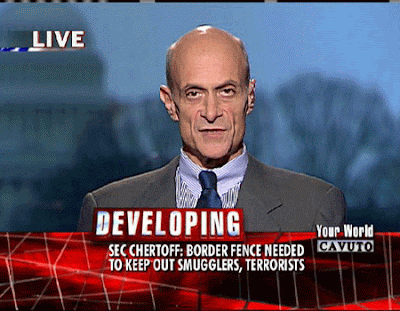
Those who say we must give up our freedom for security are in reality asking us to sacrifice one of the founding principles of our republic, the rule of law, for nothing but a false sense of security.
Judy Ackerman trespassed, disrupted border wall construction, and stood her ground. For this she was duly arrested and charged with a crime. But on the same ground where Ackerman made her stand, The Department of Homeland Security is willfully and destructively ignoring the law. One man has decided which laws apply and which do not and has single-handedly dismissed our right to sue for protection under the law. Ackerman’s trespassing charge is a misdemeanor. But the border wall construction that restarted soon after her arrest is a much more serious crime, and Chertoff’s waiver of laws is a flagrant violation of the principles upon which our nation was founded.
Saturday, November 15, 2008
Testimony on the Environmental Impacts of the Border Wall Given to the Texas State Legislature
On November 13 the Mexican American Legislative Caucus of the Texas State House of Representatives held hearings on the impacts of the border wall. Organized by Representative Eddie Lucio III, it brought speakers from all along Texas' southern border, including landowners, citrus growers, politicians, environmentalists, and residents. “The Texas border with Mexico thrives due to its close relationship with its neighbor to the South; it is imperative that we understand how a border wall would affect Texas’ relationship with Mexico,” Lucio said.
A number of members of the No Border Wall Coalition spoke at the hearing, addressing the impacts of the wall on agriculture, border communities, and the waiving of laws under the Real ID Act. Martin Hagne, Executive Director of the Valley Nature Center and a founding member of the Coalition, described to the legislators the effects that the walls currently under construction are likely to have on the environment.
Here is his testimony:
Thank you for allowing us the opportunity to testify and to give you further information about the border wall in Texas as designed by the U.S. Department of Homeland Security. My name is Martin Hagne, and I am the Executive Director of the Valley Nature Center in Weslaco, Texas. Today I am representing the No Border Wall Coalition, which was formed in the Lower Rio Grande Valley in May of 2007. And although the No Border Wall Coalition is greatly concerned with all aspects of the border wall, including human rights, immigration, property rights, and economic issues, today my testimony will focus on the impact of the wall to wildlife and the environment.
The border wall is to date the single most detrimental environmental disaster to take place along the Texas Mexico Border in our lifetime. The environmental effects will be far-reaching, long-lasting, and permanent in many areas. There is simply no way to construct such a barrier in such a place without doing irreparable harm to wildlife and the very sensitive habitats along the Rio Grande.
Today I will focus mostly on the Lower Rio Grande, but all areas in Texas slated for the border wall face similarly destructive challenges. Obviously the habitats along such a long border will vary greatly, but the damage will be equally destructive.
Habitat Loss
The easiest issues to describe will be the obvious habitat loss that will occur when the concrete and steel structure is built. As mandated in the Secure Fence Act of 2006, the wall is not just a single wall but two structures spaced apart to facilitate high speed roads between and outside the walls. This in itself will clear a wide swath of habitat up to 350 feet. Granted that DHS seems to be pursuing a single layer wall at this time, but the Act still stipulates the double layered version and still shows such on the "books." We must, therefore, be aware of this and act accordingly.
The thin layer of riparian forest that still exists along the Rio Grande, is often only 100 feet wide or less. Agricultural land has crept up all the way to the rivers edge in many places. The riparian forest made up of tall woody species such as Anacua, Texas Ebony, Rio Grande Hackberry, and Mexican Ash has been slipping away due to clearing for human use, and much of what little is left has been altered due to the river being dammed in 1957 by Falcon Dam. The dams and reservoirs that make the Valley flood-free and inhabitable for humans have also stopped the seasonal flooding which keeps the riparian forests alive. Each year floods would inundate the lowlands of the Rio Grande and keep such ecosystems thriving. Flood control is altering these precious forests into drier thorn forests.
For over 30 years efforts have been made to reclaim some of the lost habitat along the river and to create a Wildlife Corridor. US Fish & Wildlife, along with many other groups, such as Texas Parks & Wildlife, The Nature Conservancy, and Audubon Society, to name a few, have been working hard to purchase old farmland and to re-vegetate them back into a natural state of riparian forest. So far over $70 million has been spent of mostly federal funds to purchase land, and about $30 million has been used to plant native plants on these tracts. Tens of thousands of school children have taken part in these planting efforts! Now we are faced with all that work and taxpayer's money being bulldozed.
It has been argued by proponents of the wall that such small areas needing to be cleared are insignificant and that birds can fly over any structure that is put in their path. While it is true that birds can find water by flying a distance, mammals and reptiles will not be able to travel over such a structure. It has also been said that birds can leave an area and adapt to another habitat.
But there are bird species that rely on certain habitats that can't adapt fast enough if their present homes are removed. These are species that live and nest in this riparian habitat that is almost gone and that has little left of its original make-up. These same species are not found north of the Rio Grande Valley, and many are just found along the actual Rio Grande itself. These birds are limited to the riparian remnants along the river.
In these tall, Spanish moss-draped forests we find such bird species as Gray Hawk, Tropical Parula, Clay-colored Robin, Northern Beardless-Tyrannulet, Brown Jay, Muscovy Duck, Common Black-Hawk, and Red-billed Pigeon. These birds rely on the riparian forest along the river, and many rarely stray inland. These birds do rarely if ever utilize other habitats and could therefore be extirpated from Texas and the United States.
It has been estimated, using the maps released for this EIS, that over 80% of USF&W refuge property will be affected along the Rio Grande in the Lower Rio Grande Valley.
This does not include the several Texas Parks & Wildlife's Wildlife Management Areas and privately owned sanctuaries by such groups as the National Audubon and The Nature Conservancy located along the river that will be affected. The Lower Rio Grande Valley National Refuge alone in the Lower Rio Grande Valley takes into account eleven (11) different biotic communities. This is arguably the most bio-diverse region in the U.S.
Habitat Fragmentation
Equally destructive to wildlife is habitat fragmentation. A few decades ago this was rarely thought of as a problem. Roads were built crisscrossing our nation's wildlife refuges and wildlands. But now biologists know the very real threat of fragmenting any habitat. The edges created invite new species of plants and animals, changing the make-up of the ecosystem, often driving out the original inhabitants.
Not only does fragmentation affect the habitat in question, but it also has far-reaching effects on entire ecosystems. By changing the makeup of one area, it also affects other neighboring habitats and in the long run changes the entire regional ecosystem. This has not been taken into account in any DHS document or "study" released so far.
The other effect the wall will have is separating animals from each other on both sides of the wall. Ground dwelling mammals, reptiles, amphibians, and other wildlife will not be able to cross 16 to 18 foot tall concrete and steel structure. This will leave them not able to reach water, nor roosting and nesting sites.
Species can become genetically flawed by being cut off from neighboring populations, eventually creating a bottle-neck effect in the gene pool. It has been said that the wall can't cut off species from reaching each other because it is an east and west directed wall. This is not true, as DHS maps shows it clearly meanders south and north and doubles back in many places. Most animal species when faced with such an obstacle cannot and will not find ways around it, leaving them confused and stuck in place. This has already been documented in Arizona, where the wall was built through wildlife refuges.
The Wildlife Corridor was designed for just such travel and will now be severely hampered and made ineffective.
Endangered Species
There are 20 species of federally endangered species in this area, as well as many more threatened and endangered species listed by the state of Texas. The border wall will affect many of these species in negative ways through habitat loss, habitat fragmentation, corridor loss, water being cut off, and loss of eco-tourism dollars that positively help habitat restoration efforts.
Two federally endangered wildcat species are barely hanging on in existence within their U.S. range in the Lower Rio Grande Valley: the Ocelot and the Jaguarundi. The corridor is a must for these species to be able to travel to new territories for mates. As the efforts to restore the populations of these cats succeed, new territories need to be found by males to further the populations. Crossing the Rio Grande into Mexico will be a must for these cats. The border wall will cut off their access to such crossings. These cats will not, and cannot, travel long distances to find "openings" in a wall. Their habitats are now too fragmented to allow for this. Without new genetic populations to breed to, the U.S. population will become in-bred, narrowing its lines, until it can no longer get out of a bottleneck in its genetics. USF&W and other organizations such as Environmental Defense have been working with private landowners and ranchers in deep South Texas to create more habitats for these cats, especially the Ocelot. Land corridors for travel north and south are also being pursued, as this is critical for the cats to reach Mexico. The wall in Cameron County will basically stop this project.
The USFW plan for recovery for the Jaguar was already shelved because of the negative impacts the wall will have in Arizona. If the Jaguar cannot freely travel north and south, it has no chance of recovery in the U.S., leaving the program totally ineffective.
The Wildlife Corridor in the Lower Rio Grande Valley is also a must for other species in peril of extirpation. Long-tailed Weasels, the Mexican sub-species of American Beaver, and others, live in the riparian areas along the Rio Grande. These species, as well as the hundreds of others, must be taken into account.
Wetland Loss and Water Quality Issues
Critical wetlands along the wall will be affected, many of which are ephemeral (drying out during dry seasons). Due to flood control measures, the area in question has lost much of the seasonal wetlands that used to exist. Any and all wetlands removed or negatively affected therefore have an even higher negative impact to area wildlife.
The fact that many of these wetlands are seasonal makes it even harder to identify them, therefore making it easy for DHS to say none existed.
With the removal of any wetlands comes degraded water quality. Wetlands act as natural water cleansers as the water filters though wetland aquatic vegetation. Farm chemicals and other harmful runoff from city lawns and streets have no natural filtration system before reaching the Rio Grande.
Flooding is also negated by natural wetlands. Ponds and marshes slow the rain waters and collect large amounts of flood water.
Flood Levee System and Wall Combo
Last year FEMA announced that the flood levees which are built, maintained and operated by the federal agency IBWC, were not high enough to protect the area from a major hurricane. The area would no longer be certified and, therefore, insurance would go up or be unattainable. Industry would pull out and many other issues would arise. Although this should be a federal issue and fixed by federal dollars and agencies, it has now become a County project. Hidalgo County was "frightened" into signing a deal with DHS to receive some federal funds and then use County bond funds to repair the levees. But under one condition: that the face of the levee be an 18 foot sheer concrete wall that would also act as a border wall.
This scenario has many flaws. First, the County should not have to pay for such repairs. Second, the 22 miles of sections repaired are only in the areas where DHS wanted a wall in the first place, leaving unrepaired gaps in the flood control system. This does nothing for making the system FEMA approved again. Thirdly, cutting into the side of the existing levees during hurricane season is nothing short of asking for a disaster. Fourthly, fixing the levees on the U.S. side at this time will endanger hundreds of thousands of lives on the Mexican side of the border if levees are not simultaneously repaired in Mexico.
And lastly, this levee/wall combo has been touted as a win-win for the environment. Although the levee/wall combo might affect certain areas less as far as habitat removal, it will only slightly improve on that situation. But what it will do is become a solid 18 foot wall of concrete which is totally impenetrable to wildlife. There will be effectively no movement over, under or around this wall. No animal, besides a bird, could get over such a structure. It is less wildlife friendly than the originally designed wall.
Environmental Law and Justice
The Real Id Act of 2005 was passed to give the Minster of Homeland Security broad sweeping powers to secure the nation. It, unprecedented, gave Michael Chertoff powers to waive any and all U.S. laws to build the wall. This was not a well known law by lawmakers and many voted on this passage without knowing enough about it.
This year alone DHS has waived 36 federal and state laws ranging from the Clean Water Act to the Endangered Species Act. Such powers have only if ever been enacted during acts of war towards the United States.
Environmental organizations as well as individuals have tried to sue DHS to stop the wall, to retain their property and not allow the government to take it, but all legal action is made void due to the Real ID Act. The people of the United States have no legal recourse.
The Texas Park & Wildlife Department has already lost land on their Las Palomas Wildlife Management Tracts. A levee/wall combination is dissecting properties owned by TPW and USFW in an area that was before only dissected by a dirt levee which was traversable by wildlife.
The same Act also has rendered the National Environmental Policy Act (NEPA) void and, therefore, no Environmental Impact Studies (EIS) were needed to be performed. DHS started the NEPA process and eventually did release an EIS document. This 600 some page document was nothing more than a glorious work of copied material taken out of a dictionary. The studies for such an elaborate project should have taken over two years, but instead the document was published in months! Environmental studies on wildlife migration, daily usage, breeding and nesting sites, plant surveys, use during inclement weather, and many other such long-term studies could not be produced in months. The document was the worst example of government bullying.
The Real ID Act must be repealed!
The "fact" being put forth by DHS and BP representatives that a border wall is less environmentally intrusive than the "trash and human waste" left by immigrants is truly such a far-fetched illusion that we cannot believe it has even been brought up! A habitat left with trash and waste is far better than a habitat void of plants. Plants make the habitat. An area with native plants gives life whether it is degraded with trash or not. Trash can be removed, while permanent environmental damage by clear-cutting cannot! These are such simple facts that it is unbelievable that any government agency would state otherwise!
An animal living in the Rio Grande Valley within a riparian area is not one that is much impacted by trash and human waste. Such a statement shows ignorance and lack of understanding of the area's fauna and flora, this fact further showing the true need for a broader and much more thorough EIS. We are not talking about whales swallowing plastic bags. Ocelots do not eat trash! On the other hand, if you remove any habitat from the area which is already in such short supply, you are likely to lose species.
To compare the need for a border wall for national security to the needs of conserving a lizard, as DHS spokespersons have done, we can only say that if DHS believes this wall will only impact one lizard, a complete and broader EIS would show just how wrong such a statement is.
Environmental Economic Issues
Many areas along the Texas-Mexico border have prime natural areas. The Big Bend area in West Texas has tens of thousands of wild areas, river canoe excursions and hiking opportunities.
The Lower Rio Grande Valley is the top bird watching and nature watching destination in the U.S. The Valley is considered the most biologically diverse area within the U.S. 517 bird species have been recorded in this small area. That is more than all other state totals besides Texas, California, Arizona and New Mexico. Native plant species number at least 1,100, but if all forbs and grasses were counted, these numbers could easily be closer to 3,000. Over 340 species of butterflies are found here, as well as over 120 species of odonates. There are 80 some species of mammals, and a higher number of reptiles and amphibians. These numbers are staggering for such a small area.
The wall is not only a disaster to our environment, but also a disaster to the local economy, which embraces eco-tourism as an annual income of $125 million, contributed by some 200,000 nature visitors annually. An ecological impact of the wall is the fact that the bird species that depend on this habitat will disappear! That in itself is truly disturbing. The implication the wall has for humans is not only the loss of nature, but the loss of livelihoods. No bird watcher would want to come see a steel and concrete wall where before a native habitat stood.
Other nations have already figured that out! Below is a note from a bird watcher from Sweden who visited the Valley and Santa Ana NWR last year.
"Thanks very much for sending me information about the horrible plans for the Rio Grande; I am reading it with great interest. I just want to say that it is not only an interior matter but also an international one. It would hit the birding business coming from other countries. I mean, if the nice areas around the Rio Grande would disappear, not many birders from others countries will go to Texas in the future, as well as people from other places in the USA. Hopefully there will be a better solution than destroying a unique fauna." Christer Landgren, Sweden
The State of Texas has invested millions of dollars into the three State Parks in the Lower Rio Garden Valley. The fairly new World Birding Center complex with nine (9) sites is also a partnership with the state. Many of these sites, along with the above mentioned USFW refuges, Audubon Sabal Palms Sanctuary, the TNC Southmost Preserve, the NABA Butterfly Park, and others, will be negatively affected.
The National Audubon Society is presently debating what to do with their flagship sanctuary, Sabal Palms. After the wall goes up it will be walled off, and concerns are many. How will staff have access? Who will have keys? What if a fire breaks loose? Will anyone insure us? Do we dare to allow visitors? etc. None of these questions can be answered by DHS when asked.
National organizations such as NAS and TNC are now faced with possibly giving up decade-old work and investments and pulling up stakes from the Valley, taking with them resources and funds.
With these funds also goes many environmental and science funded programs for local school classes. In a day where children need every opportunity to get outdoors to exercise and learn about nature, we will be forced to lose such precious resources.
A number of members of the No Border Wall Coalition spoke at the hearing, addressing the impacts of the wall on agriculture, border communities, and the waiving of laws under the Real ID Act. Martin Hagne, Executive Director of the Valley Nature Center and a founding member of the Coalition, described to the legislators the effects that the walls currently under construction are likely to have on the environment.
Here is his testimony:
Thank you for allowing us the opportunity to testify and to give you further information about the border wall in Texas as designed by the U.S. Department of Homeland Security. My name is Martin Hagne, and I am the Executive Director of the Valley Nature Center in Weslaco, Texas. Today I am representing the No Border Wall Coalition, which was formed in the Lower Rio Grande Valley in May of 2007. And although the No Border Wall Coalition is greatly concerned with all aspects of the border wall, including human rights, immigration, property rights, and economic issues, today my testimony will focus on the impact of the wall to wildlife and the environment.
The border wall is to date the single most detrimental environmental disaster to take place along the Texas Mexico Border in our lifetime. The environmental effects will be far-reaching, long-lasting, and permanent in many areas. There is simply no way to construct such a barrier in such a place without doing irreparable harm to wildlife and the very sensitive habitats along the Rio Grande.
Today I will focus mostly on the Lower Rio Grande, but all areas in Texas slated for the border wall face similarly destructive challenges. Obviously the habitats along such a long border will vary greatly, but the damage will be equally destructive.
Habitat Loss
The easiest issues to describe will be the obvious habitat loss that will occur when the concrete and steel structure is built. As mandated in the Secure Fence Act of 2006, the wall is not just a single wall but two structures spaced apart to facilitate high speed roads between and outside the walls. This in itself will clear a wide swath of habitat up to 350 feet. Granted that DHS seems to be pursuing a single layer wall at this time, but the Act still stipulates the double layered version and still shows such on the "books." We must, therefore, be aware of this and act accordingly.
The thin layer of riparian forest that still exists along the Rio Grande, is often only 100 feet wide or less. Agricultural land has crept up all the way to the rivers edge in many places. The riparian forest made up of tall woody species such as Anacua, Texas Ebony, Rio Grande Hackberry, and Mexican Ash has been slipping away due to clearing for human use, and much of what little is left has been altered due to the river being dammed in 1957 by Falcon Dam. The dams and reservoirs that make the Valley flood-free and inhabitable for humans have also stopped the seasonal flooding which keeps the riparian forests alive. Each year floods would inundate the lowlands of the Rio Grande and keep such ecosystems thriving. Flood control is altering these precious forests into drier thorn forests.
For over 30 years efforts have been made to reclaim some of the lost habitat along the river and to create a Wildlife Corridor. US Fish & Wildlife, along with many other groups, such as Texas Parks & Wildlife, The Nature Conservancy, and Audubon Society, to name a few, have been working hard to purchase old farmland and to re-vegetate them back into a natural state of riparian forest. So far over $70 million has been spent of mostly federal funds to purchase land, and about $30 million has been used to plant native plants on these tracts. Tens of thousands of school children have taken part in these planting efforts! Now we are faced with all that work and taxpayer's money being bulldozed.
It has been argued by proponents of the wall that such small areas needing to be cleared are insignificant and that birds can fly over any structure that is put in their path. While it is true that birds can find water by flying a distance, mammals and reptiles will not be able to travel over such a structure. It has also been said that birds can leave an area and adapt to another habitat.
But there are bird species that rely on certain habitats that can't adapt fast enough if their present homes are removed. These are species that live and nest in this riparian habitat that is almost gone and that has little left of its original make-up. These same species are not found north of the Rio Grande Valley, and many are just found along the actual Rio Grande itself. These birds are limited to the riparian remnants along the river.
In these tall, Spanish moss-draped forests we find such bird species as Gray Hawk, Tropical Parula, Clay-colored Robin, Northern Beardless-Tyrannulet, Brown Jay, Muscovy Duck, Common Black-Hawk, and Red-billed Pigeon. These birds rely on the riparian forest along the river, and many rarely stray inland. These birds do rarely if ever utilize other habitats and could therefore be extirpated from Texas and the United States.
It has been estimated, using the maps released for this EIS, that over 80% of USF&W refuge property will be affected along the Rio Grande in the Lower Rio Grande Valley.
This does not include the several Texas Parks & Wildlife's Wildlife Management Areas and privately owned sanctuaries by such groups as the National Audubon and The Nature Conservancy located along the river that will be affected. The Lower Rio Grande Valley National Refuge alone in the Lower Rio Grande Valley takes into account eleven (11) different biotic communities. This is arguably the most bio-diverse region in the U.S.
Habitat Fragmentation
Equally destructive to wildlife is habitat fragmentation. A few decades ago this was rarely thought of as a problem. Roads were built crisscrossing our nation's wildlife refuges and wildlands. But now biologists know the very real threat of fragmenting any habitat. The edges created invite new species of plants and animals, changing the make-up of the ecosystem, often driving out the original inhabitants.
Not only does fragmentation affect the habitat in question, but it also has far-reaching effects on entire ecosystems. By changing the makeup of one area, it also affects other neighboring habitats and in the long run changes the entire regional ecosystem. This has not been taken into account in any DHS document or "study" released so far.
The other effect the wall will have is separating animals from each other on both sides of the wall. Ground dwelling mammals, reptiles, amphibians, and other wildlife will not be able to cross 16 to 18 foot tall concrete and steel structure. This will leave them not able to reach water, nor roosting and nesting sites.
Species can become genetically flawed by being cut off from neighboring populations, eventually creating a bottle-neck effect in the gene pool. It has been said that the wall can't cut off species from reaching each other because it is an east and west directed wall. This is not true, as DHS maps shows it clearly meanders south and north and doubles back in many places. Most animal species when faced with such an obstacle cannot and will not find ways around it, leaving them confused and stuck in place. This has already been documented in Arizona, where the wall was built through wildlife refuges.
The Wildlife Corridor was designed for just such travel and will now be severely hampered and made ineffective.
Endangered Species
There are 20 species of federally endangered species in this area, as well as many more threatened and endangered species listed by the state of Texas. The border wall will affect many of these species in negative ways through habitat loss, habitat fragmentation, corridor loss, water being cut off, and loss of eco-tourism dollars that positively help habitat restoration efforts.
Two federally endangered wildcat species are barely hanging on in existence within their U.S. range in the Lower Rio Grande Valley: the Ocelot and the Jaguarundi. The corridor is a must for these species to be able to travel to new territories for mates. As the efforts to restore the populations of these cats succeed, new territories need to be found by males to further the populations. Crossing the Rio Grande into Mexico will be a must for these cats. The border wall will cut off their access to such crossings. These cats will not, and cannot, travel long distances to find "openings" in a wall. Their habitats are now too fragmented to allow for this. Without new genetic populations to breed to, the U.S. population will become in-bred, narrowing its lines, until it can no longer get out of a bottleneck in its genetics. USF&W and other organizations such as Environmental Defense have been working with private landowners and ranchers in deep South Texas to create more habitats for these cats, especially the Ocelot. Land corridors for travel north and south are also being pursued, as this is critical for the cats to reach Mexico. The wall in Cameron County will basically stop this project.
The USFW plan for recovery for the Jaguar was already shelved because of the negative impacts the wall will have in Arizona. If the Jaguar cannot freely travel north and south, it has no chance of recovery in the U.S., leaving the program totally ineffective.
The Wildlife Corridor in the Lower Rio Grande Valley is also a must for other species in peril of extirpation. Long-tailed Weasels, the Mexican sub-species of American Beaver, and others, live in the riparian areas along the Rio Grande. These species, as well as the hundreds of others, must be taken into account.
Wetland Loss and Water Quality Issues
Critical wetlands along the wall will be affected, many of which are ephemeral (drying out during dry seasons). Due to flood control measures, the area in question has lost much of the seasonal wetlands that used to exist. Any and all wetlands removed or negatively affected therefore have an even higher negative impact to area wildlife.
The fact that many of these wetlands are seasonal makes it even harder to identify them, therefore making it easy for DHS to say none existed.
With the removal of any wetlands comes degraded water quality. Wetlands act as natural water cleansers as the water filters though wetland aquatic vegetation. Farm chemicals and other harmful runoff from city lawns and streets have no natural filtration system before reaching the Rio Grande.
Flooding is also negated by natural wetlands. Ponds and marshes slow the rain waters and collect large amounts of flood water.
Flood Levee System and Wall Combo
Last year FEMA announced that the flood levees which are built, maintained and operated by the federal agency IBWC, were not high enough to protect the area from a major hurricane. The area would no longer be certified and, therefore, insurance would go up or be unattainable. Industry would pull out and many other issues would arise. Although this should be a federal issue and fixed by federal dollars and agencies, it has now become a County project. Hidalgo County was "frightened" into signing a deal with DHS to receive some federal funds and then use County bond funds to repair the levees. But under one condition: that the face of the levee be an 18 foot sheer concrete wall that would also act as a border wall.
This scenario has many flaws. First, the County should not have to pay for such repairs. Second, the 22 miles of sections repaired are only in the areas where DHS wanted a wall in the first place, leaving unrepaired gaps in the flood control system. This does nothing for making the system FEMA approved again. Thirdly, cutting into the side of the existing levees during hurricane season is nothing short of asking for a disaster. Fourthly, fixing the levees on the U.S. side at this time will endanger hundreds of thousands of lives on the Mexican side of the border if levees are not simultaneously repaired in Mexico.
And lastly, this levee/wall combo has been touted as a win-win for the environment. Although the levee/wall combo might affect certain areas less as far as habitat removal, it will only slightly improve on that situation. But what it will do is become a solid 18 foot wall of concrete which is totally impenetrable to wildlife. There will be effectively no movement over, under or around this wall. No animal, besides a bird, could get over such a structure. It is less wildlife friendly than the originally designed wall.
Environmental Law and Justice
The Real Id Act of 2005 was passed to give the Minster of Homeland Security broad sweeping powers to secure the nation. It, unprecedented, gave Michael Chertoff powers to waive any and all U.S. laws to build the wall. This was not a well known law by lawmakers and many voted on this passage without knowing enough about it.
This year alone DHS has waived 36 federal and state laws ranging from the Clean Water Act to the Endangered Species Act. Such powers have only if ever been enacted during acts of war towards the United States.
Environmental organizations as well as individuals have tried to sue DHS to stop the wall, to retain their property and not allow the government to take it, but all legal action is made void due to the Real ID Act. The people of the United States have no legal recourse.
The Texas Park & Wildlife Department has already lost land on their Las Palomas Wildlife Management Tracts. A levee/wall combination is dissecting properties owned by TPW and USFW in an area that was before only dissected by a dirt levee which was traversable by wildlife.
The same Act also has rendered the National Environmental Policy Act (NEPA) void and, therefore, no Environmental Impact Studies (EIS) were needed to be performed. DHS started the NEPA process and eventually did release an EIS document. This 600 some page document was nothing more than a glorious work of copied material taken out of a dictionary. The studies for such an elaborate project should have taken over two years, but instead the document was published in months! Environmental studies on wildlife migration, daily usage, breeding and nesting sites, plant surveys, use during inclement weather, and many other such long-term studies could not be produced in months. The document was the worst example of government bullying.
The Real ID Act must be repealed!
The "fact" being put forth by DHS and BP representatives that a border wall is less environmentally intrusive than the "trash and human waste" left by immigrants is truly such a far-fetched illusion that we cannot believe it has even been brought up! A habitat left with trash and waste is far better than a habitat void of plants. Plants make the habitat. An area with native plants gives life whether it is degraded with trash or not. Trash can be removed, while permanent environmental damage by clear-cutting cannot! These are such simple facts that it is unbelievable that any government agency would state otherwise!
An animal living in the Rio Grande Valley within a riparian area is not one that is much impacted by trash and human waste. Such a statement shows ignorance and lack of understanding of the area's fauna and flora, this fact further showing the true need for a broader and much more thorough EIS. We are not talking about whales swallowing plastic bags. Ocelots do not eat trash! On the other hand, if you remove any habitat from the area which is already in such short supply, you are likely to lose species.
To compare the need for a border wall for national security to the needs of conserving a lizard, as DHS spokespersons have done, we can only say that if DHS believes this wall will only impact one lizard, a complete and broader EIS would show just how wrong such a statement is.
Environmental Economic Issues
Many areas along the Texas-Mexico border have prime natural areas. The Big Bend area in West Texas has tens of thousands of wild areas, river canoe excursions and hiking opportunities.
The Lower Rio Grande Valley is the top bird watching and nature watching destination in the U.S. The Valley is considered the most biologically diverse area within the U.S. 517 bird species have been recorded in this small area. That is more than all other state totals besides Texas, California, Arizona and New Mexico. Native plant species number at least 1,100, but if all forbs and grasses were counted, these numbers could easily be closer to 3,000. Over 340 species of butterflies are found here, as well as over 120 species of odonates. There are 80 some species of mammals, and a higher number of reptiles and amphibians. These numbers are staggering for such a small area.
The wall is not only a disaster to our environment, but also a disaster to the local economy, which embraces eco-tourism as an annual income of $125 million, contributed by some 200,000 nature visitors annually. An ecological impact of the wall is the fact that the bird species that depend on this habitat will disappear! That in itself is truly disturbing. The implication the wall has for humans is not only the loss of nature, but the loss of livelihoods. No bird watcher would want to come see a steel and concrete wall where before a native habitat stood.
Other nations have already figured that out! Below is a note from a bird watcher from Sweden who visited the Valley and Santa Ana NWR last year.
"Thanks very much for sending me information about the horrible plans for the Rio Grande; I am reading it with great interest. I just want to say that it is not only an interior matter but also an international one. It would hit the birding business coming from other countries. I mean, if the nice areas around the Rio Grande would disappear, not many birders from others countries will go to Texas in the future, as well as people from other places in the USA. Hopefully there will be a better solution than destroying a unique fauna." Christer Landgren, Sweden
The State of Texas has invested millions of dollars into the three State Parks in the Lower Rio Garden Valley. The fairly new World Birding Center complex with nine (9) sites is also a partnership with the state. Many of these sites, along with the above mentioned USFW refuges, Audubon Sabal Palms Sanctuary, the TNC Southmost Preserve, the NABA Butterfly Park, and others, will be negatively affected.
The National Audubon Society is presently debating what to do with their flagship sanctuary, Sabal Palms. After the wall goes up it will be walled off, and concerns are many. How will staff have access? Who will have keys? What if a fire breaks loose? Will anyone insure us? Do we dare to allow visitors? etc. None of these questions can be answered by DHS when asked.
National organizations such as NAS and TNC are now faced with possibly giving up decade-old work and investments and pulling up stakes from the Valley, taking with them resources and funds.
With these funds also goes many environmental and science funded programs for local school classes. In a day where children need every opportunity to get outdoors to exercise and learn about nature, we will be forced to lose such precious resources.
Subscribe to:
Posts (Atom)