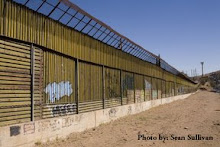
By Scott Nicol
In his recent speech in El Paso President Obama pointed to the buildup of border security personnel and infrastructure, and declining crime rates in border communities, to justify a renewed effort to enact immigration reform. This will be a tough sell in the current Congress.
Just three weeks earlier the difficulty of his task was on display in Washington DC when Representative Jason Chaffetz (R-UT) displayed photos of headless corpses while shouting at Ron Vitiello, Deputy Chief of the US Border Patrol, during a committee hearing. Vitiello had enraged Representative Chaffetz by calmly asserting that, “While there is still work to be done, every key measure shows we are making significant progress along the Southwest border.”
The horrific pictures were not taken within U.S. borders, and so were outside of the Border Patrol’s jurisdiction, despite Chaffetz’ cries that “This is the kind of thing that we’re sending our agents to deal with on a daily basis!”
Chaffetz’ anger boiled over because Deputy Chief Vitiello was not following the Congressman’s script. The facts, that border communities are safe and apprehensions are down, were not welcome.
The Congressional hearing was intended to paint a picture of the U.S. southern border as a war zone, awash in blood and the mutilated bodies of innocents. In this telling, the Border Patrol fights valiantly to achieve “operational control” and quell the violence, but it is hamstrung by environmental laws and federal land managers who care more about endangered species than human life.
It was meant to promote HR 1505, the misnamed “National Security and Federal Lands Protection Act.” Starting with the premise that the Border Patrol has been prevented from entering federal wildlife refuges, wilderness areas, and national monuments along the southern border, it gives the Border Patrol carte blanche on federal lands.
Like the photos of headless bodies, this provision is based on a false impression of our southern border. The Border Patrol and federal land management agencies signed a cooperative agreement in 2006 allowing access to protected lands that Vitiello said works well. Rugged terrain and remote locations are the real problems reported by agents in the field, not restrictions imposed by land managers.
The bill goes on to exempt the Border Patrol from obeying dozens of environmental laws.
Its precursor, the Real ID Act, was used in 2008 to waive 36 laws along the southern border to erect border walls. The Endangered Species Act, Clean Water Act, and National Environmental Policy Act were among those brushed aside to allow for construction that otherwise would have violated them. This resulted in severe environmental damage.
HR 1505 extends the 2008 waivers to cover all of the U.S. – Mexico border, the Canadian border, all maritime borders, and every square inch of terrain within 100 miles of them.
The waiver covers some of our nation’s most important protected areas, from Glacier National Park and the Boundary Waters to Redwood National Park and the Cape Cod National Seashore. Two-thirds of the population of the United States would also fall under the waiver.
Instead of thanking the Congressmen for freeing the Border Patrol from these legal burdens, Deputy Chief Vitiello undermined HR 1505’s premise. He confirmed the Government Accountability Office finding that “Most agents reported that land management laws have had no effect on Border Patrol’s overall measure of border security.”
The photos of headless bodies were displayed in an effort to discredit the Border Patrol’s testimony, and to burn a brutal image into viewers’ minds that would overwhelm the facts that Vitiello presented.
The angry tirades aimed at the Border Patrol made it clear that the “National Security and Federal Lands Protection Act” really has nothing to do with national security. It does not help the Border Patrol, and they did not ask for it. It is nothing more than an assault on our nation’s public lands and environmental laws.
Speaking within sight of the border, President Obama said that “despite a lot of breathless reports that have tagged places like El Paso as dangerous… El Paso and other cities and towns along this border are consistently among the safest in the nation.”
America cannot develop rational policies that protect border residents and ecosystems by picking and choosing facts any more than we can support the rule of law by cherry picking which laws to obey and waiving the rest. With members of congress choosing fear over facts, ungrounded nightmares instead of FBI statistics, the reform that the president spoke of remains a distant dream.
Here is part one of the April 15 hearing on HR 1505
Here is part two. Rep. Chaffetz brandishes the photos of corpses around a half-hour into this clip.
Friday, May 20, 2011


Thursday, May 5, 2011
Congressional Proposals Aim to Eviscerate Environmental Laws Along U.S. Borders, Coasts
Press Release from:
Randy Serraglio, Center for Biological Diversity
Scott Nicol, Sierra Club Borderlands Team
Jenny Neeley, Sky Island Alliance
Matt Clark, Defenders of Wildlife
Mike Quigley, The Wilderness Society
Nathan Newcomer, New Mexico Wilderness Alliance
Matt Skroch, Arizona Wilderness Coalition
Under Guise of Border Security, Bills Would Eliminate Measures
Protecting Air, Water, Endangered Species
TUCSON, Ariz.— Two bills pending in Congress would eliminate environmental laws along U.S. borderlands — including those that protect endangered species and safeguard clean air and water — under the guise of improving border security. The “National Security and Federal Lands Protection Act” (H.R. 1505), introduced by Utah Rep. Rob Bishop, would permanently exempt border-enforcement activities from 31 environmental and cultural resource laws within 100 miles of all U.S. borders and coasts.
The “Border Security Enforcement Act of 2011” (S. 803), introduced by Arizona Sens. John McCain and Jon Kyl, would effectively give the Department of Homeland Security veto power over environmental protections on public lands within 150 miles of the southwestern border. Land managers in the border region would be prevented from acting to protect the resources they manage if their actions were perceived to conflict with Department of Homeland Security activities.
“These bedrock environmental laws were put in place for a reason: to protect the air we breathe, the water we drink and the natural resources and wildlife we value,” said Randy Serraglio, a conservation advocate with the Center for Biological Diversity. “It makes no sense to turn our back on these laws to satisfy the narrow agenda of a few politicians looking to score points with their most extreme constituents.”
The authority included in these bills has not been requested. In fact, it has been deemed unnecessary by border-enforcement agencies. During an April 15 congressional hearing on border security, U.S. Border Patrol Deputy Chief Ronald Vitiello testified that his agency “enjoys a close working relationship” with public lands agencies that “allows it to fulfill its border enforcement responsibilities.” Vitiello said his agency “is fully committed to continuing our cooperative relationships with the Department of the Interior and the Department of Agriculture.”
“These bills have been introduced solely to satisfy the radical whims of a small minority of anti-environment extremists in Congress,” said Jenny Neeley, conservation policy director for Sky Island Alliance. “These proposals threaten the entire Sky Islands region we work to protect by establishing a dangerous legal precedent of permanently erasing environmental and cultural resource protections across huge swaths of the United States.”
Barrier and road construction, off-road driving, stadium lighting and other border-enforcement activities already threaten parks, refuges and other protected areas as well as many species in the border region, including endangered jaguars and ocelots in Arizona, New Mexico and Texas.
“Too much damage has been done to our borderlands already,” said Scott Nicol, Sierra Club Borderlands Team co-chair. “From massive blasting and erosion in California wilderness areas to devastating floods in Arizona and fragmented habitat for endangered species in Texas, the implementation of border enforcement with callous disregard for our nation’s environmental laws has caused one disaster after another.”
“Protections for endangered wildlife, water and clean air are not standing in the way of border security,” said Matt Clark with Defenders of Wildlife in Tucson. “All Congress has to do is look at the facts: Apprehensions of immigrants illegally crossing the border have fallen by two-thirds over the past decade. Border Patrol and land-management agencies have been effectively working together, and it’s clear that it takes teamwork to secure the border and protect the environment.”
“These efforts to discard the rule of law rest on the false premise that we can have border security or we can have functioning borderlands ecosystems, but not both. That's wrong. We can — and we should — have both,” said Mike Quigley, Arizona representative of The Wilderness Society.
“Protected areas such as wilderness and national parks along our borders provide us with essential environmental services, premier recreation opportunities and important habitat for our wildlife heritage,” said Matt Skroch, executive director of the Arizona Wilderness Coalition. “These shortsighted efforts to waive laws are penny wise and pound foolish. Border enforcement and natural resource management are not and should not be mutually exclusive.”
http://www.biologicaldiversity.org/news/press_releases/2011/border-05-04-2011.html
Randy Serraglio, Center for Biological Diversity
Scott Nicol, Sierra Club Borderlands Team
Jenny Neeley, Sky Island Alliance
Matt Clark, Defenders of Wildlife
Mike Quigley, The Wilderness Society
Nathan Newcomer, New Mexico Wilderness Alliance
Matt Skroch, Arizona Wilderness Coalition
Under Guise of Border Security, Bills Would Eliminate Measures
Protecting Air, Water, Endangered Species
TUCSON, Ariz.— Two bills pending in Congress would eliminate environmental laws along U.S. borderlands — including those that protect endangered species and safeguard clean air and water — under the guise of improving border security. The “National Security and Federal Lands Protection Act” (H.R. 1505), introduced by Utah Rep. Rob Bishop, would permanently exempt border-enforcement activities from 31 environmental and cultural resource laws within 100 miles of all U.S. borders and coasts.
The “Border Security Enforcement Act of 2011” (S. 803), introduced by Arizona Sens. John McCain and Jon Kyl, would effectively give the Department of Homeland Security veto power over environmental protections on public lands within 150 miles of the southwestern border. Land managers in the border region would be prevented from acting to protect the resources they manage if their actions were perceived to conflict with Department of Homeland Security activities.
“These bedrock environmental laws were put in place for a reason: to protect the air we breathe, the water we drink and the natural resources and wildlife we value,” said Randy Serraglio, a conservation advocate with the Center for Biological Diversity. “It makes no sense to turn our back on these laws to satisfy the narrow agenda of a few politicians looking to score points with their most extreme constituents.”
The authority included in these bills has not been requested. In fact, it has been deemed unnecessary by border-enforcement agencies. During an April 15 congressional hearing on border security, U.S. Border Patrol Deputy Chief Ronald Vitiello testified that his agency “enjoys a close working relationship” with public lands agencies that “allows it to fulfill its border enforcement responsibilities.” Vitiello said his agency “is fully committed to continuing our cooperative relationships with the Department of the Interior and the Department of Agriculture.”
“These bills have been introduced solely to satisfy the radical whims of a small minority of anti-environment extremists in Congress,” said Jenny Neeley, conservation policy director for Sky Island Alliance. “These proposals threaten the entire Sky Islands region we work to protect by establishing a dangerous legal precedent of permanently erasing environmental and cultural resource protections across huge swaths of the United States.”
Barrier and road construction, off-road driving, stadium lighting and other border-enforcement activities already threaten parks, refuges and other protected areas as well as many species in the border region, including endangered jaguars and ocelots in Arizona, New Mexico and Texas.
“Too much damage has been done to our borderlands already,” said Scott Nicol, Sierra Club Borderlands Team co-chair. “From massive blasting and erosion in California wilderness areas to devastating floods in Arizona and fragmented habitat for endangered species in Texas, the implementation of border enforcement with callous disregard for our nation’s environmental laws has caused one disaster after another.”
“Protections for endangered wildlife, water and clean air are not standing in the way of border security,” said Matt Clark with Defenders of Wildlife in Tucson. “All Congress has to do is look at the facts: Apprehensions of immigrants illegally crossing the border have fallen by two-thirds over the past decade. Border Patrol and land-management agencies have been effectively working together, and it’s clear that it takes teamwork to secure the border and protect the environment.”
“These efforts to discard the rule of law rest on the false premise that we can have border security or we can have functioning borderlands ecosystems, but not both. That's wrong. We can — and we should — have both,” said Mike Quigley, Arizona representative of The Wilderness Society.
“Protected areas such as wilderness and national parks along our borders provide us with essential environmental services, premier recreation opportunities and important habitat for our wildlife heritage,” said Matt Skroch, executive director of the Arizona Wilderness Coalition. “These shortsighted efforts to waive laws are penny wise and pound foolish. Border enforcement and natural resource management are not and should not be mutually exclusive.”
http://www.biologicaldiversity.org/news/press_releases/2011/border-05-04-2011.html
Thursday, February 3, 2011
Border Walls versus Environmental Justice
By Scott Nicol
In 1994 President Clinton issued Executive Order 12898 to address the issue of Environmental Justice. It instructs federal agencies to identify and address actions that might have “disproportionately high and adverse human health or environmental effects… on minority populations and low-income populations.” EO 12898 remains in effect today, but in building border walls the Department of Homeland Security (DHS) has chosen to ignore it.
Since the passage of the Secure Fence Act around 650 miles of border wall have been built, slicing though towns, farms, and natural areas. Southern border states have rates of poverty that are significantly higher than the national average. In 2009 Arizona had the second highest poverty rate in the nation, New Mexico had the third highest, and Texas came in seventh. Within these states communities along the border tend to be the poorest. The 2007 list of 10 counties with the lowest median incomes in the nation included the Texas border counties of El Paso, Hidalgo, and Cameron, all three of which now have border walls.
Rather than act to minimize the border wall’s impacts on these communities, DHS used the Real ID Act to waive 36 federal laws. The Safe Drinking Water Act, Farmland Protection Policy Act, Native American Graves Protection and Repatriation Act, and other laws that protect the rest of the nation no longer protect border communities. Equal protection under the law does not apply to those who live along the border.
This has led to a host of negative impacts on border communities. The economic impacts of land condemnation and damage to family farms have hit economically disadvantaged communities. Walls have cause severe flooding in Lukeville, Arizona, and across the border in Nogales, Sonora, Mexico, where two people drowned. In Texas wetlands have been destroyed, and construction has caused serious erosion, further degrading the Rio Grande, which is the source of drinking and irrigation water for border residents.
In documents released before wall construction began, DHS stated that each of the Texas communities living in the path of the wall, “meets these two criteria [high percentages of minority and low-income residents] as a potential environmental justice population.” DHS went on to claim, however, that “the Secretary’s waiver means that CBP no longer has any specific obligation under Executive Order (EO) 12898.” While the first statement is backed by census data, the claim that DHS is not bound by the executive order is false, because the executive order was not listed among the 36 laws that DHS waived. But the assertion has meant that little effort has gone into lessening the impacts of border walls on border communities, or including them in decision-making.
South Texas Communities
To build border walls the federal government filed condemnation lawsuits against more than 400 Texas landowners, in communities that are 85 – 90% Hispanic and have rates of poverty that are more than twice the state average.
In Hidalgo and Cameron counties, where border walls were built along existing levees, homes, businesses, farms, and privately-owned nature preserves have been cut in two, or even walled off entirely, trapped between the border wall and the Rio Grande.
DHS has only to paid for the exact footprint of the border wall (typically, a 60-foot wide strip) as it passes through a parcel of land. The agency has completely discounted the hardships that the border wall will bring to landowners, such as the devaluation of contiguous property, access to farm land and homes, and impacts on livelihood.
In south Texas there are 21 separate border walls, totaling 70 linear miles, with wide gaps between sections. Border residents noticed that walls tended to be built through the lands of low-income families, but stopped abruptly at the property line of landowners such as the Hunt family, who, coincidentally, donated millions for the construction of the Bush Presidential Library.
Researchers from the University of Texas who examined this determined, “Our comparison of the areas planned to be fenced along the border with those areas where ‘gaps’ in the fence are planned suggests disproportionate impact on individuals with lower income and education, Hispanic ethnicity and non-U.S. citizenship status.”
Tohono O’odham Nation
The Tohono O’odham nation in Southern Arizona is split by 75 miles of the U.S.-Mexico border, with 1,500 out of 20,000 tribal members living south of the line. As in many Native American nations poverty is widespread. According to the 2000 census the average income on the reservation was $8,137, compared to a national average of $26,940. Life expectancy was eight years less than the national average.
Speaking before a U.S. House of Representatives hearing on the border wall, O’odham Chairman Ned Norris Jr. said, “We are older than the international boundary with Mexico and had no role in creating the border. But our land is now cut in half, with O’odham communities, sacred sites, salt pilgrimage routes, and families divided.”
Chairman Norris went on to state that, with the waiving of the Native American Graves Protection and Repatriation Act, “… fragments of human remains were observed in the tire tracks of heavy construction equipment. Barriers and the border road now cross the site.”
“Imagine a bulldozer parking in your family graveyard, turning up bones. This is our reality.”
Chairman Norris concluded, “We know from our own experience living on the border that security can be improved while respecting the rights of tribes and border communities, while fulfilling our duty to the environment and to our ancestors, and without granting any person the power to ignore the law.”
In 1994 President Clinton issued Executive Order 12898 to address the issue of Environmental Justice. It instructs federal agencies to identify and address actions that might have “disproportionately high and adverse human health or environmental effects… on minority populations and low-income populations.” EO 12898 remains in effect today, but in building border walls the Department of Homeland Security (DHS) has chosen to ignore it.
Since the passage of the Secure Fence Act around 650 miles of border wall have been built, slicing though towns, farms, and natural areas. Southern border states have rates of poverty that are significantly higher than the national average. In 2009 Arizona had the second highest poverty rate in the nation, New Mexico had the third highest, and Texas came in seventh. Within these states communities along the border tend to be the poorest. The 2007 list of 10 counties with the lowest median incomes in the nation included the Texas border counties of El Paso, Hidalgo, and Cameron, all three of which now have border walls.
Rather than act to minimize the border wall’s impacts on these communities, DHS used the Real ID Act to waive 36 federal laws. The Safe Drinking Water Act, Farmland Protection Policy Act, Native American Graves Protection and Repatriation Act, and other laws that protect the rest of the nation no longer protect border communities. Equal protection under the law does not apply to those who live along the border.
This has led to a host of negative impacts on border communities. The economic impacts of land condemnation and damage to family farms have hit economically disadvantaged communities. Walls have cause severe flooding in Lukeville, Arizona, and across the border in Nogales, Sonora, Mexico, where two people drowned. In Texas wetlands have been destroyed, and construction has caused serious erosion, further degrading the Rio Grande, which is the source of drinking and irrigation water for border residents.
In documents released before wall construction began, DHS stated that each of the Texas communities living in the path of the wall, “meets these two criteria [high percentages of minority and low-income residents] as a potential environmental justice population.” DHS went on to claim, however, that “the Secretary’s waiver means that CBP no longer has any specific obligation under Executive Order (EO) 12898.” While the first statement is backed by census data, the claim that DHS is not bound by the executive order is false, because the executive order was not listed among the 36 laws that DHS waived. But the assertion has meant that little effort has gone into lessening the impacts of border walls on border communities, or including them in decision-making.
South Texas Communities
To build border walls the federal government filed condemnation lawsuits against more than 400 Texas landowners, in communities that are 85 – 90% Hispanic and have rates of poverty that are more than twice the state average.
In Hidalgo and Cameron counties, where border walls were built along existing levees, homes, businesses, farms, and privately-owned nature preserves have been cut in two, or even walled off entirely, trapped between the border wall and the Rio Grande.
DHS has only to paid for the exact footprint of the border wall (typically, a 60-foot wide strip) as it passes through a parcel of land. The agency has completely discounted the hardships that the border wall will bring to landowners, such as the devaluation of contiguous property, access to farm land and homes, and impacts on livelihood.
In south Texas there are 21 separate border walls, totaling 70 linear miles, with wide gaps between sections. Border residents noticed that walls tended to be built through the lands of low-income families, but stopped abruptly at the property line of landowners such as the Hunt family, who, coincidentally, donated millions for the construction of the Bush Presidential Library.
Researchers from the University of Texas who examined this determined, “Our comparison of the areas planned to be fenced along the border with those areas where ‘gaps’ in the fence are planned suggests disproportionate impact on individuals with lower income and education, Hispanic ethnicity and non-U.S. citizenship status.”
Tohono O’odham Nation
The Tohono O’odham nation in Southern Arizona is split by 75 miles of the U.S.-Mexico border, with 1,500 out of 20,000 tribal members living south of the line. As in many Native American nations poverty is widespread. According to the 2000 census the average income on the reservation was $8,137, compared to a national average of $26,940. Life expectancy was eight years less than the national average.
Speaking before a U.S. House of Representatives hearing on the border wall, O’odham Chairman Ned Norris Jr. said, “We are older than the international boundary with Mexico and had no role in creating the border. But our land is now cut in half, with O’odham communities, sacred sites, salt pilgrimage routes, and families divided.”
Chairman Norris went on to state that, with the waiving of the Native American Graves Protection and Repatriation Act, “… fragments of human remains were observed in the tire tracks of heavy construction equipment. Barriers and the border road now cross the site.”
“Imagine a bulldozer parking in your family graveyard, turning up bones. This is our reality.”
Chairman Norris concluded, “We know from our own experience living on the border that security can be improved while respecting the rights of tribes and border communities, while fulfilling our duty to the environment and to our ancestors, and without granting any person the power to ignore the law.”
Tuesday, January 18, 2011
Climbing the Border Wall
A recent video clip showing two young women scaling the border wall in under 20 seconds has gone viral. The video was shot by a crew working on the film The Other side of Immigration, in what appears to be the Arizona desert. FOX and other media outlets have done stories on it, and as of today it has been watched 456,602 times on Youtube.
Here is the clip:
Most of the responses have been a mix of surprise and amusement that a federal project that has soaked up over $3 billion, and has involved more than 400 condemnation suits against landowners and the waiving of 36 federal laws would be so easy to overcome.
It should not surprise anyone.

Bush administration Secretary of Homeland Security Michael Chertoff said in 2007, "I think the fence has come to assume a certain kind of symbolic significance which should not obscure the fact that it is a much more complicated problem than putting up a fence which someone can climb over with a ladder or tunnel under with a shovel."
Clip from the documentary The Wall.
 Climbing the border wall in the Otay Mountain Wilderness Area while Border Patrol agents look on. Photo by Italia Milan.
Before the border walls that President Bush touted were built, Del Rio, Texas, Border Patrol Chief Randy Hill predicted, "We're going to see steel barriers erected on the borders where U.S. and Mexican cities adjoin. These will slow down illegal crossers by minutes." He made no claim that they would stop anyone.
Here is the clip:
Most of the responses have been a mix of surprise and amusement that a federal project that has soaked up over $3 billion, and has involved more than 400 condemnation suits against landowners and the waiving of 36 federal laws would be so easy to overcome.
It should not surprise anyone.
Climbing the San Diego "triple fence." Photo by Laura Garcia.
Bush administration Secretary of Homeland Security Michael Chertoff said in 2007, "I think the fence has come to assume a certain kind of symbolic significance which should not obscure the fact that it is a much more complicated problem than putting up a fence which someone can climb over with a ladder or tunnel under with a shovel."
Clip from the documentary The Wall.
Climbing the border wall in the Otay Mountain Wilderness Area while Border Patrol agents look on. Photo by Italia Milan.Border Patrol spokesperson Mike Scioli said, "The border fence is a speed bump in the desert."
But that is likely giving it too much credit. In this clip former President Bush is giving an interview in front of the border wall, discussing the efficacy of his border security measures. Just over his shoulder a group of immigrants jump the wall:Before the border walls that President Bush touted were built, Del Rio, Texas, Border Patrol Chief Randy Hill predicted, "We're going to see steel barriers erected on the borders where U.S. and Mexican cities adjoin. These will slow down illegal crossers by minutes." He made no claim that they would stop anyone.
 Photo from a Time Magazine article titled "The Great Wall of America."
The border wall has been a farce since its inception. Forget the "danged fence." It is time to admit that the emperor has no clothes, and address immigration reform and substance abuse in a rational manner.
Sunday, January 2, 2011
The New Congress Will Try to Build More Border Walls
By Scott Nicol
I generally refrain from making New Year’s predictions, but following the mid-term elections one thing has been crystal clear: barring divine intervention or a grass-roots outcry loud enough to drown out the Tea Party, the new Congress will pass legislation requiring hundreds of miles of new border walls.
In the final days of the Congressional “lame duck” session Democrats struggled to line up votes in the Senate to pass the DREAM Act, which would have provided a path to citizenship for those who had been brought into the United States as minors, and who completed two years of college or military service. Hoping to bring Republicans on board, slots were left open for two Republican amendments, should the bill make it to the Senate floor.

Senator Jim DeMint (R-SC).
Republican Senator Jim DeMint of South Carolina took one of those slots for an amendment that would change the Secure Fence Act to require 700 miles of “pedestrian” border walls; vehicle barriers built along the border could no longer be applied to the mile count. Currently, 302 miles of vehicle barriers are included in the Department of Homeland Security’s official total of 646 miles of border wall. DeMint’s amendment would require Customs and Border Protection to build 356 miles of new “pedestrian” wall. With “pedestrian” walls averaging $7.5 million per mile, this could cost taxpayers $2,670,000,000. And with California, Arizona, and New Mexico largely walled off, most of those miles would come to Texas.
Passage of the DREAM Act should have been fairly easy, as many Republican Senators had supported it in the past. Ten years ago Republican Senator Orin Hatch actually co-wrote the DREAM Act. Before he voted against his own creation this year, his spokesperson simply said, “Times have changed.”
The need for immigration reform has not changed. What has changed is the political landscape, particularly in the Republican Party. Where once Karl Rove cautioned against alienating Hispanic voters, the hard tack to the right brought on by the Tea Party has convinced Republicans that support of immigration reform could cost them their next election. Senator Lindsey Graham (R-SC), who had planned to coauthor Comprehensive Immigration Reform with Democratic Senator Charles Schumer in early 2010, said at the end of the same year, "There's no way I can go to the people in South Carolina and say, 'Let's pass the Dream Act,' when we've done nothing on the border and there's a raging war in Mexico."
When Senator Graham says “we’ve done nothing on the border” he knows full well that the opposite is true. The Government Accountability Office presented a report to Congress in November of 2010 that stated,
“Border Patrol agents staffed along the U.S. borders have increased from 11,264 in 2005 to 20,161 as of June 2010, with 2,139 agents staffed on the northern border and 17,089 agents staffed on the southwest border. In regard to infrastructure, CBP’s SBI office reported that as of April 2010, it had completed 646 of the 652 miles of border fencing—including pedestrian fencing and permanent vehicle barriers—that it committed to deploy along the southwest border.”

Bollard border wall in California. Photo by Jay Johnson Castro.
The myth that borders can be made airtight through the construction of hundreds of miles of border wall or the doubling of Border Patrol agents should have been laid to rest by the fact that after these things were done the cries from politicians that the borders are broken are louder than ever.
Republicans voted in lock-step to prevent the DREAM Act from reaching the floor of the Senate. Even Senator DeMint, who planned to attach his amendment to it, voted against even debating the bill.
DeMint’s proposed amendment to the DREAM Act is identical to the one that he successfully attached to the Department of Homeland Security’s appropriation bill in 2009. Texas Senators Cornyn and Hutchison voted in favor of the 2009 amendment, as they have for every border wall bill that has come before them. But because there was not a matching amendment in the House version of the bill Representative Ciro Rodriguez (D-TX) was able to remove it in the House -Senate conference committee.
Once the new Congress is sworn in the House of Representatives will no longer act as a brake on Senator DeMint’s desire to build more border walls. Ciro Rodriguez lost his reelection bid, and, thanks in part to the success of Tea Party candidates, Republicans will control the House. In addition to new members like Ben Quayle (R-AZ) who put militarizing the border front and center in their campaigns, the next Congress will see some of the border wall’s biggest backers chairing key House committees.

Signing ceremony for the Secure Fence Act of 2006
Peter King (R-NY) will be the new chair of the House Homeland Security Committee. He wrote the Secure Fence Act, which mandated the hundreds of miles of wall that now slice through border communities, farms, and wildlife refuges. In the White House photo of the Secure Fence Act signing ceremony he can be seen looking over President Bush’s shoulder, smiling from ear to ear. Last week he told the New York Post that, “The Obama Administration continues to display an obvious lack of urgency when it comes to operational control of the border.” He went on to list border walls as an important tool for gaining control.
The House Judiciary Committee, which oversees immigration laws and legislation, will be chaired by Texas Republican Lamar Smith. Lamar Smith was a vocal backer of the Secure Fence Act. He also co-sponsored a 2008 “English-only” bill, and supported an amendment forbidding the US government from telling the Mexican government about the activities of Minuteman border vigilantes. This past October he wrote an op-ed for FOX News, saying that, “If we want to prevent another terrorist attack, we must prevent terrorists from getting to the U.S. in the first place. That means finishing the border fence and giving Border Patrol all the necessary resources to keep our borders safe.” Apparently Rep. Smith missed the 9/11 Commission’s finding that none of the September 11 terrorists entered the U.S. by crossing a land border.
Iowa Republican Steve King is expected to lead the Judiciary Committee’s Immigration Subcommittee. In 2006 Rep. King assembled a model of the border wall during Congressional debate on the Secure Fence Act and suggested running electric current through it, saying, “we do this with livestock all the time.” Last month King said that as Immigration Subcommittee Chair he planned to conduct a formal review of the Obama Administration’s spending on border enforcement and push for construction of new border walls. He told the New York Times, “Build it until they stop going around the end – that would be my standard.”
Rep. Steve King (R-Iowa) builds his wall on the House floor
Rep. Smith and the two Kings, along with Senator DeMint, are so enamored with the idea of a border wall that they have not bothered to look at whether the wall actually prevents immigrants, smugglers, or terrorists from entering the United States. Even Customs and Border Protection (CBP), which Congress tasked with building walls, cannot say whether or not they do anything. The November Government Accountability Office report found that, “As of May 2010, CBP had not assessed the effect of fencing on border security.”
But that will not stop Senator DeMint from reintroducing his amendment next year. The Senate passed it in 2009, and although Democrats will still control the chamber it will be more conservative now than it was then. Senator DeMint was an early and ardent backer of Tea Party candidates, and they will be anxious to return the favor by supporting his bill. And with Republicans in charge of the House of Representatives, Ciro Rodriguez gone, and the key committees in the hands of Representatives who have long histories of supporting border walls, the DeMint amendment is all but assured of passage there as well.
Once it passes the House and Senate, it will be up to President Obama to decide whether or not more walls are built. Will he veto an entire bill (perhaps the Department of Homeland Security’s appropriation) to stop border walls? That would mean a head-on fight with Republicans over an issue that he has so far chosen to avoid. As Governor of Arizona, Janet Napolitano famously said, “You show me a 50-foot wall, and I'll show you a 51-foot ladder." But as President Obama’s Secretary of Homeland Security, she failed to bring border wall construction to a halt.
The decision will come down to politics. If Democrats in the House and Senate oppose the DeMint amendment and vote against it, President Obama might oppose it as well. If it passes with Democratic support and votes, he will sign it.
So in looking ahead do we succumb to fatalism, and accept that eventually walls will stretch unbroken from the Pacific to the Gulf of Mexico, cutting off South Texas from the river that slakes its thirst, waters its crops, and anchors its wildlife refuges? Or do we work to change the political dynamic that pushes for more and more and more border walls?
When Senator DeMint reintroduces his border wall amendment in 2011 most of the politicians who will vote for or against it represent districts that are hundreds of miles away from the border. Their votes will be based on opinion polls and political expediency, not an understanding of border security or concern for border communities. Senators Hatch and Graham voted against the DREAM Act not because they believed that it was a bad bill, but because they believed that supporting it would be bad politics. When the political winds changed, their votes changed.
The Tea Party was successful in changing the political landscape not just because they had the backing of FOX News and Koch Industries. They were also very loud. They made so much noise that their ideas, no matter how far off the deep end, became impossible to ignore. They shaped the political debate, and then they turned out to vote.
If we want to prevent the construction of more border walls we need to be just as loud, and make it clear that politicians who support more walls will be less likely to return to Washington after the next election. In the end, a politician’s vote on border walls is about job security, not border security.
I generally refrain from making New Year’s predictions, but following the mid-term elections one thing has been crystal clear: barring divine intervention or a grass-roots outcry loud enough to drown out the Tea Party, the new Congress will pass legislation requiring hundreds of miles of new border walls.
In the final days of the Congressional “lame duck” session Democrats struggled to line up votes in the Senate to pass the DREAM Act, which would have provided a path to citizenship for those who had been brought into the United States as minors, and who completed two years of college or military service. Hoping to bring Republicans on board, slots were left open for two Republican amendments, should the bill make it to the Senate floor.
Senator Jim DeMint (R-SC).
Republican Senator Jim DeMint of South Carolina took one of those slots for an amendment that would change the Secure Fence Act to require 700 miles of “pedestrian” border walls; vehicle barriers built along the border could no longer be applied to the mile count. Currently, 302 miles of vehicle barriers are included in the Department of Homeland Security’s official total of 646 miles of border wall. DeMint’s amendment would require Customs and Border Protection to build 356 miles of new “pedestrian” wall. With “pedestrian” walls averaging $7.5 million per mile, this could cost taxpayers $2,670,000,000. And with California, Arizona, and New Mexico largely walled off, most of those miles would come to Texas.
Passage of the DREAM Act should have been fairly easy, as many Republican Senators had supported it in the past. Ten years ago Republican Senator Orin Hatch actually co-wrote the DREAM Act. Before he voted against his own creation this year, his spokesperson simply said, “Times have changed.”
The need for immigration reform has not changed. What has changed is the political landscape, particularly in the Republican Party. Where once Karl Rove cautioned against alienating Hispanic voters, the hard tack to the right brought on by the Tea Party has convinced Republicans that support of immigration reform could cost them their next election. Senator Lindsey Graham (R-SC), who had planned to coauthor Comprehensive Immigration Reform with Democratic Senator Charles Schumer in early 2010, said at the end of the same year, "There's no way I can go to the people in South Carolina and say, 'Let's pass the Dream Act,' when we've done nothing on the border and there's a raging war in Mexico."
When Senator Graham says “we’ve done nothing on the border” he knows full well that the opposite is true. The Government Accountability Office presented a report to Congress in November of 2010 that stated,
“Border Patrol agents staffed along the U.S. borders have increased from 11,264 in 2005 to 20,161 as of June 2010, with 2,139 agents staffed on the northern border and 17,089 agents staffed on the southwest border. In regard to infrastructure, CBP’s SBI office reported that as of April 2010, it had completed 646 of the 652 miles of border fencing—including pedestrian fencing and permanent vehicle barriers—that it committed to deploy along the southwest border.”
Bollard border wall in California. Photo by Jay Johnson Castro.
The myth that borders can be made airtight through the construction of hundreds of miles of border wall or the doubling of Border Patrol agents should have been laid to rest by the fact that after these things were done the cries from politicians that the borders are broken are louder than ever.
Republicans voted in lock-step to prevent the DREAM Act from reaching the floor of the Senate. Even Senator DeMint, who planned to attach his amendment to it, voted against even debating the bill.
DeMint’s proposed amendment to the DREAM Act is identical to the one that he successfully attached to the Department of Homeland Security’s appropriation bill in 2009. Texas Senators Cornyn and Hutchison voted in favor of the 2009 amendment, as they have for every border wall bill that has come before them. But because there was not a matching amendment in the House version of the bill Representative Ciro Rodriguez (D-TX) was able to remove it in the House -Senate conference committee.
Once the new Congress is sworn in the House of Representatives will no longer act as a brake on Senator DeMint’s desire to build more border walls. Ciro Rodriguez lost his reelection bid, and, thanks in part to the success of Tea Party candidates, Republicans will control the House. In addition to new members like Ben Quayle (R-AZ) who put militarizing the border front and center in their campaigns, the next Congress will see some of the border wall’s biggest backers chairing key House committees.
Signing ceremony for the Secure Fence Act of 2006
Peter King (R-NY) will be the new chair of the House Homeland Security Committee. He wrote the Secure Fence Act, which mandated the hundreds of miles of wall that now slice through border communities, farms, and wildlife refuges. In the White House photo of the Secure Fence Act signing ceremony he can be seen looking over President Bush’s shoulder, smiling from ear to ear. Last week he told the New York Post that, “The Obama Administration continues to display an obvious lack of urgency when it comes to operational control of the border.” He went on to list border walls as an important tool for gaining control.
The House Judiciary Committee, which oversees immigration laws and legislation, will be chaired by Texas Republican Lamar Smith. Lamar Smith was a vocal backer of the Secure Fence Act. He also co-sponsored a 2008 “English-only” bill, and supported an amendment forbidding the US government from telling the Mexican government about the activities of Minuteman border vigilantes. This past October he wrote an op-ed for FOX News, saying that, “If we want to prevent another terrorist attack, we must prevent terrorists from getting to the U.S. in the first place. That means finishing the border fence and giving Border Patrol all the necessary resources to keep our borders safe.” Apparently Rep. Smith missed the 9/11 Commission’s finding that none of the September 11 terrorists entered the U.S. by crossing a land border.
Iowa Republican Steve King is expected to lead the Judiciary Committee’s Immigration Subcommittee. In 2006 Rep. King assembled a model of the border wall during Congressional debate on the Secure Fence Act and suggested running electric current through it, saying, “we do this with livestock all the time.” Last month King said that as Immigration Subcommittee Chair he planned to conduct a formal review of the Obama Administration’s spending on border enforcement and push for construction of new border walls. He told the New York Times, “Build it until they stop going around the end – that would be my standard.”
Rep. Steve King (R-Iowa) builds his wall on the House floor
Rep. Smith and the two Kings, along with Senator DeMint, are so enamored with the idea of a border wall that they have not bothered to look at whether the wall actually prevents immigrants, smugglers, or terrorists from entering the United States. Even Customs and Border Protection (CBP), which Congress tasked with building walls, cannot say whether or not they do anything. The November Government Accountability Office report found that, “As of May 2010, CBP had not assessed the effect of fencing on border security.”
But that will not stop Senator DeMint from reintroducing his amendment next year. The Senate passed it in 2009, and although Democrats will still control the chamber it will be more conservative now than it was then. Senator DeMint was an early and ardent backer of Tea Party candidates, and they will be anxious to return the favor by supporting his bill. And with Republicans in charge of the House of Representatives, Ciro Rodriguez gone, and the key committees in the hands of Representatives who have long histories of supporting border walls, the DeMint amendment is all but assured of passage there as well.
Once it passes the House and Senate, it will be up to President Obama to decide whether or not more walls are built. Will he veto an entire bill (perhaps the Department of Homeland Security’s appropriation) to stop border walls? That would mean a head-on fight with Republicans over an issue that he has so far chosen to avoid. As Governor of Arizona, Janet Napolitano famously said, “You show me a 50-foot wall, and I'll show you a 51-foot ladder." But as President Obama’s Secretary of Homeland Security, she failed to bring border wall construction to a halt.
The decision will come down to politics. If Democrats in the House and Senate oppose the DeMint amendment and vote against it, President Obama might oppose it as well. If it passes with Democratic support and votes, he will sign it.
So in looking ahead do we succumb to fatalism, and accept that eventually walls will stretch unbroken from the Pacific to the Gulf of Mexico, cutting off South Texas from the river that slakes its thirst, waters its crops, and anchors its wildlife refuges? Or do we work to change the political dynamic that pushes for more and more and more border walls?
When Senator DeMint reintroduces his border wall amendment in 2011 most of the politicians who will vote for or against it represent districts that are hundreds of miles away from the border. Their votes will be based on opinion polls and political expediency, not an understanding of border security or concern for border communities. Senators Hatch and Graham voted against the DREAM Act not because they believed that it was a bad bill, but because they believed that supporting it would be bad politics. When the political winds changed, their votes changed.
The Tea Party was successful in changing the political landscape not just because they had the backing of FOX News and Koch Industries. They were also very loud. They made so much noise that their ideas, no matter how far off the deep end, became impossible to ignore. They shaped the political debate, and then they turned out to vote.
If we want to prevent the construction of more border walls we need to be just as loud, and make it clear that politicians who support more walls will be less likely to return to Washington after the next election. In the end, a politician’s vote on border walls is about job security, not border security.
Tuesday, December 7, 2010
Walling Off Our Southern Deserts
by Scott Nicol
Over 660 miles of border wall have been built along the U.S.-Mexico border, slicing through the deserts of California and Arizona on its route from the Pacific Ocean to the Gulf of Mexico. The wall’s path takes it through some of our nation’s most fragile and biologically diverse protected lands. Border wall construction has involved dynamiting mountains and damming rivers, the disruption of migration corridors and the destruction of endangered species habitat.
Over 660 miles of border wall have been built along the U.S.-Mexico border, slicing through the deserts of California and Arizona on its route from the Pacific Ocean to the Gulf of Mexico. The wall’s path takes it through some of our nation’s most fragile and biologically diverse protected lands. Border wall construction has involved dynamiting mountains and damming rivers, the disruption of migration corridors and the destruction of endangered species habitat.
 Border wall on the beach between San Diego and Tijuana.
In 2004 the California Coastal Commission determined that border walls south of San Diego would have a devastating impact on the Tijuana Estuary, in violation of the Coastal Zone Management Act. Environmental groups, including the Sierra Club, sued to stop the Border Patrol’s plan to plug several canyons in order to create a level path for the border wall. The court found that the Border Patrol was in violation of federal environmental laws, and construction ground to a halt.
Rather than insist that Border Patrol obey our nation’s environmental laws, Congress passed the Real ID Act. Section 102 of the act was intended to overrule the objections of the California Coastal Commission and the Sierra Club by allowing the Secretary of Homeland Security to waive any law that border wall construction might otherwise violate. No one else, including the President, is granted this power. Former Homeland Secretary Chertoff used the Real ID Act five times, to set aside 36 federal laws and, “all federal, state, or other laws, regulations and legal requirements of, deriving from, or related to the subject of” those laws. The waivers encompass the broad subjects of water, air, wildlife, and the environment, leaving few, if any, environmental laws in place.
Rather than insist that Border Patrol obey our nation’s environmental laws, Congress passed the Real ID Act. Section 102 of the act was intended to overrule the objections of the California Coastal Commission and the Sierra Club by allowing the Secretary of Homeland Security to waive any law that border wall construction might otherwise violate. No one else, including the President, is granted this power. Former Homeland Secretary Chertoff used the Real ID Act five times, to set aside 36 federal laws and, “all federal, state, or other laws, regulations and legal requirements of, deriving from, or related to the subject of” those laws. The waivers encompass the broad subjects of water, air, wildlife, and the environment, leaving few, if any, environmental laws in place.

Border wall through the Otay Mountain Wilderness Area.
A few miles east of the border wall’s start in the Pacific Ocean, the Otay Mountain Wilderness Area protects the last surviving stands of Tecate cypress, an ice age tree that survives by absorbing coastal moisture from the air. This tree in turn is the host plant for the rare Thorne’s hairstreak butterfly. When the Environmental Protection Agency (EPA) reviewed the plan to build border walls through the Otay Mountain Wilderness Area, they expressed concern that filling in canyons and waterways that feed the Tijuana River would violate the Clean Water Act. The Department of the Interior (DOI) warned that 6 endangered species would also be harmed by the wall.
San Diego Sector Border Patrol spokesman Richard Kite said of the Wilderness Area, "At the mountain range, you simply don't need a fence. It's such harsh terrain it's difficult to walk, let alone drive. There's no reason to disrupt the land when the land itself is a physical barrier."
By 2008, this logic no longer held sway at DHS and, ignoring the concerns of the EPA and DOI, the Department of Homeland Security (DHS) decided to “disrupt the land” of the Otay Mountain Wilderness Area with a border wall and a patrol road. The rugged terrain necessitated the blasting of 530,000 cubic yards of rock and extensive grading and leveling. Border wall construction caused tremendous erosion, and involved cutting down more than 100 Tecate cypress trees.
Because dynamiting mountains is clearly incompatible with a wilderness designation, Secretary Chertoff used the Real ID Act to waive the Otay Mountain Wilderness Act. He also swept aside the Clean Water Act and the Endangered Species Act. The Otay Mountain Wilderness Area now suffers from a barren scar and erosion that will bleed sediment into the Tijuana River for years to come.
San Diego Sector Border Patrol spokesman Richard Kite said of the Wilderness Area, "At the mountain range, you simply don't need a fence. It's such harsh terrain it's difficult to walk, let alone drive. There's no reason to disrupt the land when the land itself is a physical barrier."
By 2008, this logic no longer held sway at DHS and, ignoring the concerns of the EPA and DOI, the Department of Homeland Security (DHS) decided to “disrupt the land” of the Otay Mountain Wilderness Area with a border wall and a patrol road. The rugged terrain necessitated the blasting of 530,000 cubic yards of rock and extensive grading and leveling. Border wall construction caused tremendous erosion, and involved cutting down more than 100 Tecate cypress trees.
Because dynamiting mountains is clearly incompatible with a wilderness designation, Secretary Chertoff used the Real ID Act to waive the Otay Mountain Wilderness Act. He also swept aside the Clean Water Act and the Endangered Species Act. The Otay Mountain Wilderness Area now suffers from a barren scar and erosion that will bleed sediment into the Tijuana River for years to come.
 Border wall through the Otay Mountain Wilderness Area.
Further east, Arizona’s San Pedro River is one of the last undammed, free-flowing rivers in the American Southwest. It anchors one of the most biologically diverse areas in the United States, at the convergence of four major ecosystems: the Sierra Madre and Rocky Mountains, and the Sonoran and Chihuahan Deserts. The San Pedro Riparian National Conservation Area was designated by the National Audubon Society as its first Globally Important Bird Area, and by the United Nations World Heritage Program as a World Heritage Natural Area.
When the DHS announced that it would put a wall across the San Pedro, the Sierra Club and Defenders of Wildlife sued. A federal court agreed that the federal government’s failure to fully assess the environmental impacts of the border wall violated the National Environmental Policy Act (NEPA), and ordered a temporary halt to construction. Rather than comply with NEPA, former DHS Secretary Chertoff used the Real ID Act to waive it. Border walls built in the San Pedro watershed are now causing erosion and damming that will permanently alter the riparian habitat.
The border wall’s impact on the flow of water in desert ecosystems was made clear in 2008, when the Organ Pipe Cactus National Monument received seasonal monsoon rains that resulted in the flooding of a number of washes that were blocked by the border wall. Grates built into the base of the wall to allow for the passage of water quickly choked with debris and sediment. The wall then acted as a dam, with water up to seven feet deep piling up behind it. Floodwaters then travelled laterally along the wall until they found an outlet at the Sonoyta port of entry, causing millions of dollars of damage to private businesses and government buildings there.
The border walls and patrol roads that slice through hundreds of miles of public and protected lands also fragment the habitats of a number of endangered species, including the Sonoran pronghorn, cactus ferruginous pygmy owl, and desert tortoise. Cut off from their usual range, populations may not have access to mates in other groups, a necessity for a genetically diverse, healthy population. Border walls also separate animals from food and water sources, leaving them especially vulnerable in times of drought. With the endangered species act waived, these threats to species’ survival have been largely ignored.
 A mountain lion runs alongside the border wall.
The lands of the Tohono O'odham, whose name means “the desert people,” were once vast, extending from what is now Central Arizona down into Sonora, Mexico, and from the Gulf of California east to the San Pedro River. The international border splits their land, and the erection of the border wall has restricted their ability to visit family and sacred sites and to collect traditional foods and other materials.
Border wall construction has also unearthed Tohono O’odham graves. When the Secretary of Homeland Security waived Native American Grave Protection and Repatriation Act, the regulations that ensured respect for the Tohono O’odham’s ancestral remains and culture no longer applied to border wall construction.
Speaking before a U.S. House of Representatives hearing on the border wall, Tohono O’odham Chairman Ned Norris Jr. said, “… fragments of human remains were observed in the tire tracks of heavy construction equipment. Imagine a bulldozer parking in your family graveyard, turning up bones. This is our reality.”
DHS claims that border walls are actually good for the environment because border crossers leave litter, make foot paths, and, in the states that do not have a river for a border, drive off road vehicles through sensitive habitat. This assertion is based on a pair of false premises. The first is that border walls stop crossers. They do not. The Congressional Research Service found that border walls have “no discernible impact” on the number of undocumented immigrants who enter the United States each year. Instead, walls redirect many of those who seek to enter on foot, “funneling” them into more remote areas. This often means that their environmental impacts are concentrated in fragile desert ecosystems, rather than closer to walled off border towns. “Funneling” has contributed to the deaths of more than 5,600 crossers in the harsh Arizona desert.
The second false premise is that border walls and patrol roads are less damaging to ecosystems than border crossers. The border wall’s destructive impact is made obvious by the Department of Homeland Security’s need to “waive in their entirety” our nation’s most important environmental laws. The only reason for DHS to waive laws is that border walls violate them. Litter and migrant trails can be a problem for wildlife, but the blasting, bulldozing, habitat fragmentation, and large-scale erosion caused by border walls and roads are worse by magnitudes of scale.
Ignoring the useless and destructive nature of border walls, political hopefuls from Alaska to Kansas, Utah to Rhode Island, called for more walls in the run up to the mid-term elections. This is not just empty rhetoric that can be ignored. A number of amendments requiring the erection of hundreds of miles of new wall were introduced in the last Congress, and one, authored by Jim DeMint of South Carolina, passed in the Senate before being stripped in a House/Senate conference committee.
Representative Ciro Rodriguez, whose district already has border walls, blocked DeMint’s amendment. Rep. Rodriguez lost his reelection bid, and the U.S. House lurched to the right. Key committees that oversee immigration and homeland security will soon be chaired by Representatives who have long advocated further militarizing the border. DeMint and others will likely redouble their efforts to build more border walls, and their legislation will stand a much better chance of making it onto the President’s desk.
Instead of building more border walls, Congress should focus on mitigating the damage that has already been inflicted. It is also critically important that Congress repeal the Real ID Act’s waiver provision. The Real ID Act is not only a threat to border ecosystems should Congress require more walls, it also establishes the precedent that bedrock environmental laws such as the Endangered Species Act and Clean Water Act can be swept aside when obeying them would be inconvenient. For these reasons the Sierra Club and other environmental organizations oppose further border wall construction, and call upon Congress to repeal of section 102 of the Real ID Act.
This originally appeared in the Desert Report, a quarterly publication of the Sierra Club's California / Nevada Desert Committee: http://www.desertreport.org/wp-content/uploads/2010/12/DR_Winter2010.pdf
Border wall construction has also unearthed Tohono O’odham graves. When the Secretary of Homeland Security waived Native American Grave Protection and Repatriation Act, the regulations that ensured respect for the Tohono O’odham’s ancestral remains and culture no longer applied to border wall construction.
Speaking before a U.S. House of Representatives hearing on the border wall, Tohono O’odham Chairman Ned Norris Jr. said, “… fragments of human remains were observed in the tire tracks of heavy construction equipment. Imagine a bulldozer parking in your family graveyard, turning up bones. This is our reality.”
DHS claims that border walls are actually good for the environment because border crossers leave litter, make foot paths, and, in the states that do not have a river for a border, drive off road vehicles through sensitive habitat. This assertion is based on a pair of false premises. The first is that border walls stop crossers. They do not. The Congressional Research Service found that border walls have “no discernible impact” on the number of undocumented immigrants who enter the United States each year. Instead, walls redirect many of those who seek to enter on foot, “funneling” them into more remote areas. This often means that their environmental impacts are concentrated in fragile desert ecosystems, rather than closer to walled off border towns. “Funneling” has contributed to the deaths of more than 5,600 crossers in the harsh Arizona desert.
The second false premise is that border walls and patrol roads are less damaging to ecosystems than border crossers. The border wall’s destructive impact is made obvious by the Department of Homeland Security’s need to “waive in their entirety” our nation’s most important environmental laws. The only reason for DHS to waive laws is that border walls violate them. Litter and migrant trails can be a problem for wildlife, but the blasting, bulldozing, habitat fragmentation, and large-scale erosion caused by border walls and roads are worse by magnitudes of scale.
Ignoring the useless and destructive nature of border walls, political hopefuls from Alaska to Kansas, Utah to Rhode Island, called for more walls in the run up to the mid-term elections. This is not just empty rhetoric that can be ignored. A number of amendments requiring the erection of hundreds of miles of new wall were introduced in the last Congress, and one, authored by Jim DeMint of South Carolina, passed in the Senate before being stripped in a House/Senate conference committee.
Representative Ciro Rodriguez, whose district already has border walls, blocked DeMint’s amendment. Rep. Rodriguez lost his reelection bid, and the U.S. House lurched to the right. Key committees that oversee immigration and homeland security will soon be chaired by Representatives who have long advocated further militarizing the border. DeMint and others will likely redouble their efforts to build more border walls, and their legislation will stand a much better chance of making it onto the President’s desk.
Instead of building more border walls, Congress should focus on mitigating the damage that has already been inflicted. It is also critically important that Congress repeal the Real ID Act’s waiver provision. The Real ID Act is not only a threat to border ecosystems should Congress require more walls, it also establishes the precedent that bedrock environmental laws such as the Endangered Species Act and Clean Water Act can be swept aside when obeying them would be inconvenient. For these reasons the Sierra Club and other environmental organizations oppose further border wall construction, and call upon Congress to repeal of section 102 of the Real ID Act.
This originally appeared in the Desert Report, a quarterly publication of the Sierra Club's California / Nevada Desert Committee: http://www.desertreport.org/wp-content/uploads/2010/12/DR_Winter2010.pdf
Friday, November 19, 2010
Homeland Security may Squander $40 million on Environmental Lip Service
By Dan Millis
In 2010 Congress allocated $40 million to the Department of Homeland Security (DHS) for the purpose of "minimizing adverse environmental and other negative impacts" of border wall construction. Environmental mitigation and monitoring work is best done by agencies such as the U.S. Fish and Wildlife Service, part of the Department of the Interior (DOI). In fact, the allocation language made it very clear that congress "expects CBP to use these funds to work in coordination with the Department of Interior and other government agencies with responsibilities for environmental policy on the border."
However, it is feared that DHS could instead decide to keep the money, and use it to fund ill-advised and half-hearted attempts to address some of the environmental havoc wreaked by their walls, roads, and infrastructure.
Take Arizona's San Pedro Riparian National Conservation Area, a U.N. World Heritage Natural Area known for its huge diversity of migratory bird species. Ostensibly to address flooding issues that arise from walls recently built across washes and riverbeds, DHS has been busily constructing and installing "flood gates" such as the one seen below.
In 2010 Congress allocated $40 million to the Department of Homeland Security (DHS) for the purpose of "minimizing adverse environmental and other negative impacts" of border wall construction. Environmental mitigation and monitoring work is best done by agencies such as the U.S. Fish and Wildlife Service, part of the Department of the Interior (DOI). In fact, the allocation language made it very clear that congress "expects CBP to use these funds to work in coordination with the Department of Interior and other government agencies with responsibilities for environmental policy on the border."
However, it is feared that DHS could instead decide to keep the money, and use it to fund ill-advised and half-hearted attempts to address some of the environmental havoc wreaked by their walls, roads, and infrastructure.
Take Arizona's San Pedro Riparian National Conservation Area, a U.N. World Heritage Natural Area known for its huge diversity of migratory bird species. Ostensibly to address flooding issues that arise from walls recently built across washes and riverbeds, DHS has been busily constructing and installing "flood gates" such as the one seen below.
 The idea is that someone at DHS will predict a storm event in advance, and send a crew of Border Patrol agents or DHS workers out to the dozens of flood gates that have been installed immediately east of the San Pedro, have them toss their winch cables from their jeeps over the pulley at the top, hook on to the eyelet, and winch up these gates so that the water and debris can pass through. Maybe you can give the planners the benefit of a doubt on these small gates. But...
Local rancher Bill Odle shows off DHS's "flood gates" and debris piles
What about these huge gates?!?! They are massive. Locals report that Border Patrol vehicles attempting to open them instead end up winching their own front ends off the ground! Once open, the holes are large enough to drive a pick-up truck through them, which begs the question, why build the wall in the first place?! Of course, predicting the weather in the Southwest is a crapshoot at best, and once the storms begin, access to many areas is often cut off by flash flooding. Debris piled high against the gates indicate to us that these things haven't been opened during recent stroms, which locals say have been relatively mild. It's an example of a half-hatched scheme launched by an agency whose expertise is in security, not environmental planning. The funds sunk in this scheme would have been put to much better use by the experts within the DOI.

Notre Dame students frolic atop a DHS jungle gym
The "flood gates" are one example of mitigation gone wrong. Another is the "cat hole" project in Texas. Concern over the blockage of wildlife migration corridors prompted DHS to retrofit a section of border wall near the Lower Rio Grande National Wildlife Refuge with a series of doggy doors, each about the size of an 8.5 by 11 inch sheet of notebook paper. For more info on the "cat holes," download our flier:
http://dl.getdropbox.com/u/369702/cathole.pdf
Mitigation and monitoring needs to be done by the professionals at DOI, which is why DHS needs to give them the funds which have already been appropriated.
Dan Millis is an organizer for the Sierra Club's Borderlands campaign. To read more about the border wall's environmental impacts, and to view the Club's 20-minute documentary Wild vs. Wall, go to http://sierraclub.org/borderlands/
Following flooding in Nogales and the Organ Pipe Cactus National Monument the Border Patrol commissioned a report on the walls that cross washes and rivers from El Paso to San Diego. It found that the poorly designed walls were not only damming them, but in many instances their foundations were being undermined. The report is available here: http://www.scribd.com/doc/41500057/Customs-and-Border-Protection-report-on-border-walls-crossing-washes-and-streams
Subscribe to:
Posts (Atom)