By Scott Nicol
In 1994 President Clinton issued Executive Order 12898 to address the issue of Environmental Justice. It instructs federal agencies to identify and address actions that might have “disproportionately high and adverse human health or environmental effects… on minority populations and low-income populations.” EO 12898 remains in effect today, but in building border walls the Department of Homeland Security (DHS) has chosen to ignore it.
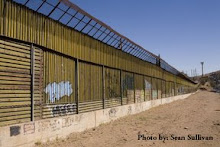
Since the passage of the Secure Fence Act around 650 miles of border wall have been built, slicing though towns, farms, and natural areas. Southern border states have rates of poverty that are significantly higher than the national average. In 2009 Arizona had the second highest poverty rate in the nation, New Mexico had the third highest, and Texas came in seventh. Within these states communities along the border tend to be the poorest. The 2007 list of 10 counties with the lowest median incomes in the nation included the Texas border counties of El Paso, Hidalgo, and Cameron, all three of which now have border walls.
Rather than act to minimize the border wall’s impacts on these communities, DHS used the Real ID Act to waive 36 federal laws. The Safe Drinking Water Act, Farmland Protection Policy Act, Native American Graves Protection and Repatriation Act, and other laws that protect the rest of the nation no longer protect border communities. Equal protection under the law does not apply to those who live along the border.
This has led to a host of negative impacts on border communities. The economic impacts of land condemnation and damage to family farms have hit economically disadvantaged communities. Walls have cause severe flooding in Lukeville, Arizona, and across the border in Nogales, Sonora, Mexico, where two people drowned. In Texas wetlands have been destroyed, and construction has caused serious erosion, further degrading the Rio Grande, which is the source of drinking and irrigation water for border residents.
In documents released before wall construction began, DHS stated that each of the Texas communities living in the path of the wall, “meets these two criteria [high percentages of minority and low-income residents] as a potential environmental justice population.” DHS went on to claim, however, that “the Secretary’s waiver means that CBP no longer has any specific obligation under Executive Order (EO) 12898.” While the first statement is backed by census data, the claim that DHS is not bound by the executive order is false, because the executive order was not listed among the 36 laws that DHS waived. But the assertion has meant that little effort has gone into lessening the impacts of border walls on border communities, or including them in decision-making.
South Texas Communities
To build border walls the federal government filed condemnation lawsuits against more than 400 Texas landowners, in communities that are 85 – 90% Hispanic and have rates of poverty that are more than twice the state average.
In Hidalgo and Cameron counties, where border walls were built along existing levees, homes, businesses, farms, and privately-owned nature preserves have been cut in two, or even walled off entirely, trapped between the border wall and the Rio Grande.
DHS has only to paid for the exact footprint of the border wall (typically, a 60-foot wide strip) as it passes through a parcel of land. The agency has completely discounted the hardships that the border wall will bring to landowners, such as the devaluation of contiguous property, access to farm land and homes, and impacts on livelihood.
In south Texas there are 21 separate border walls, totaling 70 linear miles, with wide gaps between sections. Border residents noticed that walls tended to be built through the lands of low-income families, but stopped abruptly at the property line of landowners such as the Hunt family, who, coincidentally, donated millions for the construction of the Bush Presidential Library.
Researchers from the University of Texas who examined this determined, “Our comparison of the areas planned to be fenced along the border with those areas where ‘gaps’ in the fence are planned suggests disproportionate impact on individuals with lower income and education, Hispanic ethnicity and non-U.S. citizenship status.”
Tohono O’odham Nation
The Tohono O’odham nation in Southern Arizona is split by 75 miles of the U.S.-Mexico border, with 1,500 out of 20,000 tribal members living south of the line. As in many Native American nations poverty is widespread. According to the 2000 census the average income on the reservation was $8,137, compared to a national average of $26,940. Life expectancy was eight years less than the national average.
Speaking before a U.S. House of Representatives hearing on the border wall, O’odham Chairman Ned Norris Jr. said, “We are older than the international boundary with Mexico and had no role in creating the border. But our land is now cut in half, with O’odham communities, sacred sites, salt pilgrimage routes, and families divided.”
Chairman Norris went on to state that, with the waiving of the Native American Graves Protection and Repatriation Act, “… fragments of human remains were observed in the tire tracks of heavy construction equipment. Barriers and the border road now cross the site.”
“Imagine a bulldozer parking in your family graveyard, turning up bones. This is our reality.”
Chairman Norris concluded, “We know from our own experience living on the border that security can be improved while respecting the rights of tribes and border communities, while fulfilling our duty to the environment and to our ancestors, and without granting any person the power to ignore the law.”
Showing posts with label Private Property. Show all posts
Showing posts with label Private Property. Show all posts
Thursday, February 3, 2011


Thursday, September 17, 2009
No Border Wall Calls on Congress to Strip the DeMint Border Wall Mandate from the DHS Appropriations Bill
The No Border Wall Coalition sent the following letter to the members of the House / Senate conference committee that will be deciding on the final language of the Department of Homeland Security appropriations bill. While the House version does not include more border walls, the Seante's version includes the DeMint amendment, calling for 700 miles of pedestrian walls. After the letter was sent a new report from the Government Accountability Office on the Secure Border Initiative, which includes border walls, was released. It found,
"A life cycle cost study has been completed which estimates deployment, operations, and future maintenance for the tactical infrastructure will total $6.5 billion. Despite the investment in tactical infrastructure, its impact on securing the border has not been measured because DHS has not assessed the impact of the tactical infrastructure on gains or losses in the level of effective control."
The life cycle cost estimate is on top of construction costs, and does not include the cost of the construction called for by the DeMint amendment.
Here is the text of our letter to the committee members, explaining our opposition to the construction of more border walls:
The No Border Wall Coalition urges you to remove the DeMint amendment (1399), which calls for hundreds of miles of new border wall, from the Department of Homeland Security appropriations bill. Further border wall construction will do tremendous damage to private and municipal property, severely impact critical wildlife habitat, and cost our nation billions of dollars. But like the walls that have already been built, the new border walls will have no impact on immigration.
The DeMint amendment changes the Secure Fence Act to require 700 miles of “pedestrian” border walls; vehicle barriers built along the border could no longer be applied to the mile count. As of July, DHS has completed 331 miles of “pedestrian fencing” and 302 miles of vehicle barriers. If DeMint’s amendment is accepted by the House/Senate Conference Committee and is signed into law, the border wall will suddenly be 369 miles short of its new mandate.
To build border walls the federal government has initiated condemnation suits against more than 400 landowners, of which 255 are still unresolved. Landowners and local elected officials have been denied basic information, including how they will access properties and water intake pumps that are walled off. If the DeMint amendment is not removed, hundreds more farmers, ranchers, nature preserves, and municipalities will be hauled into federal court to have their lands taken from them.
Border walls currently slice through National Monuments, National Wildlife Refuges, and preserves owned by the Nature Conservancy and Audubon. Habitats that are critical for the survival of federally endangered ocelots and Sonoran pronghorn have been fragmented, cutting animals off from the resources that they need to survive. Blocked watersheds have led to flood damage in Organ Pipe Cactus National Monument, and ongoing blasting in the Otay Mountain Wilderness Area is filling the Tijuana River with boulders and debris. If more border walls are built, more border ecosystems will be degraded or destroyed.
To date, $3.1 billion has been spent on border wall construction. Last year the Army Corps of Engineers reported that the average cost of building walls had increased to $7.5 million per mile. Some sections of border wall are particularly expensive: walls in South Texas averaged $12 million per mile; in California, a 3.5 mile section that involved filling in canyons cost taxpayers $57 million.
If the DeMint amendment remains in the DHS appropriations bill, we will spend no less than (and quite possibly a lot more than) $2,767,500,000.00 to build 369 miles of new border walls.
Border walls have utterly failed to stop either immigrants or smugglers from entering the United States. The majority enter through ports of entry, so walls erected between the ports have no effect on them. And according to the Border Patrol, even those who find the wall directly in their path are only slowed down by around 5 minutes.
Professor Wayne Cornelius of the University of California at San Diego has spent more than a decade researching undocumented immigration. His work has revealed that, even with border walls,
“all but a tiny minority eventually get through – between 92 and 98 percent, depending on the community of origin. … [T]he eventual success rate is virtually the same for migrants whose most recent crossing occurred before 1995, when the border was largely unfortified, and those crossing in the most recent period. In other words, the border enforcement build-up seems to have made no appreciable difference in terms of migrants’ ability to enter the United States clandestinely.”
The Department of Homeland Security recognizes this fact. After DeMint’s amendment was adopted, DHS spokesman Matt Chandler told the Wall Street Journal that it is, “designed to prevent real progress on immigration enforcement and [is] a reflection of the old administration's strategy: all show, no substance."
Rather than spend billions more on walls that will do tremendous damage to border communities and ecosystems, and which the Department of Homeland Security says will not help them to do their job, the membership of the No Border Wall Coalition urges you to adopt the House version of the DHS appropriations bill. For many of us, the border is our home, and as walls have been erected our needs, concerns, and voices have been ignored. We ask that you listen to us now. Strip the DeMint amendment from the bill, and refrain from building more border walls.
"A life cycle cost study has been completed which estimates deployment, operations, and future maintenance for the tactical infrastructure will total $6.5 billion. Despite the investment in tactical infrastructure, its impact on securing the border has not been measured because DHS has not assessed the impact of the tactical infrastructure on gains or losses in the level of effective control."
The life cycle cost estimate is on top of construction costs, and does not include the cost of the construction called for by the DeMint amendment.
Here is the text of our letter to the committee members, explaining our opposition to the construction of more border walls:
The No Border Wall Coalition urges you to remove the DeMint amendment (1399), which calls for hundreds of miles of new border wall, from the Department of Homeland Security appropriations bill. Further border wall construction will do tremendous damage to private and municipal property, severely impact critical wildlife habitat, and cost our nation billions of dollars. But like the walls that have already been built, the new border walls will have no impact on immigration.
The DeMint amendment changes the Secure Fence Act to require 700 miles of “pedestrian” border walls; vehicle barriers built along the border could no longer be applied to the mile count. As of July, DHS has completed 331 miles of “pedestrian fencing” and 302 miles of vehicle barriers. If DeMint’s amendment is accepted by the House/Senate Conference Committee and is signed into law, the border wall will suddenly be 369 miles short of its new mandate.
To build border walls the federal government has initiated condemnation suits against more than 400 landowners, of which 255 are still unresolved. Landowners and local elected officials have been denied basic information, including how they will access properties and water intake pumps that are walled off. If the DeMint amendment is not removed, hundreds more farmers, ranchers, nature preserves, and municipalities will be hauled into federal court to have their lands taken from them.
Border walls currently slice through National Monuments, National Wildlife Refuges, and preserves owned by the Nature Conservancy and Audubon. Habitats that are critical for the survival of federally endangered ocelots and Sonoran pronghorn have been fragmented, cutting animals off from the resources that they need to survive. Blocked watersheds have led to flood damage in Organ Pipe Cactus National Monument, and ongoing blasting in the Otay Mountain Wilderness Area is filling the Tijuana River with boulders and debris. If more border walls are built, more border ecosystems will be degraded or destroyed.
To date, $3.1 billion has been spent on border wall construction. Last year the Army Corps of Engineers reported that the average cost of building walls had increased to $7.5 million per mile. Some sections of border wall are particularly expensive: walls in South Texas averaged $12 million per mile; in California, a 3.5 mile section that involved filling in canyons cost taxpayers $57 million.
If the DeMint amendment remains in the DHS appropriations bill, we will spend no less than (and quite possibly a lot more than) $2,767,500,000.00 to build 369 miles of new border walls.
Border walls have utterly failed to stop either immigrants or smugglers from entering the United States. The majority enter through ports of entry, so walls erected between the ports have no effect on them. And according to the Border Patrol, even those who find the wall directly in their path are only slowed down by around 5 minutes.
Professor Wayne Cornelius of the University of California at San Diego has spent more than a decade researching undocumented immigration. His work has revealed that, even with border walls,
“all but a tiny minority eventually get through – between 92 and 98 percent, depending on the community of origin. … [T]he eventual success rate is virtually the same for migrants whose most recent crossing occurred before 1995, when the border was largely unfortified, and those crossing in the most recent period. In other words, the border enforcement build-up seems to have made no appreciable difference in terms of migrants’ ability to enter the United States clandestinely.”
The Department of Homeland Security recognizes this fact. After DeMint’s amendment was adopted, DHS spokesman Matt Chandler told the Wall Street Journal that it is, “designed to prevent real progress on immigration enforcement and [is] a reflection of the old administration's strategy: all show, no substance."
Rather than spend billions more on walls that will do tremendous damage to border communities and ecosystems, and which the Department of Homeland Security says will not help them to do their job, the membership of the No Border Wall Coalition urges you to adopt the House version of the DHS appropriations bill. For many of us, the border is our home, and as walls have been erected our needs, concerns, and voices have been ignored. We ask that you listen to us now. Strip the DeMint amendment from the bill, and refrain from building more border walls.
Sunday, August 23, 2009
Will Ciro Rodriguez Stop a New Round of Border Walls?
By Scott Nicol
U.S. Representative Ciro Rodriguez, whose district stretches fromSan Antonio to the border communities of Eagle Pass , Del Rio, and Presidio, will play a key role in determining whether or not more border walls are built in Texas

Standing up forTexas border communities would certainly be welcomed by those in Representative Rodriguez’ district who live along the Rio Grande Eagle Pass

Representative Rodriguez has made efforts to lessen the border wall’s impact and give the Secretary of Homeland Security the latitude to spareEagle Pass
“nothing in this paragraph shall require the Secretary of Homeland Security to install fencing, physical barriers, roads, lighting, cameras, and sensors in a particular location along an international border of the United States, if the Secretary determines that the use or placement of such resources is not the most appropriate means to achieve and maintain operational control over the international border at such location.''

Rep. Rodriguez also joined the rest ofTexas
Ultimately, Representative Rodriguez was not elected to serve Roy Beck. Ciro Rodriguez is in Washington DC to represent the interests of Eagle Pass, Del Rio, Presidio, and other communities that are threatened with border wall construction. If he fails to act on their behalf by removing the border wall amendment from the DHS bill, more of his constituents will see border walls tear through their communities.
U.S. Representative Ciro Rodriguez, whose district stretches from
Ignoring the destructive impacts on municipalities, private property, and wildlife refuges that Texas
Based on his record, there is hope that, in contrast to Texas

Standing up for
Eagle Pass Mayor Chad Foster has repeatedly criticized the border wall, calling upon DHS to, “halt construction on [this] expensive and useless one-size-fits-all solution to border security. Instead, the [DHS] secretary should be working toward genuine solutions, with input from local and state officials. Only then will we achieve real security along our nation's southern border."

Representative Rodriguez has made efforts to lessen the border wall’s impact and give the Secretary of Homeland Security the latitude to spare
“nothing in this paragraph shall require the Secretary of Homeland Security to install fencing, physical barriers, roads, lighting, cameras, and sensors in a particular location along an international border of the United States, if the Secretary determines that the use or placement of such resources is not the most appropriate means to achieve and maintain operational control over the international border at such location.''
Since the Congressional Research Service had already determined that border walls have “no discernible impact” on the number of undocumented immigrants and smugglers who cross the border each year, it should have been easy for then-Secretary Chertoff to decide that walls were not the most appropriate means to control the border. Unfortunately, neither he nor current DHS Secretary Napolitano has been willing to take the political heat and halt the construction of more “expensive and useless” walls.

Rep. Rodriguez also joined the rest of
So clearly, Rodriguez can be counted on to remove the border wall building amendment from the DHS appropriations bill, right?
Maybe not. In July, Rep. Rodriguez co-sponsored the Secure America with Verification and Enforcement (SAVE) Act. One provision of the SAVE Act states,
“[T]he Secretary shall construct or purchase […] additional fencing (and aesthetic fencing in business districts) in urban areas of the border; and vehicle barriers, to support, not replace, manpower, in rural and remote areas of the border necessary to achieve operational control of the international borders of the United States.”
So despite his prior record of opposing the border wall, Representative Rodriguez is now co-sponsoring a bill that calls for more wall construction, which may cut through the communities he serves.
This earned Representative Rodriguez and the rest of the SAVE Act’s co-sponsors a congratulatory letter from Roy Beck, president of the anti-immigration group NumbersUSA, who said, “It is with highest enthusiasm and expectation that NumbersUSA endorses your re-introduction of the SAVE Act.”
NumbersUSA has been denounced by the Southern Poverty Law Center for its ties to nativist and racist organizations. Roy Beck himself was a longtime editor of the white nationalist publication The Social Contract, and NumbersUSA shares a Washington , DC
Representative Rodriguez’s support for the SAVE Act muddies his record as an advocate for the border communities in his district and begs the question: what will he do in Conference Committee? Will he work to strip border walls from the DHS bill, or allow them to tear through his constituents’ communities? Will he side with Chad Foster, or Roy Beck?
It is possible that Representative Rodriguez’ support for the walls in the SAVE Act is a response to the right wing’s howls that he and Senator Hutchison “gutted” the Secure Fence Act when they gave DHS the flexibility to decide whether or not to wall off a given refuge, community, or family farm. Senator Hutchison has been unable to stand up to the right’s criticism, and has given the border wall unwavering support ever since.
Ultimately, Representative Rodriguez was not elected to serve Roy Beck. Ciro Rodriguez is in Washington DC to represent the interests of Eagle Pass, Del Rio, Presidio, and other communities that are threatened with border wall construction. If he fails to act on their behalf by removing the border wall amendment from the DHS bill, more of his constituents will see border walls tear through their communities.
Sunday, June 21, 2009
City Commissioners Vote to Buy Brownsville a Border Wall
By Scott Nicol
On June 2, the Brownsville City Commission finally capitulated to the Department of Homeland Security’s demand that they give away city property to build the border wall. They had attempted to do this twice before, first last July and again this past February. In both instances the commissioners backed down in the face of widespread opposition from Brownsville residents. This time, however, they stuck with DHS, ignoring the will of the people by voting to give away the city’s land and to commit to build a border wall through Brownsville at the city’s expense. No other city has done so much to help build the border wall.
When the City Commissioners considered this deal last February, they issued a press release praising it, saying that “The City of Brownsville is in the unique position to be the only border city between San Diego, California and the Gulf of Mexico to be offered the ability to remove the federally mandated border fence.” The Commissioners’ spin leaves out the fact that the initial border wall will only be removed after it is replaced with a border wall that will be far more permanent and imposing, and one for which Brownsville taxpayers will foot the entire multi-million dollar bill.
While the contract with DHS has been rewritten, the substance remains the same. The City of Brownsville will give up 15 acres of city property, which DHS valued at $123,100 when it initiated condemnation proceedings last September. The Department of Homeland Security will not pay a dime for the city’s land.
According to the contract, at some indefinite time in the future, the city will pay to build a levee-border wall in another unspecified location to replace the “floating fence.” It stipulates that the city must pay to buy the land for the new levee-border wall, and “construction shall be the responsibility of Brownsville, and shall not be performed by the United States or at any cost to the United States.” The bids for the levee-border walls in Hidalgo County ranged from $12 to $16 million per mile. Placing cost ahead of confidence in the quality of construction of our flood control levees, Hidalgo naturally went with the low bidder. Assuming that Brownsville does the same, the 2-4 miles of levee-border wall that will slice through the city will cost between $24 and $48 million, every dime of which must come from city coffers.

Once Brownsville constructs the new levee-border wall, DHS will pay to take down the “floating fence.” Maybe. Homeland Security’s promise to pay to take down the first border wall is “subject to the availability of funding.” If they do not have the cash in hand, “then DHS shall provide Brownsville with appropriate access and authority to remove such sections and dispose of the removed material” at the city’s expense.
One new provision in the contract that the City Commission approved states that, “Brownsville shall, at its sole expense, preserve and maintain the Replacement Border Barrier.” So not only will Brownsville’s taxpayers have to pay to build a levee-border wall that none of them want, they must also pay to maintain it for decades to come.
Of course, it is unlikely that Brownsville will be able to come up with all of this money, so the “temporary” border wall will in fact be permanent.
But if they do, and private developers come through with millions more to build a riverwalk, we can look forward to long lines of tourists waiting to show their passports to go through the border wall to reach the trendy restaurants on the other side. What could be more appealing than fine dining in a no-man’s land that the Department of Homeland Security has walled off to keep “terrorists and terrorist weapons” from entering the rest of the United States?
Yet, this is the deal that Brownsville City Commissioners Anthony Troiani, Edward Camarillo, Ricardo Longoria, and Leo Garza voted to accept. Charlie Atkinson, who is a Border Patrol employee, abstained. Commissioner Carlos Cisneros and Mayor Pat Ahumada voted to reject it.
When public funds are used to build schools, hospitals, or other structures for the benefit of taxpayers, the politicians who approved the project can be counted on attend a ribbon-cutting ceremony and place a plaque telling future generations of their accomplishment. If the City of Brownsville manages to pull funds from schools, hospitals, or other projects to build the levee-border wall, I trust that the City Commissioners who voted for it will be on hand for the dedication ceremony. They can smile and wave and shake hands with the grateful residents of Brownsville, who will sleep better knowing that the border is no longer broken, that floods of terrorists no longer wash over Brownsville, and that it was their City Commission that brought about this shining moment. Engraved on a bronze plaque that will be bolted to the concrete slab of the border wall will be the names:
Ricardo Longoria
Leo Garza
On June 2, the Brownsville City Commission finally capitulated to the Department of Homeland Security’s demand that they give away city property to build the border wall. They had attempted to do this twice before, first last July and again this past February. In both instances the commissioners backed down in the face of widespread opposition from Brownsville residents. This time, however, they stuck with DHS, ignoring the will of the people by voting to give away the city’s land and to commit to build a border wall through Brownsville at the city’s expense. No other city has done so much to help build the border wall.
When the City Commissioners considered this deal last February, they issued a press release praising it, saying that “The City of Brownsville is in the unique position to be the only border city between San Diego, California and the Gulf of Mexico to be offered the ability to remove the federally mandated border fence.” The Commissioners’ spin leaves out the fact that the initial border wall will only be removed after it is replaced with a border wall that will be far more permanent and imposing, and one for which Brownsville taxpayers will foot the entire multi-million dollar bill.
While the contract with DHS has been rewritten, the substance remains the same. The City of Brownsville will give up 15 acres of city property, which DHS valued at $123,100 when it initiated condemnation proceedings last September. The Department of Homeland Security will not pay a dime for the city’s land.

"Floating fence" border wall design in Cameron County, Texas
According to the contract, at some indefinite time in the future, the city will pay to build a levee-border wall in another unspecified location to replace the “floating fence.” It stipulates that the city must pay to buy the land for the new levee-border wall, and “construction shall be the responsibility of Brownsville, and shall not be performed by the United States or at any cost to the United States.” The bids for the levee-border walls in Hidalgo County ranged from $12 to $16 million per mile. Placing cost ahead of confidence in the quality of construction of our flood control levees, Hidalgo naturally went with the low bidder. Assuming that Brownsville does the same, the 2-4 miles of levee-border wall that will slice through the city will cost between $24 and $48 million, every dime of which must come from city coffers.
Levee-border wall under construction in Hidalgo County
Once Brownsville constructs the new levee-border wall, DHS will pay to take down the “floating fence.” Maybe. Homeland Security’s promise to pay to take down the first border wall is “subject to the availability of funding.” If they do not have the cash in hand, “then DHS shall provide Brownsville with appropriate access and authority to remove such sections and dispose of the removed material” at the city’s expense.
One new provision in the contract that the City Commission approved states that, “Brownsville shall, at its sole expense, preserve and maintain the Replacement Border Barrier.” So not only will Brownsville’s taxpayers have to pay to build a levee-border wall that none of them want, they must also pay to maintain it for decades to come.
Of course, it is unlikely that Brownsville will be able to come up with all of this money, so the “temporary” border wall will in fact be permanent.
But if they do, and private developers come through with millions more to build a riverwalk, we can look forward to long lines of tourists waiting to show their passports to go through the border wall to reach the trendy restaurants on the other side. What could be more appealing than fine dining in a no-man’s land that the Department of Homeland Security has walled off to keep “terrorists and terrorist weapons” from entering the rest of the United States?

Levee-border wall at the Old Hidalgo Pumphouse World Birding Center in Hidalgo County
Even if everything goes as the City Commission hopes, this deal defies all logic. It is as if someone took away your home, and rather than fight in court to either stop them or force them to pay you its market value of $123,100, you offered to buy them new land and build them a new house that would cost anywhere from $24 to $48 million, and you would then pay to maintain it. Accepting such a deal would certainly put you in a “unique position.”Yet, this is the deal that Brownsville City Commissioners Anthony Troiani, Edward Camarillo, Ricardo Longoria, and Leo Garza voted to accept. Charlie Atkinson, who is a Border Patrol employee, abstained. Commissioner Carlos Cisneros and Mayor Pat Ahumada voted to reject it.
When public funds are used to build schools, hospitals, or other structures for the benefit of taxpayers, the politicians who approved the project can be counted on attend a ribbon-cutting ceremony and place a plaque telling future generations of their accomplishment. If the City of Brownsville manages to pull funds from schools, hospitals, or other projects to build the levee-border wall, I trust that the City Commissioners who voted for it will be on hand for the dedication ceremony. They can smile and wave and shake hands with the grateful residents of Brownsville, who will sleep better knowing that the border is no longer broken, that floods of terrorists no longer wash over Brownsville, and that it was their City Commission that brought about this shining moment. Engraved on a bronze plaque that will be bolted to the concrete slab of the border wall will be the names:
Anthony P. Troiani
Edward C. Camarillo
Ricardo Longoria
Leo Garza
Friday, May 1, 2009
The Border Wall vs. Property Rights: Texas’ Senators Support the Wrong Side
by Scott Nicol
To build the border wall the federal government has brought condemnation lawsuits against more than 300Texas Texas Texas ’ Senators have worked to fund and build the wall that today stands in Hidalgo County and is tearing through Brownsville
To build the border wall the federal government has brought condemnation lawsuits against more than 300
Land nearest the
Eloisa Tamez’ property has been in her family since the King of Spain issued the San Pedro Carracitos Land Grant in 1763. In 2007 DHS demanded access to her property for border wall surveys, then initiated condemnation proceedings. Dr. Tamez enlisted the Center for Human Rights and Constitutional Law and initiated a class-action lawsuit alleging that DHS has refused to negotiate with landowners before condemning their property, as the law requires. She also demanded that DHS reveal its criteria for citing the border wall, which in places runs for miles through poor and/or minority communities, then ends abruptly at the property line of wealthy property owners and resort communities. David Pagan of Customs and Border Protection responded, "We do not plan to suspend work on the construction of fence in order to hold a series of additional consultation meetings." On April 15, 2009 the court ruled against Dr. Tamez’, allowing the federal government to seize her land. Within a week the border wall had been built across her property.
Last February Eva Lambert awoke to the sound of heavy equipment erecting the border wall’s steel posts on her land. In her case, either through disregard for the law or incompetence, DHS finished construction of the wall before anyone had contacted her to negotiate a price or condemn her property. Denied her day in court as well as her property, Ms. Lambert is still waiting to find out what compensation will be offered. As she told the Brownsville Herald, "In the end, the government does what it wants."
In the low-lying river delta of South Texas, the treaty that established the
The Department of Homeland Security has offered only to pay for the exact footprint of the border wall (typically, a 60-foot wide strip) as it passes through a parcel of land. In their simplistic calculations, the agency has completely issues such as the devaluation of contiguous property, problems accessing land and homes behind the wall, impacts on livelihood, and the importance of cultural heritage. Despite the range and complexity of these issues, DHS has steadfastly refused to enter into meaningful negotiations with property owners.
The Nature Conservancy’s Southmost Preserve maintains one of the last remaining Sabal Palm forests along the banks of the
Other homes, businesses, and properties that are behind the levees will be walled off entirely, trapped between the wall and the
The
The Department of Homeland Security has repeatedly claimed that they have consulted with landowners and local officials regarding border wall construction. But when the Texas Border Coalition repeatedly invited DHS and Customs and Border Protection officials to “walk the line” and see the impacts that the border wall will have on specific communities, they responded that they would only do so if the owners of the property that they would be crossing were kept away. Apparently, their preferred method of consultation is a condemnation proceeding.
In the face of these assaults on property rights by the federal government, one would expect
Senator Hutchison did add an amendment to the 2008 Omnibus Appropriations Bill that gave the Secretary of Homeland Security the flexibility to decide where walls should be built, as well as to spare places where walls do not make sense. The Homeland Security Secretary was also required to, “consult with the Secretary of Interior, the Secretary of Agriculture, States, local governments, Indian tribes, and property owners in the United States to minimize the impact on the environment, culture, commerce, and quality of life for the communities and residents located near the sites at which such fencing is to be constructed.”
Following howls of outrage from right wing pundits and politicians that she had “gutted” the Secure Fence Act, Hutchison backed away from her amendment. She has yet to confront DHS on its refusal to consult with property owners, as epitomized by its demand that landowners be kept away from any DHS employees who walk the line through their property. So long as she is afraid to fight on behalf of
Senator Cornyn’s statements assuring that there will be local consultation have also proved to be empty. Like Senator Hutchison, he has made no concrete effort to stand up for border residents. Instead, Cornyn sponsored the “Emergency Border Security Funding Act of 2007” which called for 700 linear miles of border wall and 300 miles of vehicle barriers along the US – Mexico border, and provided $3 billion dollars to build it. Cornyn’s bill went nowhere, but even without it DHS has received $3.1 billion to build the border wall.
On April 2, 2009, the one year anniversary of former Homeland Security Secretary Chertoff’s border-wide waiver that swept aside 36 federal laws, both of Texas’ Senators voted to add a motion to the Omnibus Appropriations bill that read, “To provide for a point of order against any appropriations bill that fails [to] fully fund the construction of the Southwest border fence.” The vote fell along party lines and failed, but in voting once again in favor of the border wall Hutchison and Cornyn chose party loyalty over the interests of their constituents.
This should not come as a surprise. When Cornyn looks back at the last election, he will look to the north
The fact that their neglect is not surprising does not make it acceptable. Our Senators, as well as our
Some border representatives are working to defend border communities. Representative Grijalva of
With this bill pending and walls under construction, it is critical that our members of Congress hear from their constituents right now. Urge them to support the Border Security and Responsibility Act. Demand that they work to stop further walls from tearing through the borderlands. Though only around 50 miles of border wall remain to be built it is not too late to stop it. If you lived in a home, or owned a farm, or worked at a wildlife refuge that is in the path of one of those miles, you would see every last mile as important.
So long as we sit quietly by and watch the border wall go up, we are irrelevant in the eyes of Congress. If we do not make our voices heard, and make our elected officials listen, mile upon mile of wall will be built. And while we can rail against the politicians who sacrifice our home for political gain, if we are silent we own a portion of the blame.
Sunday, April 5, 2009
Secretary Napolitano Must End DHS’ Abuse of Texas Border Communities
By Stefanie Herweck
Over the past two years, the Department of Homeland Security (DHS) and the organizations that it manages, Customs and Border Protection (CBP) and the Border Patrol, have shown a deep-seated indifference to the welfare of those of us living on the Texas-Mexico border. These agencies have treated our elected leaders with disrespect, they have assumed an adversarial relationship with the public, and they have shown disdain for border communities, culture, and the environment. These actions have seriously undermined DHS’s credibility along the
The border wall is the clearest example of this. The border wall project has been propelled by a blind determination to build as many miles of wall as possible regardless of cost, safety, effectiveness, and environmental damage. It has been shrouded in secrecy, and DHS has purposely obfuscated time and time again, as though border residents have no right to know what is happening in their communities and even on their own property.

Levee-border wall in Hidalgo County, Texas February 22, 2009
In June 2007, they started with a lie to the Texas Border Coalition.
DHS lied again in order to comply with legislation that requires local consultation. When ask to submit proof of the “18 town hall meetings” that they claimed to have held, they listed random phone calls and lunch meetings with single individuals, but no actual town hall meetings.
Then, in the ultimate act of negligence, DHS decided that border residents should not be protected by the laws that govern the rest of the country, and Bush Administration Secretary Chertoff waived 36 federal laws in order to slam the border wall through the 
Border wall "pickets" in front of the wall in El Calaboz, Texas March 14, 2009
Yet another DHS policy revealed this same disregard for public safety. Shortly before hurricane season last year, the news broke that in the event of a hurricane making landfall in the
Worried that this policy would cause a bottleneck at the checkpoints and the unjustified arrests of citizens fleeing in haste without documents, border leaders and residents decried the practice. Advocates for colonias complained that it unfairly risked the safety of the poor, elderly, and those with limited English who would be afraid to evacuate. Since many people would be unwilling to leave their undocumented family members, this policy could mean many thousands of people left in the path of a deadly storm.
In the face of criticism that DHS was willing to put so many human lives in jeopardy, and the perception that they might even be taking advantage of a natural disaster to make more arrests, Secretary Chertoff downplayed the policy and said that the Border Patrol would not impede evacuations. However, when Hurricane Dolly bore down on the
Although there has been a change in administration, the agency is still primarily staffed by the same officials that crafted and implemented DHS's stance during the last administration. Among them is the CBP employee who in February gave the Brownsville City Commissioners an arbitrary deadline to accept a border wall deal. The deadline was later repudiated by Secretary Napolitano, who had not been informed of it, after U.S. Representative Ortiz intervened on
Under the Obama administration, DHS has also maintained its indifference toward the landowners whose properties are being directly affected by the construction of the border wall. Having long refused to provide landowners and their elected officials with a detailed border wall plans, they sabotaged yet another opportunity to explain where and how the wall will be built when they refused to “walk the line” with the Texas Border Coalition in February. DHS said that they were willing to visit a very few of the properties where the border wall would be built with TBC, but the property owners must be kept away.

Border wall behind a home in Cameron County, Texas March 14, 2009
In perhaps the ultimate act of disrespect to landowners, as well as evidence of sheer incompetence and unprofessionalism, last week brought news that DHS usurped one
Given this track record, it is no surprise that
This behavior reinforces the widespread notion in
Secretary Napolitano must begin immediately to mend the broken relationship between DHS and border residents. This will require an attitude shift across the entire agency: DHS must recognize that for millions of people, the borderlands are the homeland. Instead of viewing the border as the frontline in a war zone, Secretary Napolitano needs to instill in her agency the understanding that the people who live on the border are entitled to the same rights and privileges, and due the same protections, as those who live in any other part of the
Secretary Napolitano will have little success in reversing the Department’s abusive practices until she replaces the ideologues that her predecessor hired. Even as she speaks to Congress and in the press about bringing change to DHS, holdovers from the last administration tell Congress and the press that there will be no change. So long as they are willing to go so far as to issue ultimatums on behalf of the Department of Homeland Security without bothering to inform its new leadership, any positive changes that she wishes to make will dissipate before they make it from Washington, D.C. to border communities.
Tremendous damage to the Texas borderlands has already been done by former Secretary Chertoff, but in a few places it is not too late to stop border wall construction and thereby signal that change is real and profound, rather than just a campaign slogan. Where the wall has not yet been built because condemnation lawsuits are still in court, DHS should drop its court case and enter into meaningful negotiations.
Finally, if Secretary Napolitano truly sees the defense of our nation’s laws as a fundamental part of her new job she should rescind former Secretary Chertoff’s Real ID Act waivers and restore the rule of law to the
The new Administration has a tremendous opportunity to reverse the Bush administration’s abuses, and to begin to repair the damage that was done. But they must act immediately. Right now, landowners are facing condemnation proceedings. Right now, construction crews from South Texas to
Wednesday, January 21, 2009
Texas Calls Upon DHS Secretary Napolitano to Bring an End to the Border Wall
Secretary Janet Napolitano
United States Department of Homeland SecurityWashington, D.C. 20528
January 20, 2009
Dear Secretary Napolitano,
At the same time as Barak Obama is taking the oath of office, workers are pouring concrete and welding steel to build the border wall. Today, walls slice through more than 500 miles of our borderlands. As Governor of Arizona, you are certainly aware of both the inefficacy of the wall and its tremendous financial costs. Surely you are aware of the thousands of undocumented migrants who have died in Arizona’s deserts, and the species being driven to extinction by Arizona’s border wall. Those of us who live in Texas hope that you will also take into account the wall’s tremendous toll along our border, and that you will reverse your predecessor’s policies and bring an immediate end to border wall construction.
The overwhelming majority of Texas border residents oppose the border wall, because we can see firsthand the destruction that it is causing without bringing the slightest benefit. If its impacts on the border and the nation as a whole were as positive as outgoing Secretary of Homeland Security Michael Chertoff has claimed, there would be overwhelming support for the wall. If the southern border was in fact being overrun by terrorists and smugglers who were causing us to live in a state of constant fear, and the wall was a viable solution to such a dire situation, there would be no need to pursue hundreds of land condemnation lawsuits. We would gather at the riverside with trowels and welding torches in hand to help build it.
But we know that the border wall will not save us from threats dreamed up by politicians in Washington, DC who have never seen the Rio Grande. The wall does not even stop those who enter the U.S. to find work. Del Rio, Texas, Border Patrol Chief Randy Hill said, “We're going to see steel barriers erected on the borders where U.S. and Mexican cities adjoin. These will slow down illegal crossers by minutes.” He said nothing about stopping crossers, only slowing crossers down by “minutes.” We are not willing to sacrifice homes, farms, and wildlife refuges for a speed bump.
Instead, a broad cross-section of border residents has come together in opposition to the border wall. The Texas Border Coalition, made up of mayors, judges, and elected officials all along Texas’ border with Mexico has been outspoken in its rejection of walls, and has fought in court to defend the Texas border from further construction. Numerous municipalities have passed resolutions opposing the border wall. The Lone Star Sierra Club Chapter has passed a resolution opposing the border wall, and has worked to draw attention to its tremendous environmental costs. Bishop Peña of the Catholic Diocese of Brownsville spoke at a No Border Wall rally, as have a number of mayors and Texas State Representatives.
The Cameron County Commissioners Court passed a resolution which sums up much of the sentiment along Texas’ southern border, saying in part,
"Proponents of the fence, who are not residents of the border region, have wrongly used the construction of a fence as a rhetorical device to transform the issue of immigration from an economic concern to a matter of international relations and national security, and to transfer responsibility for alleged defects in United States immigration policy and enforcement from the United States government to the government of Mexico."
Those of us who live along the border are not willing to see our land condemned, our communities divided, and our parks and wildlife refuges destroyed, for a rhetorical device.
The No Border Wall coalition has circulated a petition that reads,
We oppose the construction of a solid wall along more than 700 miles of the United States / Mexico border. A wall that tears through border communities will cause terrible economic damage, impacting agriculture, ecotourism, retail sales, and private property. It will cause grave social harm, separating families and sending a terrible message to our neighbors. The route specified by the Secure Fence Act of 2006 will take it through National Wildlife Refuges, other parks, and riparian habitat critical for the survival of migrating birds as well as threatened and endangered species. The border wall will cost billions of dollars and even the Department of Homeland Security has said that it will only slow down, not stop, people who cross the border illegally.
To date, 6,501 people have signed this petition. Most are residents of Texas border communities who will be directly impacted by the border wall. This is not an abstraction, a symbol, or a rhetorical device to us. This is our lives. Our families, our children, and our grandchildren will be forced to live in the shadow of a wall that we abhor so that politicians who will never visit our communities can give their voters a false sense of security.
Thanks to last year’s Omnibus spending bill, you will have the authority to either double the current length of the border wall or immediately halt construction. Outgoing Homeland Security Secretary Chertoff used these powers to condemn private property, decimate wildlife corridors, and build mile upon mile of useless border wall. His retirement was celebrated from Brownsville, Texas, to Tucson, Arizona.
Secretary Napolitano, Texas border communities call upon you to embody the “change” that Barak Obama campaigned on. You must have the courage to speak truthfully to the American people, to admit that we are not safer for having built hundreds of miles of border wall, and our national security will not be enhanced by building another mile or one hundred miles or even one thousand miles. You should restore the rule of law along the border by rescinding the waivers of 36 federal laws that Michael Chertoff issued in order to build border walls. We ask you to shift the Department of Homeland Security’s funds and priorities away from empty gestures and political grandstanding, and bring an end to the border wall.
United States Department of Homeland SecurityWashington, D.C. 20528
January 20, 2009
Dear Secretary Napolitano,
At the same time as Barak Obama is taking the oath of office, workers are pouring concrete and welding steel to build the border wall. Today, walls slice through more than 500 miles of our borderlands. As Governor of Arizona, you are certainly aware of both the inefficacy of the wall and its tremendous financial costs. Surely you are aware of the thousands of undocumented migrants who have died in Arizona’s deserts, and the species being driven to extinction by Arizona’s border wall. Those of us who live in Texas hope that you will also take into account the wall’s tremendous toll along our border, and that you will reverse your predecessor’s policies and bring an immediate end to border wall construction.
The overwhelming majority of Texas border residents oppose the border wall, because we can see firsthand the destruction that it is causing without bringing the slightest benefit. If its impacts on the border and the nation as a whole were as positive as outgoing Secretary of Homeland Security Michael Chertoff has claimed, there would be overwhelming support for the wall. If the southern border was in fact being overrun by terrorists and smugglers who were causing us to live in a state of constant fear, and the wall was a viable solution to such a dire situation, there would be no need to pursue hundreds of land condemnation lawsuits. We would gather at the riverside with trowels and welding torches in hand to help build it.
But we know that the border wall will not save us from threats dreamed up by politicians in Washington, DC who have never seen the Rio Grande. The wall does not even stop those who enter the U.S. to find work. Del Rio, Texas, Border Patrol Chief Randy Hill said, “We're going to see steel barriers erected on the borders where U.S. and Mexican cities adjoin. These will slow down illegal crossers by minutes.” He said nothing about stopping crossers, only slowing crossers down by “minutes.” We are not willing to sacrifice homes, farms, and wildlife refuges for a speed bump.
Instead, a broad cross-section of border residents has come together in opposition to the border wall. The Texas Border Coalition, made up of mayors, judges, and elected officials all along Texas’ border with Mexico has been outspoken in its rejection of walls, and has fought in court to defend the Texas border from further construction. Numerous municipalities have passed resolutions opposing the border wall. The Lone Star Sierra Club Chapter has passed a resolution opposing the border wall, and has worked to draw attention to its tremendous environmental costs. Bishop Peña of the Catholic Diocese of Brownsville spoke at a No Border Wall rally, as have a number of mayors and Texas State Representatives.
The Cameron County Commissioners Court passed a resolution which sums up much of the sentiment along Texas’ southern border, saying in part,
"Proponents of the fence, who are not residents of the border region, have wrongly used the construction of a fence as a rhetorical device to transform the issue of immigration from an economic concern to a matter of international relations and national security, and to transfer responsibility for alleged defects in United States immigration policy and enforcement from the United States government to the government of Mexico."
Those of us who live along the border are not willing to see our land condemned, our communities divided, and our parks and wildlife refuges destroyed, for a rhetorical device.
The No Border Wall coalition has circulated a petition that reads,
We oppose the construction of a solid wall along more than 700 miles of the United States / Mexico border. A wall that tears through border communities will cause terrible economic damage, impacting agriculture, ecotourism, retail sales, and private property. It will cause grave social harm, separating families and sending a terrible message to our neighbors. The route specified by the Secure Fence Act of 2006 will take it through National Wildlife Refuges, other parks, and riparian habitat critical for the survival of migrating birds as well as threatened and endangered species. The border wall will cost billions of dollars and even the Department of Homeland Security has said that it will only slow down, not stop, people who cross the border illegally.
To date, 6,501 people have signed this petition. Most are residents of Texas border communities who will be directly impacted by the border wall. This is not an abstraction, a symbol, or a rhetorical device to us. This is our lives. Our families, our children, and our grandchildren will be forced to live in the shadow of a wall that we abhor so that politicians who will never visit our communities can give their voters a false sense of security.
Thanks to last year’s Omnibus spending bill, you will have the authority to either double the current length of the border wall or immediately halt construction. Outgoing Homeland Security Secretary Chertoff used these powers to condemn private property, decimate wildlife corridors, and build mile upon mile of useless border wall. His retirement was celebrated from Brownsville, Texas, to Tucson, Arizona.
Secretary Napolitano, Texas border communities call upon you to embody the “change” that Barak Obama campaigned on. You must have the courage to speak truthfully to the American people, to admit that we are not safer for having built hundreds of miles of border wall, and our national security will not be enhanced by building another mile or one hundred miles or even one thousand miles. You should restore the rule of law along the border by rescinding the waivers of 36 federal laws that Michael Chertoff issued in order to build border walls. We ask you to shift the Department of Homeland Security’s funds and priorities away from empty gestures and political grandstanding, and bring an end to the border wall.
Thursday, January 15, 2009
Texas Border Coalition Members Ask U.S. Supreme Court to Hear Border Wall Waiver Case
The Texas Border Coalition has written an amicus brief in support of a constitutional challenge to section 102 of the Real ID Act, which gives the Secretary of Homeland Security the unprecedened power to brush aside any law that might slow down construcion of the border wall. Section 102 said, “Notwithstanding any other provision of law, the Secretary of Homeland Security shall have the authority to waive all legal requirements such Secretary, in such Secretary’s sole discretion, determines necessary to ensure expeditious construction of the barriers and roads under this section.” The Texas Border Coalition issued the following press release regarding their support of the constitutional challenge:
EAGLE PASS, Texas (Jan. 14, 2009) – Members of the Texas Border Coalition (TBC) are asking the U.S. Supreme Court to hear an appeal by El Paso County, the city of El Paso and others challenging the constitutionality of Homeland Security Secretary Michael Chertoff’s waivers of 37 federal laws and all state, local and tribal laws. Chertoff exercised these waivers in connection with the U.S.-Mexico border wall.
In an amicus curiae brief filed today, TBC members ask the Court to address for the first time whether the waiver authority granted to Chertoff by Congress is permissible under the U.S. Constitution.
The brief noted that no appellate court has ever upheld such a broad a delegation of legislative power to the executive branch without judicial review, arguing that the waivers “bulldoze wide swaths of unidentified state and local laws” in a fashion contrary to what the framers of the Constitution intended.
Eagle Pass Mayor and TBC Chairman Foster said, “I hope the justices will seize this opportunity to restore the balance of sovereignty among federal, state and local governments that our nation’s founders guaranteed to the people and eloquently expressed in the Constitution and in the writings of James Madison.”
On April 3, 2008, Chertoff issued two waivers covering almost 500 miles of territory along the Mexican border from California to Texas in an effort to expedite construction of the 670-mile wall along the U.S.-Mexico border.Invoking his authority under Section 102(c) of the Illegal Immigration Reform and Immigrant Responsibility Act (IIRIRA), the Secretary waived 37 federal laws and all related regulations, including environmental laws, historic preservation acts, the Rivers and Harbors Act, the Federal Land Policy and Management Act, the Federal Grant and Cooperation Act, acts protecting the exercise of religious freedom, and the entire Administrative Procedures Act.
Perhaps most troubling is that Chertoff has purported to waive all state and local laws relating to the subject matter of these federal laws, but has not specified which state and local laws have been waived, for how long, or against whom.
TBC members argue that such unrestricted power granted to Chertoff raises profound, unanswered questions about sovereignty – including the local police powers – of the state of Texas and other cities and counties along the U.S.-Mexico border. They assert that the secretary has encroached on the most fundamental aspect of state and local sovereignty, and that is the power to govern by their own duly enacted laws.
“Should the Supreme Court allow these waivers to stand without so much as an argument in defense of liberty, the justices will effectively confer upon an unelected agency chief limitless and unbridled power never dreamed possible by the authors of the Constitution,” Foster said.
The justices are expected to decide this spring or summer whether to hear the case.
For a copy of the brief, please click here.
The Texas Border Coalition (TBC) is a collective voice of border mayors, county judges, economic development commissions focused on issues that affect more than 6 million people along the Texas-Mexico border region and economically disadvantaged counties from El Paso to Brownsville. TBC is working closely with the state and federal government to educate, advocate, and secure funding for transportation, immigration and ports of entry, workforce and education and health care. For more information, visit the TBC Web site at www.texasbordercoaltion.org.
EAGLE PASS, Texas (Jan. 14, 2009) – Members of the Texas Border Coalition (TBC) are asking the U.S. Supreme Court to hear an appeal by El Paso County, the city of El Paso and others challenging the constitutionality of Homeland Security Secretary Michael Chertoff’s waivers of 37 federal laws and all state, local and tribal laws. Chertoff exercised these waivers in connection with the U.S.-Mexico border wall.
In an amicus curiae brief filed today, TBC members ask the Court to address for the first time whether the waiver authority granted to Chertoff by Congress is permissible under the U.S. Constitution.
The brief noted that no appellate court has ever upheld such a broad a delegation of legislative power to the executive branch without judicial review, arguing that the waivers “bulldoze wide swaths of unidentified state and local laws” in a fashion contrary to what the framers of the Constitution intended.
Eagle Pass Mayor and TBC Chairman Foster said, “I hope the justices will seize this opportunity to restore the balance of sovereignty among federal, state and local governments that our nation’s founders guaranteed to the people and eloquently expressed in the Constitution and in the writings of James Madison.”
On April 3, 2008, Chertoff issued two waivers covering almost 500 miles of territory along the Mexican border from California to Texas in an effort to expedite construction of the 670-mile wall along the U.S.-Mexico border.Invoking his authority under Section 102(c) of the Illegal Immigration Reform and Immigrant Responsibility Act (IIRIRA), the Secretary waived 37 federal laws and all related regulations, including environmental laws, historic preservation acts, the Rivers and Harbors Act, the Federal Land Policy and Management Act, the Federal Grant and Cooperation Act, acts protecting the exercise of religious freedom, and the entire Administrative Procedures Act.
Perhaps most troubling is that Chertoff has purported to waive all state and local laws relating to the subject matter of these federal laws, but has not specified which state and local laws have been waived, for how long, or against whom.
TBC members argue that such unrestricted power granted to Chertoff raises profound, unanswered questions about sovereignty – including the local police powers – of the state of Texas and other cities and counties along the U.S.-Mexico border. They assert that the secretary has encroached on the most fundamental aspect of state and local sovereignty, and that is the power to govern by their own duly enacted laws.
“Should the Supreme Court allow these waivers to stand without so much as an argument in defense of liberty, the justices will effectively confer upon an unelected agency chief limitless and unbridled power never dreamed possible by the authors of the Constitution,” Foster said.
The justices are expected to decide this spring or summer whether to hear the case.
For a copy of the brief, please click here.
The Texas Border Coalition (TBC) is a collective voice of border mayors, county judges, economic development commissions focused on issues that affect more than 6 million people along the Texas-Mexico border region and economically disadvantaged counties from El Paso to Brownsville. TBC is working closely with the state and federal government to educate, advocate, and secure funding for transportation, immigration and ports of entry, workforce and education and health care. For more information, visit the TBC Web site at www.texasbordercoaltion.org.
Monday, December 8, 2008
Obama needs to consign Border Wall plan to the trashcan of bad ideas
By K. Rod Summy
During the past year, numerous articles have appeared in the local and national press regarding problems associated with construction of the Border Fence or Wall along the U.S.–Mexico border.
In one recent article, I expressed my concerns that the initiation of Border Wall construction in Hidalgo County, Texas during the middle of the 2008 hurricane season was inherently dangerous and could predispose our region to massive flooding if we were impacted by a major storm while such construction was in progress.
As examples of levee disturbances caused by Border Wall construction, I included a series of images acquired in the city of Granjeno during early-September of this year which showed firstly, deep unconsolidated (loose and friable) soil on both faces of the flood-control levee, and secondly a five- to six-meter gap between an uncompleted section of the concrete Border Wall and the remnants of the destabilized levee located to the south.
 Border wall under construction in the levee in Granjeno, TX 9/21/08
I discussed the ramifications of each type of disturbance, and recommended that major construction of any type which provides a potential to disturb or destabilize flood-control levees should be curtailed or prohibited during the annual hurricane season, which extends from early-June through late-November.
In response to my article, an unknown person (hereafter referred to “Anonymous”) posted the following statement on the No Border Wall blog on Sept. 22, 2008:
“Deceiving commentary on the engineering that is going on here. First the existing levees (small molehills) are raised using fill material. That is what the author calls "unstable" and "friable." Then the flood wall is constructed in front of the raised levees on the side facing the river, with space between so as not to disturb the newly upgraded earthen levee. After the wall is complete, the space is backfilled and consolidated agatinst [sic] the back of the flood wall. Please explain how the upgraded earth levee would provide less protection during a major storm than what was originally there?? (the original earth levee is still there underneath the built up levee). This makes no sense to me and it's a deceptive way to get an audience for this site's border wall bashing.”

Levee / border wall diagram from the Marfa Sector draft Environmental Assessment
The engineering details of the Border Wall provided by “Anonymous” are informative but irrelevant. How effective the Border Wall might be as a flood-control structure once construction is complete has nothing to do with the concerns expressed in my article – the real question is how it may be expected to perform if we are impacted by a major tropical storm or hurricane while construction is in progress.
All phases of Border Wall construction were in progress by September 7, 2008, the beginning of the week in which Hurricane Ike entered the Gulf of Mexico and intensified into one of the largest and most dangerous storms in Texas Gulf Coast history.
This included extensive excavation of the south levee face, the embedding of pilings and metal panels along the top of the levee, and construction of the partially-completed concrete wall which now extended approximately 150 to 200 meters west of its original point of origin.
 Levee / border wall construction in Granjeno, TX 8/01/08
To suggest that a levee in this condition is storm-worthy and capable of withstanding the onslaught of floodwaters produced by major tropical storms and hurricanes is ludicrous. Tropical storms and hurricanes are typically associated with high winds and torrential rainfall, which generally result in deep water and strong water currents within floodways. Any engineer or hydrologist worthy of the name should recognize that strong water currents developing in this manner will almost certainly obliterate any type of obstruction (earthen or otherwise) causing abrupt changes in surface contour of levee faces.
Moreover, a competent engineer should also recognize that the five- to six-meter “gap behind the wall” provides a means to generate very powerful water currents if any type of breach were to occur in the levee behind the concrete wall, e.g., as a result of overtopping. This is a simple matter of physical principles and hydrology – if a breach in this area should occur, floodwaters under tremendous pressure will tend to flow along the “path of least resistance,” i.e., they will flow through the breach until the system stabilizes as floodwaters subside.

Levee / border wall construction in Granjeno, TX 11/27/08
Since the concrete wall is impermeable to water, it will force floodwaters to enter a restricted channel (i.e., the gap in question) and to flow with increased velocity toward the breach in a direction parallel to the face of the destabilized earthen levee. As water flows through the breach, hydraulic action (erosion caused by moving water) will tend to widen the breach, which in turn will allow more water to enter the restricted channel (gap) which in turn will tend to increase the velocity of water flowing through the channel.
Despite repeated advisories from NOAA that water temperatures in the Gulf of Mexico were highly conducive to the development of tropical storms and hurricanes, Border Wall construction proceeded at a feverish pace without interruption during the peak of the 2008 hurricane season – August and September. During the second week of September, when Hurricane Ike was on an apparent “collision course” with south Texas, one of our local officials stated somewhat arrogantly that construction of the Border Wall (referred to as “levee repairs”) might be “halted temporarily” if Hurricane Ike headed our way. As it turned out, no such delay occurred – during the latter half of the week, Hurricane Ike began to veer northward and made landfall at Galveston on Sept. 13.

Levee / border wall construction behind homes in Granjeno, TX August 1, 2008
It is important for the reader to note that officials of the Department of Homeland Security, our local county officials and their construction contractors made no apparent preparations at Granjeno and three other construction sites in Hidalgo County for the possible landfall of Hurricane Ike along the south Texas coast. On Sept. 13, the day in which Ike was devastating much of southeast Texas and western Louisiana with massive flooding, construction of the Border Wall at Granjeno and three other sites in Hidalgo County was in high gear, with fleets of cranes, backhoes and other heavy equipment gnawing away at our flood-control levees like huge metallic termites.
The determination by DHS and our county officials to meet “Bush’s deadline” at essentially any cost and/or risk was presumably based on the erroneous logic that if funding for legitimate levee repairs and upgrades is not obtained now (under the Bush administration), it will be very difficult or impossible to obtain in the future (under a new presidential administration). This urgency is somewhat understandable considering the recent findings by FEMA that many areas of the LRGV levee system are not in compliance with federal standards, and will not be recertified unless they are upgraded and brought into compliance with FEMA standards within a period of one year (an additional one-year extension was recently granted).
Regardless of what their motives may have been, however, the decision by DHS and our local officials to initiate Border Wall construction in the Lower Rio Grande Valley during middle of the 2008 hurricane season, and their failure to make adequate preparations for the possible landfall of dangerous storms such as Hurricane Ike (which at one time seemed imminent) is inexcusable and placed the properties and lives of hundreds and possibly thousands of our citizens at considerable risk. We were very fortunate that Hurricane Dolly made landfall before Border Wall construction began in earnest at Granjeno and the other three sites, and that Hurricane Ike veered northward two days before its destructive landfall at Galveston. Had Hurricane Ike maintained its westward course and impacted the LRGV region while large sections of our flood-control system were under major construction, this story would not have ended happily (for us, at least). We cannot afford to allow this to happen again – ever!
Within the next six weeks, the George Bush administration will be history and Barack Obama will be inaugurated as the 44th President of the United States. If our country reenters a period of normalcy and rational thinking, the “Great Texas Border Wall” will hopefully be committed to its rightful place in the “Historical Trashcan of Bad Ideas.” Given our staggering federal deficit – which has increased substantially following the recent $750 billion bailout of the U. S. financial industry – it is very unlikely that the federal government will continue to pour millions (or billions) of dollars into a concrete structure that has become symbolic of tyranny and is despised almost universally by residents along the U.S.–Mexico border.

Levee / border wall construction in the Lower Rio Grande Valley National Wildlife Refuge 11/27/08
Termination of the Border Wall concept would place great pressure on the U.S. Congress to develop real solutions to the problem of illegal immigration (instead of expensive and dangerous concrete placebos) and would allow available funds - including the $400 million “bailout package” for the ailing Border Wall project – to be used much more effectively for repair and upgrades of the Lower Rio Grande Valley levee system and bring it into compliance with FEMA standards for the first time in many years. Of all the options available to us right now, this comes closest to being a true “win–win” situation, and is the only one which will really protect us from disastrous flooding if and when we are impacted by some future storm similar to Hurricane Ike.
We were deprived of these basic rights during 2008 because of two federal laws – the Secure Fence Act and the Real ID Act - which were enacted by the U. S. Congress during a period of national hysteria, fear and intolerance. Collectively, these two laws allowed federal, state and local officials involved in the Border Wall project to conduct their business in a reckless and dangerous manner, and deprived the nearly two million American citizens in the Lower Rio Grande Valley of their legal rights to challenge construction of the Border Wall on any virtually any grounds, including public safety issues.
What happened in south Texas during 2008 is a prime example of what happens when too few people are given too much power without an adequate system of checks and balances. In order to ensure that this never happens again, it is imperative that all residents of our border regions with Mexico (and hopefully, all Americans in general) demand that our elected congressional representatives either amend or repeal both of these dangerous laws at the earliest opportunity. The next congressional session would be none too soon.
K. Rod Summy is an associate professor of entomology. He lives in Weslaco, Texas.
This article first appeared in the Rio Grande Guardian.
Subscribe to:
Posts (Atom)